What you see
A white floury coating on the upper side of the leaf that wipes off. A gray to violet felt underneath, with yellow patches above it, points to downy mildew instead.



A white, wipeable coating is powdery mildew. Take off the worst leaves, then change the air around the plant.
Downy mildew looks different and needs different conditions. It sits under the leaf as a gray to violet felt, while the upper side shows yellow patches between the veins.
The approach is similar for both. Take the affected tissue off, change the conditions, then keep checking and treating until nothing new appears.
Wipe a finger across the coating. If it lifts and stays on your fingertip, it is sitting on the leaf and you have powdery mildew. It spreads in warm, dry air without the leaves ever being wet, and it takes young leaves and shoot tips first.
Then turn a leaf over. A gray to violet felt on the underside, with yellowish patches above it bounded by the leaf veins, belongs to downy mildew. That one needs leaf tissue that stays wet for hours, and it turns up on plants standing close together with a misting habit.
A white fluffy growth on the soil rather than on a leaf is not mildew. That is mold on organic material, and it disappears once the surface dries out between waterings.
Look at
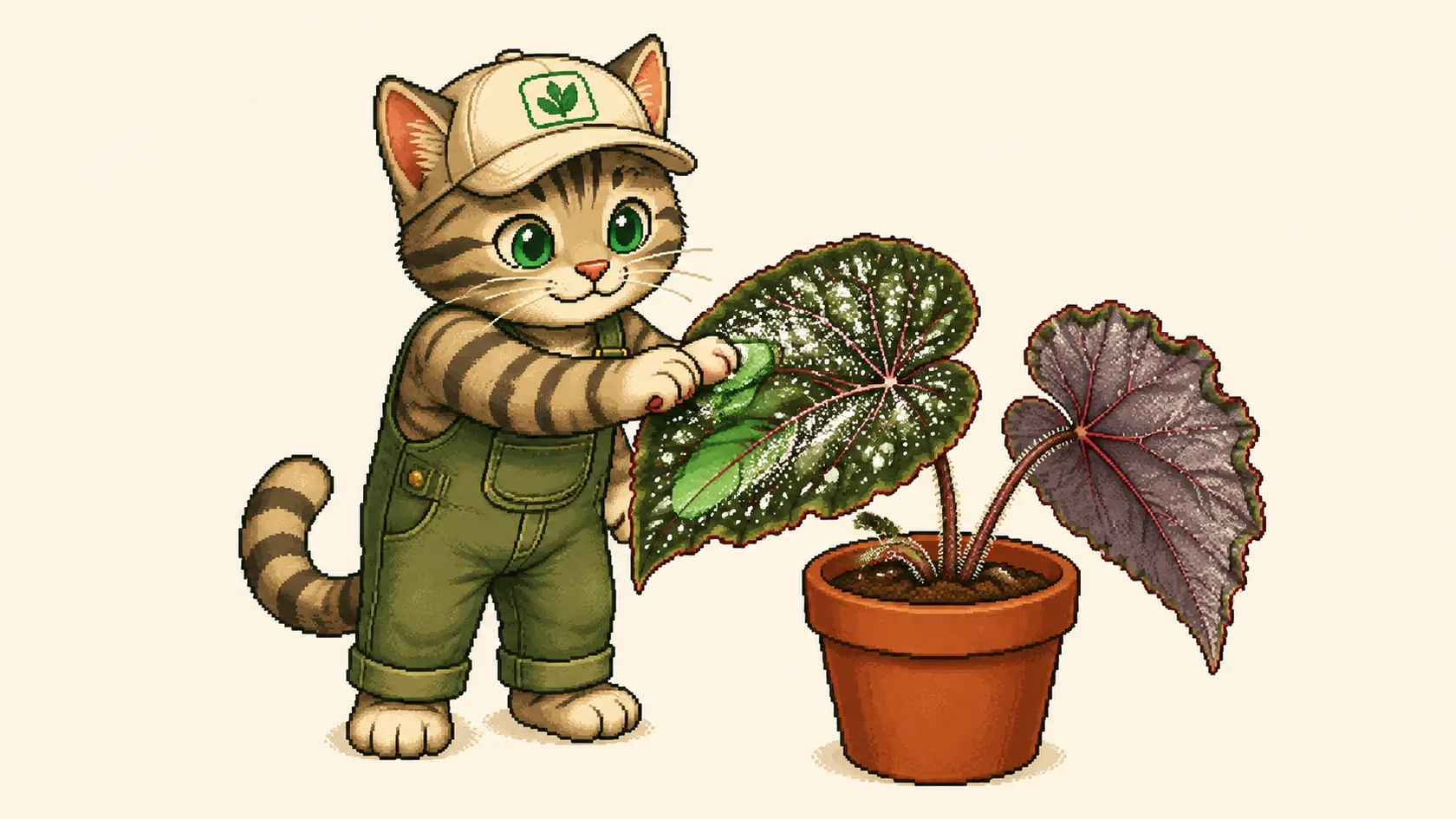
Remove heavily coated leaves instead of treating them. Most of the spores leave in one go, and the plant takes the loss of a few leaves better than another week of spread.
Hold a bag underneath while you pick and put everything in the household trash. On a compost heap the material stays around and can find its way back inside.
Do not shake the plant, and carry it out of the room slowly. The coating dusts off when you handle it and settles on the neighboring plants.
Mildew stays where the air stands still. Move the plants further apart so the leaves no longer touch, and air the room regularly.
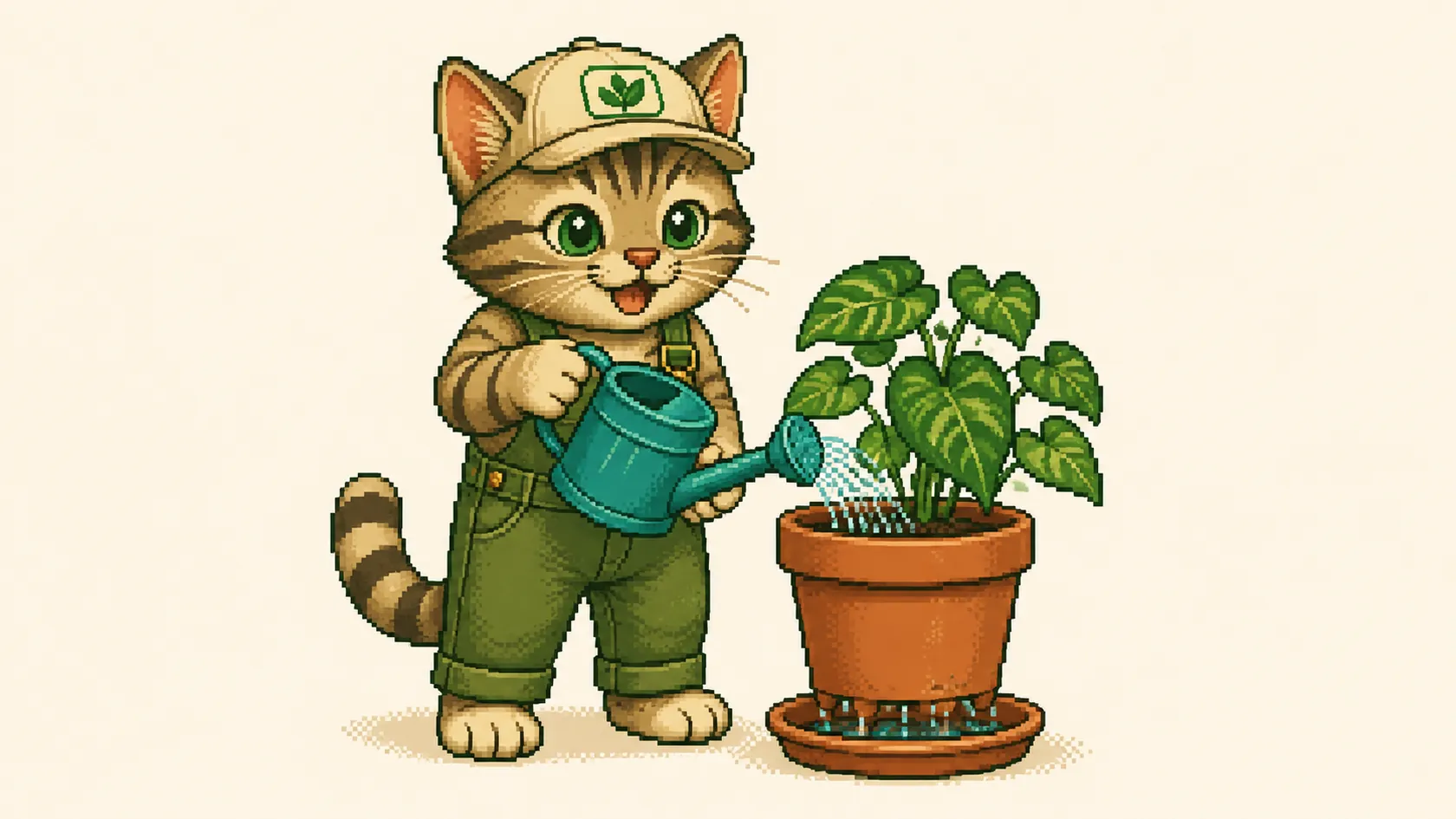
Water the soil rather than the foliage, and stop misting while the infection is running. Wet leaf tissue is the condition downy mildew needs, and it also helps powdery mildew jump to the next leaf.
Look at your feeding as well. Generous nitrogen produces soft, fast-grown tissue that gets infected more easily. Do not dose liquid fertilizer stronger than the label states.
A brighter spot makes the plant tougher, as long as it is not a jump into full midday sun behind glass.
The best known home remedy is milk diluted with water, roughly one part milk to eight parts water. It has long been used against powdery mildew and works as prevention on the leaves you actually wet. On a thick, established coating it does little.
Indoors that mixture has a practical drawback. Milk residue smells clearly after a day or two, and it leaves rings on sensitive leaves.
Baking soda in water with a drop of liquid soap as a wetting agent is the second common version. It also reaches only the wetted spots, and too strong a concentration damages leaf edges.
Test any solution on a single leaf and look at that leaf two days later before you spray the whole plant. Spray in the evening rather than in full sun, and let the plant dry off afterward.
None of these replaces taking off the affected leaves and moving the plant somewhere airier. They are the addition, not the core of the treatment.
Garden centers sell fungicides for ornamental plants, some plant-based and some chemical. Check on the pack whether the product is approved for houseplants indoors and stick to the stated dose.
The rest stays the same. A contact product works where it lands, so leaf undersides, shoot tips and leaf axils need the same attention as the upper surfaces.
For herbs and anything else you harvest from, the text on the pack alone decides whether the product is intended for that. Where it is unclear, the answer stays cutting out the affected leaves and an airier spot.
Look at the same places every few days: young leaves, shoot tips, leaf axils and the undersides. A new white patch the size of a fingernail is the moment to step in again.
Once the plant stays clean for two to three weeks, the infection is through. Put it back with the others then, and still leave a little more space around it than before.
When the coating keeps returning in the same room, the conditions are the cause and not the treatment. A room that is rarely aired and plants packed tightly together produce the infection again reliably.

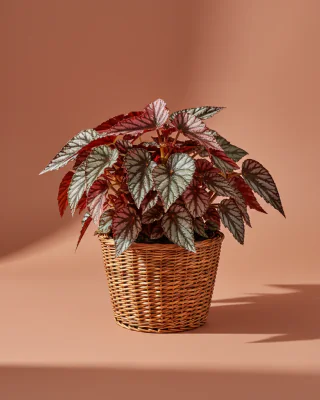
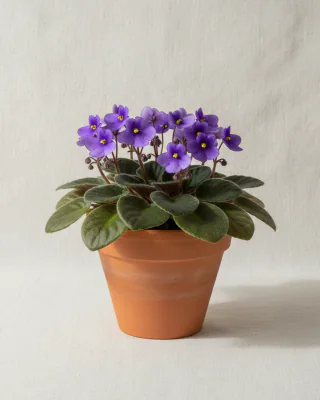
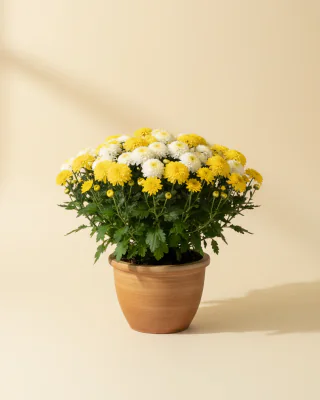
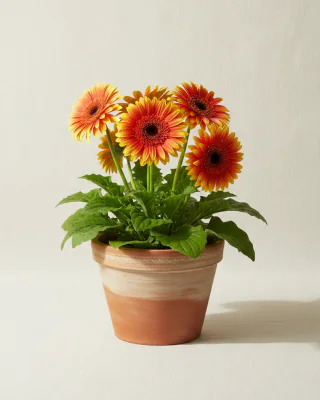
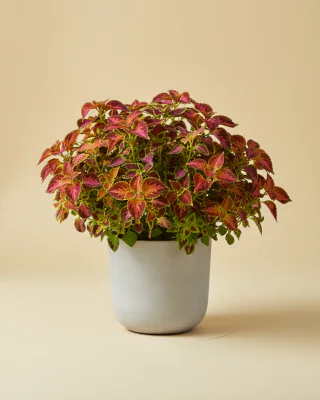
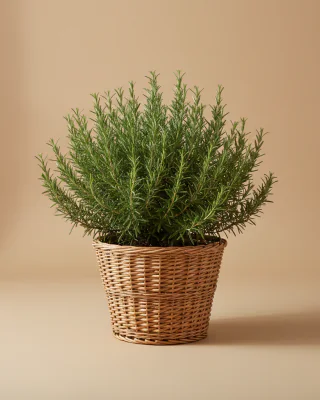
Powdery mildew prefers soft foliage. Rex begonia, African violet, florist chrysanthemum, gerbera daisy and coleus pick it up regularly, and so do windowsill herbs such as rosemary and sage when they stand too close together.
Plants with leathery, firm leaves show it rarely. A rubber plant next to an infected begonia usually stays clean.
The most common way it arrives is on a newly bought plant. Keep every new arrival on its own for two to three weeks and go through the young leaves regularly in that time.
Take off the heavily coated leaves, move the plant somewhere airier and keep checking the young growth. Treatment on its own does not hold, because the still air and the close spacing that produced the infection are still there. Repeat the moment a new patch shows up.
Diluted milk on the leaves is the best known and has long been used against powdery mildew. Baking soda in water with a drop of liquid soap is the second option. Both work only on the spots they wet and do not replace removing the affected leaves.
Powdery mildew sits on top of the leaf and wipes off. Downy mildew sits underneath as a gray felt, and the upper side shows yellow patches between the veins. Powdery mildew likes dry warmth, and downy mildew needs wet leaf tissue.
Yes, to the other plants in the room. The spores dust off when you touch the plant and settle on nearby foliage. Stand an infected plant on its own and carry it steadily, without shaking it.
Take off the heavily coated leaves as long as the plant keeps enough healthy foliage. With a severe case, work in two rounds a few days apart so the plant still has leaf area to live on.
Not powdery mildew, which likes it warm and dry. Downy mildew is a different matter, because it needs leaf tissue that stays wet. Water the soil rather than the foliage in both cases.
Last reviewed: 2026-09-07