What you see
The stem is soft and dark above the soil, the plant droops with a heavy pot, the soil smells sour and the roots are soft and dark.



Most damage on houseplants is care, not disease. Coatings, spots and rot lead three different ways.
A real fungal problem looks like something in its own right. It sits on the tissue as a coating or a mat, it has an edge you can see, and it spreads outward from where it started.
This page sorts the cases that actually turn up in a home and says what to do first with each one.
Look at the affected spot from close up instead of judging the plant as a whole. A coating that wipes off, a sharply bordered spot and an evenly dried edge are three different starting points.
Then turn a few leaves over. Insects, a sticky film or fine webbing underneath move the case to pests, even when the top of the leaf looks diseased.
Nearly every fungal problem indoors needs the same conditions: wet tissue, still air and soil that never dries out. That is why the spot the plant stands in and the way you water are part of the treatment.
Look at
Most likely cause
This is the most common serious case on houseplants. When soil stays wet too long the roots have no air, they die back, and rot organisms take over the weakened tissue.
The stem goes soft and dark right above the soil, the plant droops although the pot is heavy, and the soil smells sour instead of earthy. On succulents and cacti the base turns glassy and gives under light pressure.
Lift the plant out of its pot. Firm, pale roots are healthy. Soft dark roots whose skin slips off between your fingers get cut back into sound tissue.
Then set the plant into fresh open mix in a pot with a drainage hole and water sparingly until new leaves appear. When the stem is soft all the way up, a healthy cutting from the top is the better bet than saving the pot.

Powdery mildew lies on the upper leaf surface as a white, floury coating and smears when you rub it with a finger. It turns up in warm dry air on plants standing close together, and the leaves do not have to be wet for it to start.
Downy mildew sits underneath instead, as a gray to violet mat, while the top of the leaf shows yellowish blocks between the veins. That one needs leaf tissue that stays wet for hours.
In both cases take the worst leaves off and put them in the trash rather than a compost pile. Then stand the plant where air moves around it and water the soil instead of pouring over the foliage.
Gray mold shows as a gray fuzzy mat on spent flowers, soft shoots and damaged spots. The tissue underneath turns brown and mushy.
It starts where dead plant material lies around and the air stands still. Touching it puffs visible dust off the mat, and that dust settles on the plants next to it.
Take spent flowers and dead leaves out of the pot as they appear rather than leaving them there. Cut affected parts back into firm tissue with a clean blade and give the plant a spot with more air movement.
Round to angular spots with a distinct edge, often with a yellow halo and sometimes with tiny dark dots inside, belong to fungi or bacteria on the leaf. They grow over weeks and run together.
What separates them from sun damage is the course they take. A sun mark stays the size it started at and sits on the side facing the window. A disease spot keeps moving and appears on leaves inside the plant as well.
Take the affected leaves off, stop pouring water over the foliage, and let the leaves dry after cleaning before the plant stands close to others again. A plant whose soil is permanently wet collects new spots whatever you put on the leaf.
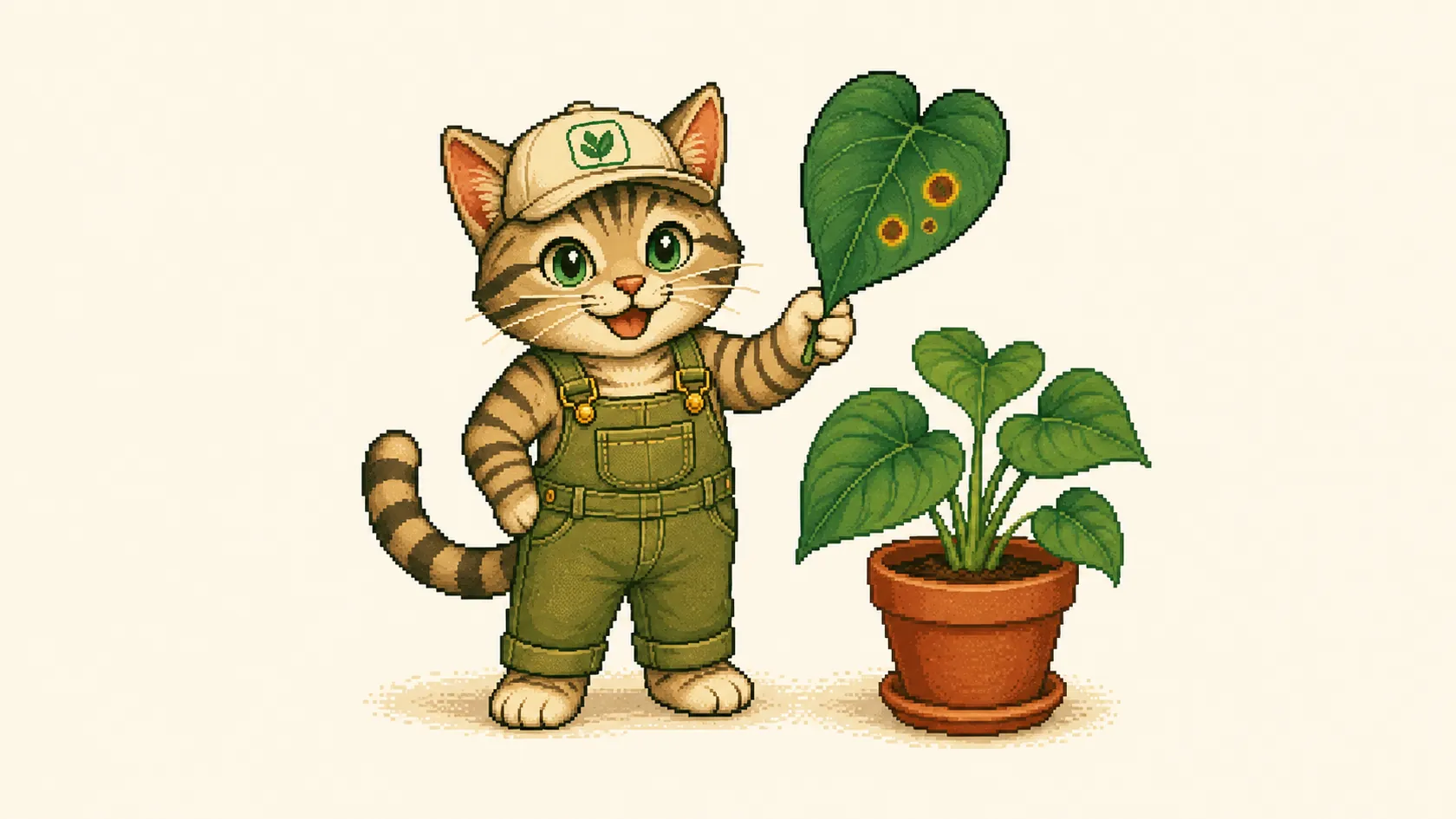
A black sooty film that wipes off with a damp cloth is not an attack on the plant. It grows on the sticky honeydew that sap feeding insects leave behind.
Finding it moves the search to the leaf undersides and the shoot tips above the affected leaves. Aphids, scale insects, mealybugs and whiteflies all produce it.
Wipe the film off so the leaf gets light again, then deal with the insects. As long as they are feeding, the film comes back.
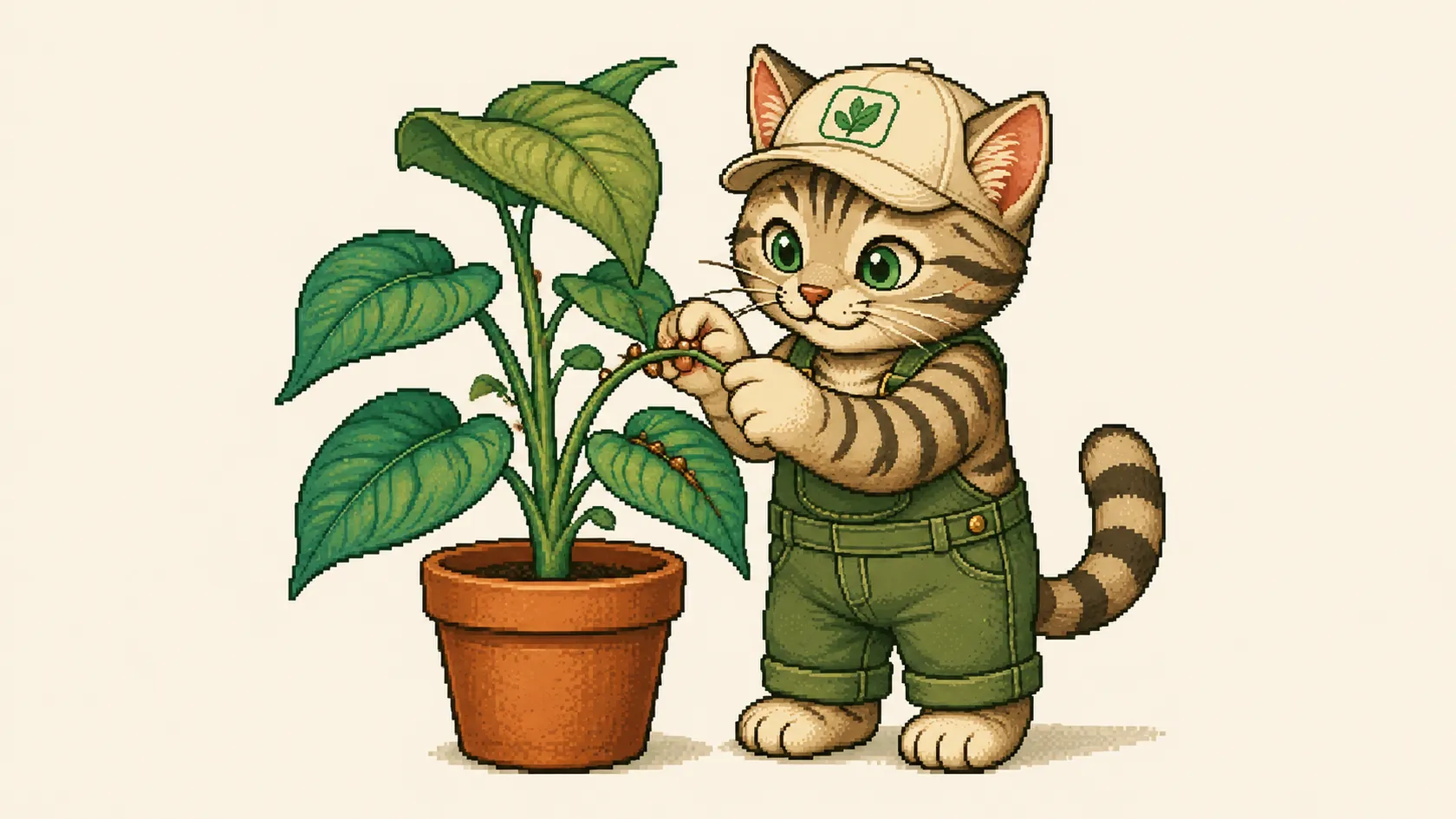
A single spot rarely names the organism behind it. Sun damage, cold damage, salts in the soil and a fungus produce similar pictures, and a firm identification takes a lab rather than an eye.
For a decision in a living room the direction is enough. Coating wipes off or not, edge sharp or diffuse, spreading or static, soil wet or dry.
Change the conditions, remove affected tissue and watch for two or three weeks. When no new patches appear and the plant pushes out clean growth, the case is closed even though the organism never got a name.
Indoors it is rot at the roots and stem base, powdery mildew, gray mold and leaf spots that come up regularly. All of them depend on wet tissue, still air or soil that never dries out.
Care damage stays the size it started at and sits where sun, draft or dryness reached the plant. A disease keeps growing and turns up on leaves inside the plant as well, including ones that were clean last week.
Usually not. White fluffy growth on the surface is harmless mold on organic material, and a white crusty rim comes from minerals and fertilizer salts. Both tell you the soil is too wet and the air around it too still.
Yes, as soon as you see a coating or spreading spots. Spores travel on hands, water and moving air. Keep the plant on its own until two or three weeks pass with no new patches.
No. Put that soil in the trash and wash the pot out with hot water before using it again. Fresh mix costs less than a second loss.
No, dead tissue stays as it is. Success shows in the absence of new patches and in the next leaf opening clean.
Last reviewed: 2026-09-07