



What dust actually costs the plant
Indoor leaves collect household dust, cooking grease in a kitchen and a film from heated air. Outdoors rain clears it, and in a living room it stays until you take it off.
The effect shows up in slow, pale growth on a plant whose care has not changed. Large flat leaves lose the most, because they have the most surface pointed at the light.
Clogged leaves also make a hiding place. Spider mites and scale insects sit undisturbed under a layer of dust and are found weeks later than they need to be.
There is no schedule that fits every home. Run a finger over a leaf, and if it leaves a clean stripe the plant is due.
What you need
A soft cloth, lukewarm water and a bowl cover almost every plant in the house. Microfiber holds dust better than paper towel and does not shed on hairy leaves.
Add a soft brush for leaves you cannot wipe, and a spray bottle for small plants that fit in the sink.
Water at room temperature matters more than most people expect. Cold water on a warm leaf leaves pale marks on african violets and several other thin-leaved plants.
Plain water does the work. A drop of mild dish soap belongs in the bowl only when there is a greasy film or a sticky residue from insects, and it gets rinsed off afterward, because soap left on a leaf can damage the surface.
Wiping leaf by leaf
Support each leaf underneath with your free hand and wipe from the stem outward. Without that support the leaf stalk bends and snaps at the base.
Do both sides. The underside carries less dust and more of what you want to find early, and it is where the leaf pores sit.
Rinse the cloth often and change the water when it turns gray, otherwise you are moving dust from one leaf to the next.
Wipe the leaf stalks and the stems too, and wipe your cloth between two plants so nothing rides across on it.
- Support the leaf from below with one hand.
- Wipe from the stem outward, top side then underside.
- Rinse the cloth often and change gray water.
- Use a separate pass or cloth for a plant you suspect has pests.
Rinsing in the shower or the sink
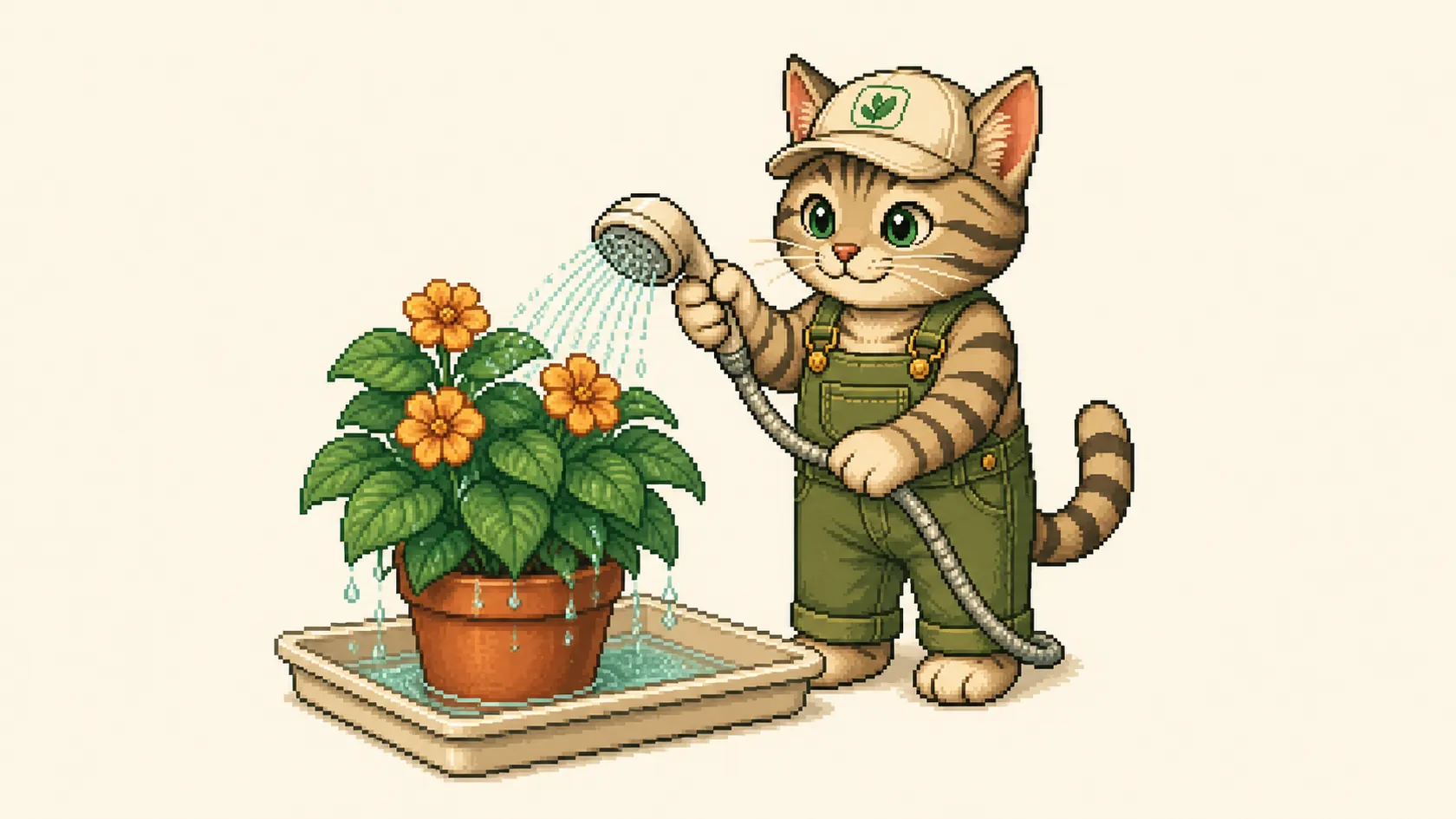
A plant with many small leaves is faster to rinse than to wipe. Pothos, ferns, palms and inch plant take a lukewarm shower on a gentle setting.
Cover the soil with a plastic bag or tip the pot slightly so the mix does not get soaked while you rinse. A pot that comes out of the shower waterlogged has traded one problem for another.
Let the plant drain fully before it goes back on its saucer, and let the leaves dry out of direct sun. Water sitting in the crown of a rosette or in the leaf joints of a soft-stemmed plant can start rot.
Do not put a plant back in a cold spot with wet leaves in winter. Rinse in the morning and give it the day to dry.
Hairy, ribbed and prickly leaves
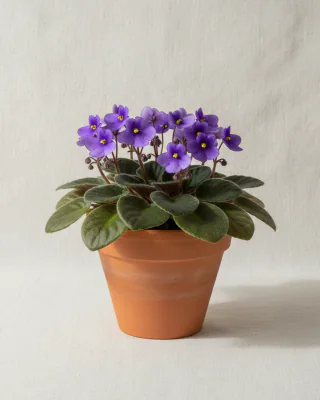
African violets, gynura and other hairy leaves are brushed rather than wiped. A soft brush takes dust out of the hairs, and water left on the surface leaves pale rings.
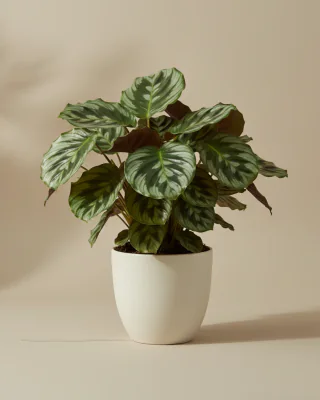
Deeply ribbed leaves such as calathea and prayer plant hold dust in the grooves. Wipe along the groove rather than across it, with the cloth barely damp.
Cacti and other spiny plants get a soft brush or a puff of air. Nothing you wipe with will come back out of the spines in one piece.
Air plants have scaly leaves that take up water directly. They are dunked or rinsed rather than wiped, and then turned upside down to drain so no water stays in the center.
Ferns are the easiest case. Rinse the fronds and leave the fussing alone, because thin fronds tear under a cloth.
What does not belong on a leaf
Leaf shine products coat the surface with a film. They look glossy for a few weeks, and they sit over the pores the leaf breathes through. A clean leaf reflects light on its own.
Milk, mayonnaise, coconut oil and olive oil all show up in the same advice threads. Each leaves a residue that holds dust harder than the dust it replaced, and the oily ones can burn a leaf in sun.
Beer and vinegar do not clean a leaf either. Vinegar is an acid and marks thin leaf tissue.
Skip anything you would have to justify. Lukewarm water and a cloth clean a leaf as well as a home ever needs, and there is nothing left on the surface afterward.
Finish with a check
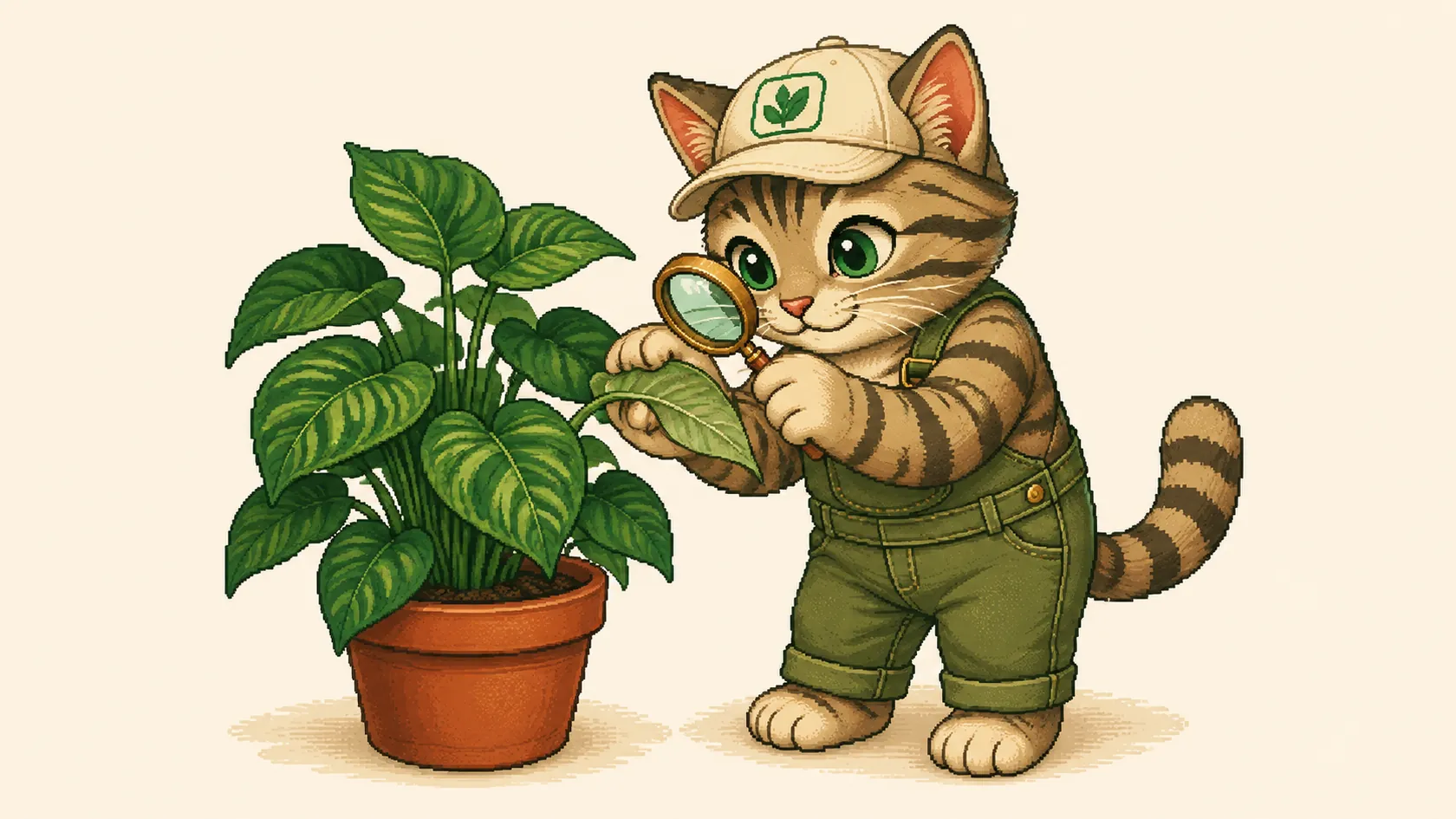
While the plant is in your hands, look at the leaf undersides and the joints in good light. Fine webbing, pale speckling, brown bumps or white cottony dots are what you are looking for.
A sticky film on the leaves or on the surface under the plant means sap feeding insects above, even before you find them.
Take dead leaves out of the pot and off the soil surface at the same time. They are where mold and fungus gnats start.
Then put the plant back in the same spot. Cleaning changes the light it receives, not the care it needs.
Related plants
Keep reading
Common questions
How do you clean houseplant leaves?
With a soft cloth and lukewarm water, supporting each leaf from below and wiping from the stem outward on both sides. Plants with many small leaves are quicker to rinse in the shower on a gentle setting.
How often should you clean plant leaves?
There is no fixed interval, because it depends on the room. Run a finger across a leaf, and clean when it leaves a stripe. Plants in a kitchen and plants with large flat leaves come due sooner.
Can you use dish soap on plant leaves?
Only in a very weak solution and only for greasy films or sticky residue, and rinse it off afterward. Soap left on a leaf can damage the surface, and plain water handles ordinary dust.
Should I use leaf shine spray?
No. It leaves a film over the pores the leaf uses, and the gloss is the product rather than the plant. A leaf wiped with water reflects light by itself.
Can I clean plant leaves with milk or olive oil?
Both leave a residue that collects dust faster than before, and oil on a leaf in direct sun can scorch it. Lukewarm water on a cloth does the job with nothing left behind.
How do you clean fuzzy leaves like african violets?
With a soft dry brush, worked out from the middle of the leaf. Water on hairy leaves leaves pale rings, so keep the cloth for the smooth-leaved plants.
Last reviewed: 2026-09-07