What you see
Dense clusters of small soft insects on the shoot tips, buds and youngest leaves, green, black or pink, with curled new growth above the sticky leaves.



A sticky film is almost always honeydew from insects. Wiping it off without finding them buys a few days.
The sticky leaf is rarely the part that carries the insects. It is usually the leaf under the one they are feeding on, or the shelf under the plant.
Which insect it is changes what you do next. Four of them turn up in homes, they sit in different places and they look nothing alike.
Run a finger over a sticky leaf. Honeydew is clear and slightly tacky, and it dries to a shine that catches dust. Water on a leaf runs off and dries clean.
Look above the sticky spot rather than at it. Insects feed on the undersides of leaves, at the soft shoot tips and in the leaf axils, and the honeydew falls onto the surfaces below them.
Carry the plant to a window and turn the leaves over. A magnifying glass helps where the light is poor. A black film on the sticky patches is a further sign, because it only grows where honeydew has landed.
Look at
Most likely cause
Aphids sit in dense clusters on the softest parts of a plant. The shoot tips, the flower buds and the youngest leaves carry them, and they are large enough to see without a lens.
They are green, black, yellow or pink, pear shaped, and they move slowly when you disturb them. A shoot covered in them curls and stops extending.
Rinse the plant with lukewarm water at the sink or in the shower. Hold the pot at an angle so the soil is not flooded and support the shoot tips with one hand.
Look the plant over again after a few days. Aphids breed fast and a handful left behind rebuilds the colony, so repeat the rinse until a check finds none.
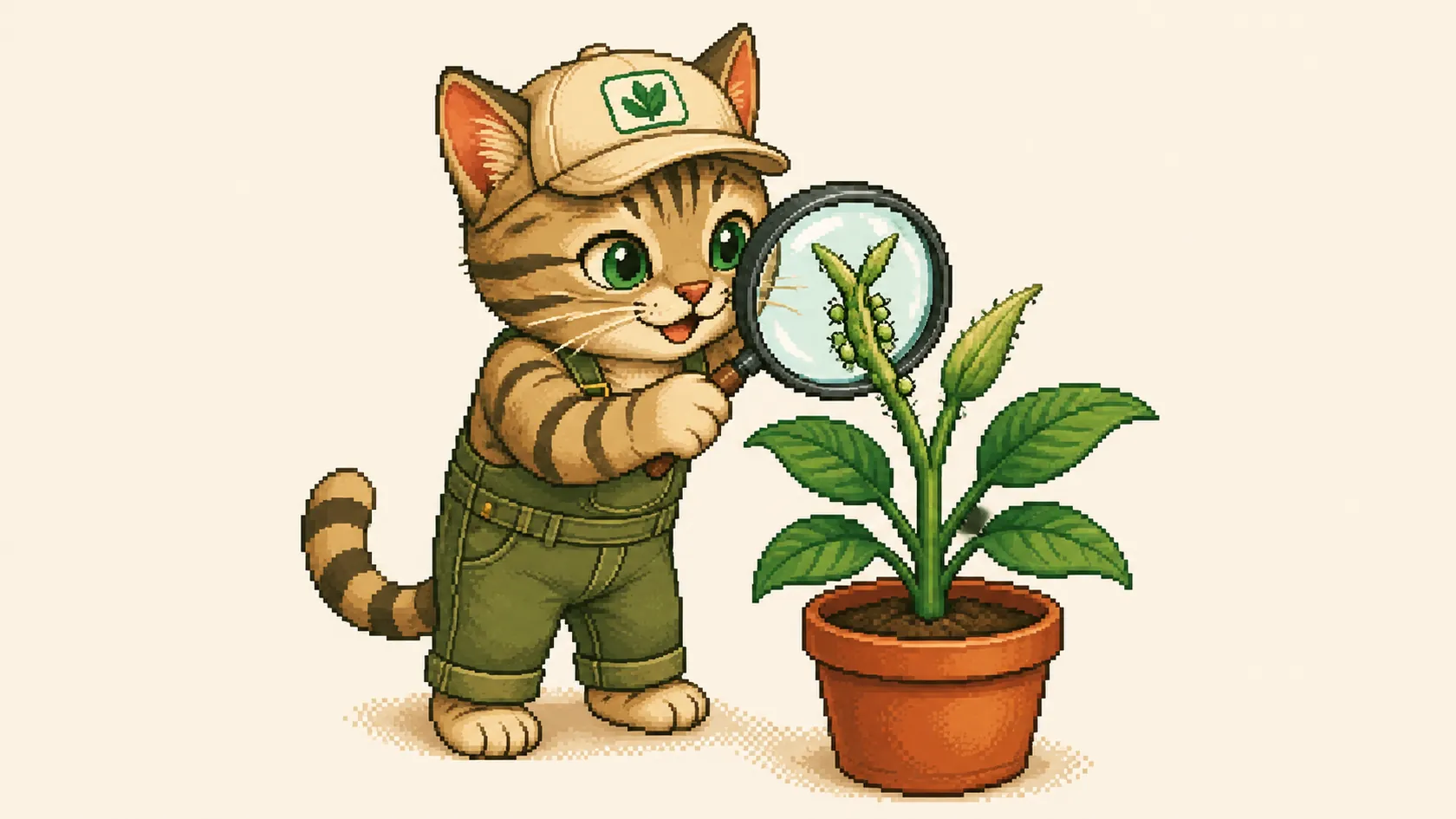
Mealybugs look like small white cotton fluffs. They sit where a leaf meets the stem, along the midrib under a leaf and down in the crown of the plant, and they keep out of the light.
Pull one fluff apart with a fingertip. Under the wax is a soft oval insect. That waxy coat is why water runs off them and why a rinse alone leaves them behind.
Dab each one off with a cotton bud, working through the plant axil by axil. Then check the pot rim and the top of the soil, where they also sit.
Go over the plant again every week for a while. Eggs tucked into crevices hatch after you think the job is done.
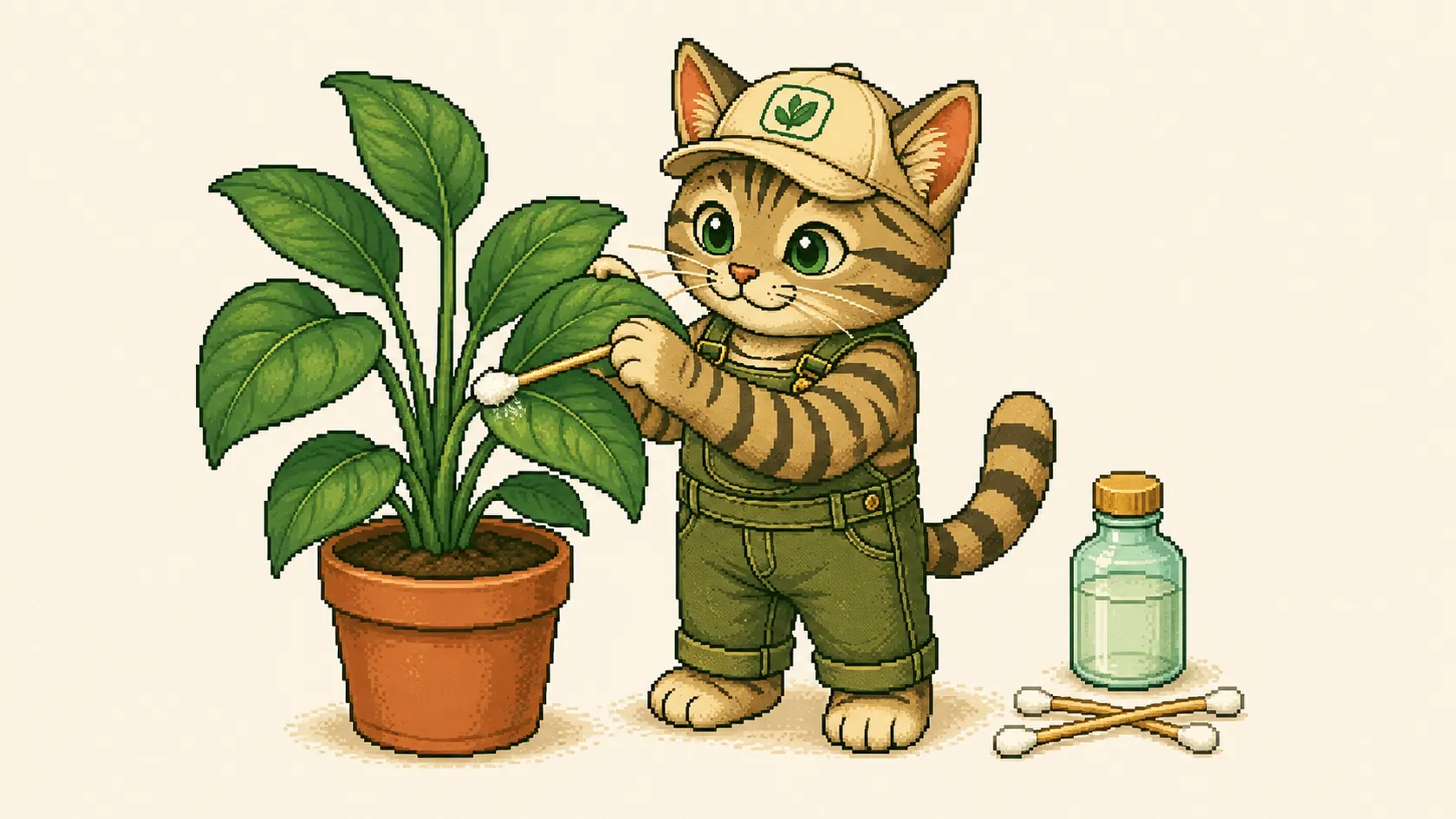
Scale insects look like small brown or tan bumps rather than animals. They sit along the stems, on the leaf stalks and on the veins under the leaves, and they stay still once they have settled.
Run a fingernail along a stem. A bump that scrapes off and leaves a damp mark is a scale insect. A bump that is part of the stem stays where it is.
Scrape them off one at a time, then wipe the stems and the undersides of the leaves with a soft damp cloth. A shoot that is covered in them is faster to cut off than to clean.
Young scale insects crawl before they settle, which is how the plants standing nearby pick them up. Keep the plant on its own until several checks come back clean.
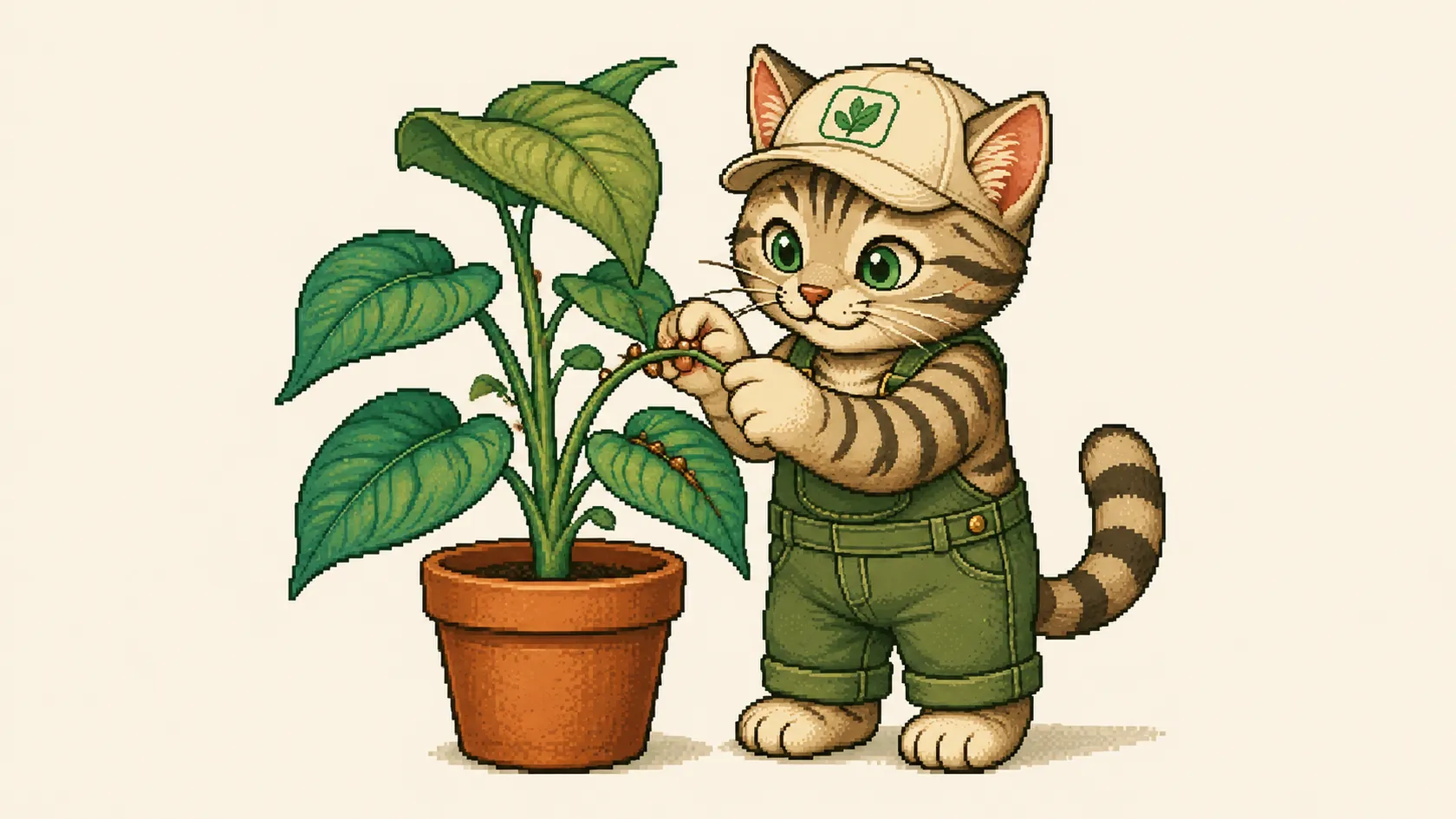
Tap a shoot with one finger. A small cloud of tiny white flies rising from the leaf undersides and settling again is the sign, and nothing else in a home behaves that way.
The adults are only the visible part. The young sit still on the undersides as flat pale scales and produce most of the honeydew.
Rinse the undersides of the leaves with lukewarm water and hang a yellow sticky card beside the plant to catch the adults. The card also shows you whether the numbers are falling.
Whiteflies move between plants easily. Check every plant on the same shelf rather than the sticky one alone.
Look up before you treat anything. A plant on a higher shelf with an infestation drips honeydew onto everything under it, and the leaves below turn sticky without carrying a single insect.
The same thing happens on a windowsill under a hanging basket. Move the lower plant, wipe it clean and watch whether the film comes back.
A few plants leak sticky sap of their own from damaged tissue. A broken leaf stalk, a fresh cut or a snapped stem can leave a sticky bead near the wound, and that stays local instead of coating whole leaves.
A soft damp cloth takes the film off in a few minutes and the plant looks fixed. The insects coat it again within days, so cleaning first tells you only how fast they are working.
Black sooty mold grows on honeydew and lives on the sugar rather than on the leaf. It wipes off with a damp cloth once the insects are gone, and it stops coming back when the honeydew stops.
Clean the windowsill, the shelf and the floor around the plant at the same time. Honeydew there feeds the same mold and makes it harder to tell whether a new film has appeared.
Search the plant properly every week until several checks in a row come back empty. New growth with no sticky leaf under it is the sign that it is over.
The sticky layer is honeydew, the sugar that sap feeding insects pass out as they feed. It lands on the leaves, the stems and the floor below them. A houseplant almost never produces a sticky film on its own.
Clear beads on the upper surface of a leaf are honeydew that fell from something higher up, either another leaf on the same plant or a plant on a shelf above. Search above the drops rather than the leaf carrying them.
The film itself does little. The insects making it drain sap, which slows growth and distorts new leaves, and the sooty mold that grows on the honeydew shades the leaf surface. Removing the insects settles all three.
A weak soap solution is an established home treatment, and it can damage the leaves of hairy, waxy or thin-leaved plants. Test one leaf and wait a day before you treat the whole plant, then rinse with clean water. It works only where it actually touches an insect.
Rarely. Some plants leak sticky sap from a fresh wound, and it stays as a bead near the damage. A film spread across whole leaves and the surfaces underneath is honeydew from insects.
Keep the treated plant away from the others until several weekly checks find nothing. Look over every new plant before it joins the shelf. Turn a few leaves over each time you water, because an infestation starts on the undersides.
Last reviewed: 2026-09-07