



There are places where a spray bottle earns its keep, and leaves that should never get one. Both are worth knowing before you make misting a habit.
What a burst of mist actually does
Sprayed water sits on the leaf surface and turns to vapor. During those minutes the air touching the leaf is more humid than the room air around it.
Then the room takes it back. Air moves through a room constantly, and one pot cannot hold a pocket of damp air against a whole heated space. Once the droplets are gone the leaf is back to whatever the room offers.
That is the honest limit. Misting is a short local change at the leaf, not a way to change the air your plant lives in.
It is also not watering. The soil under a misted plant stays exactly as dry as it was, so keep checking it the way you would otherwise.
What raises humidity for longer
Standing plants together is the simplest change. Each plant releases water vapor through its leaves, and a group holds a slightly damper pocket of air between the pots than a single plant on its own.
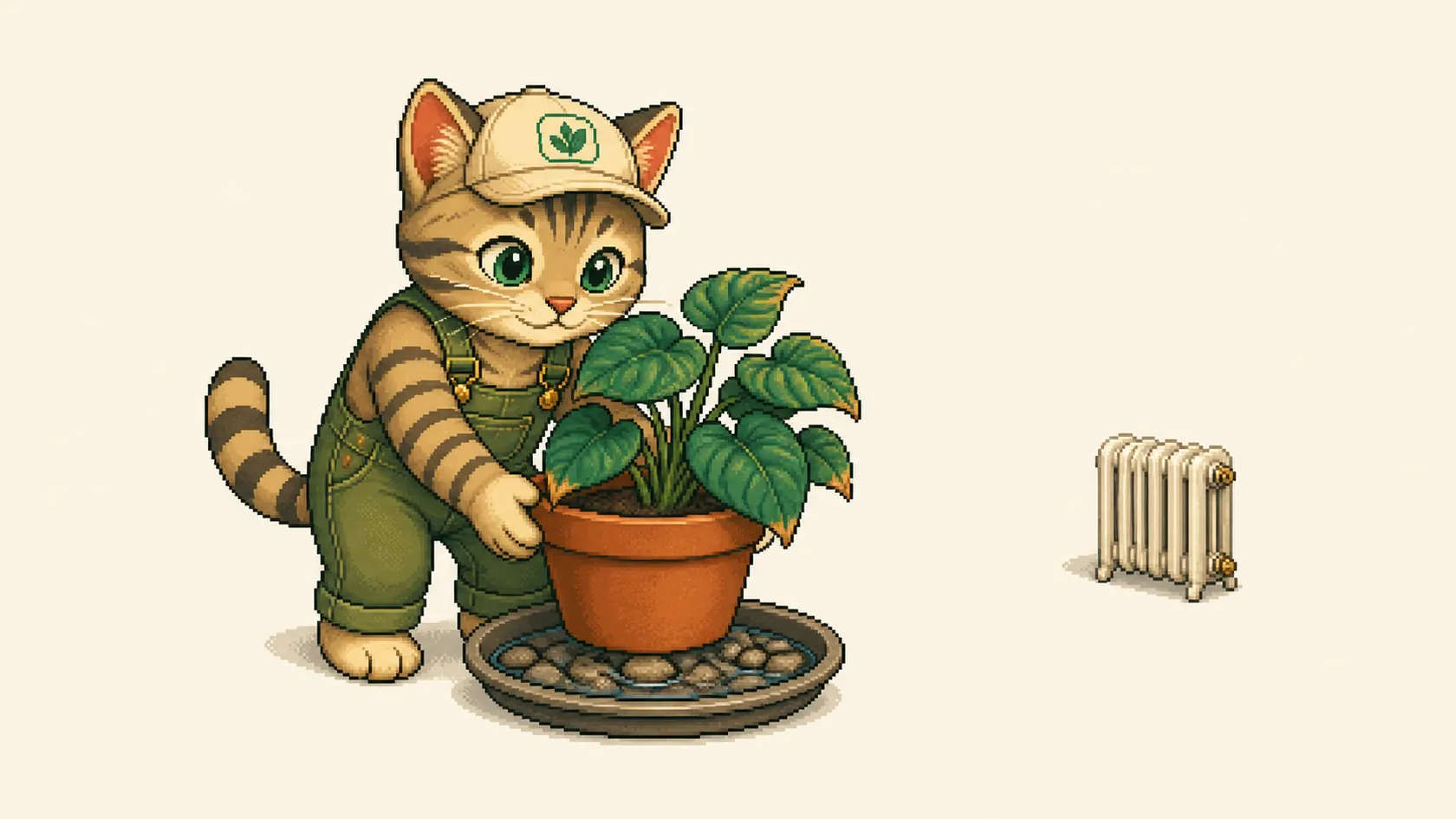
A pebble tray works underneath the pot. Fill a shallow tray with pebbles, add water to just below the top of the stones, and set the pot on them so the base stays clear of the water. The water evaporates upward past the leaves and the roots never sit in it.
A room humidifier is the only one of these that changes the whole room rather than the space around a plant. It also needs cleaning, because a neglected tank puts things into the air you do not want there.
Distance from the heat source matters as much as anything you add. A pot directly above a radiator or in the path of a heating vent sits in a dry updraft all winter. Moving it a couple of feet away does more than a daily spray.
Where misting is worth doing
On dust. A fine spray loosens the film that settles on smooth leaves, and a soft cloth then takes it off. Large leaves lose real light under dust, so this one is worth the minute it takes.
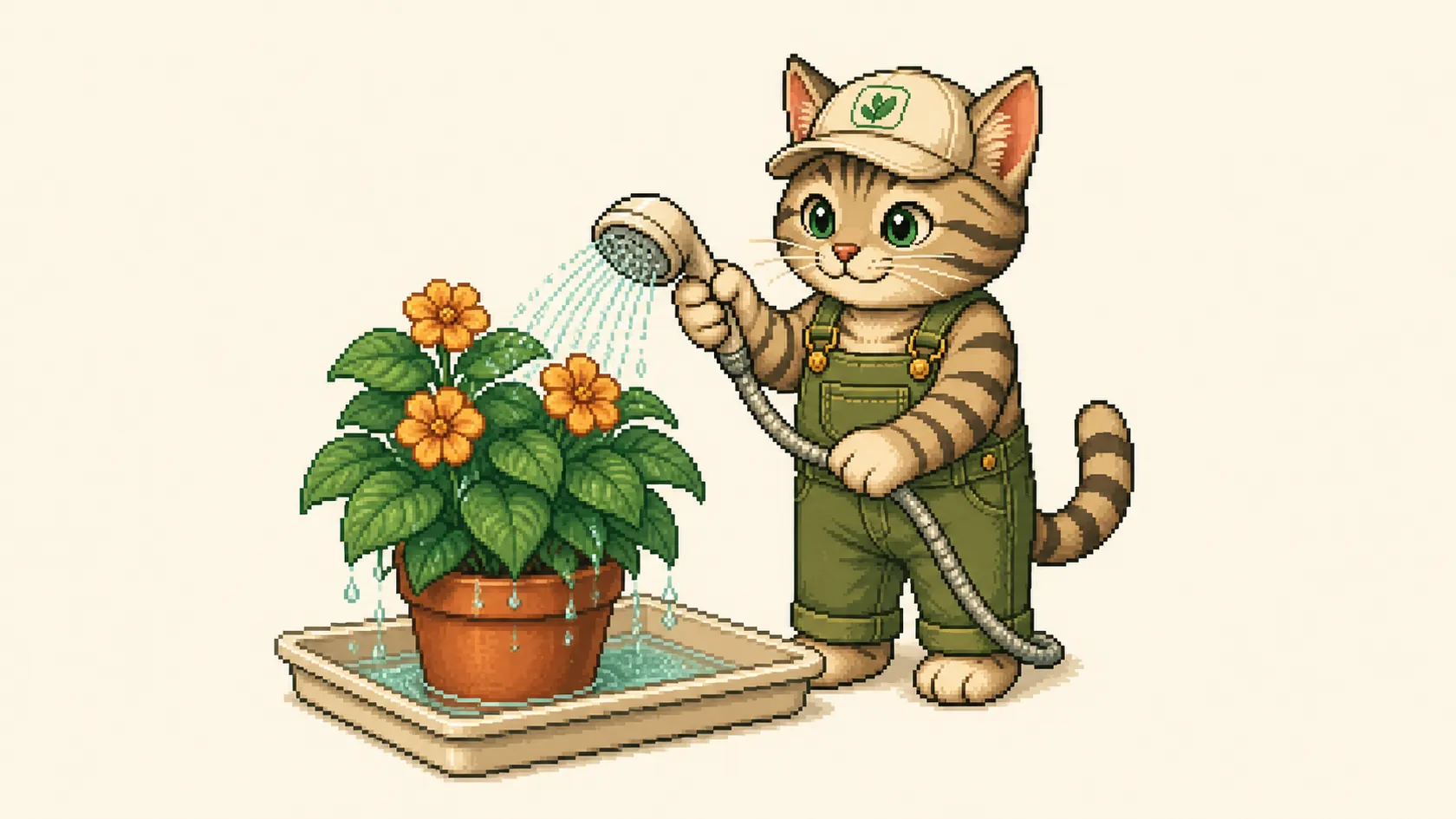
For a proper clean, a lukewarm rinse in the shower does more than a spray bottle. It reaches the leaf undersides, where pests start, and it washes the dust away instead of moving it around.
On aerial roots. Climbers that send roots out along the stem take up water through them, and a moss pole that gets sprayed stays damp enough for those roots to grip and grow into it.
On cuttings under cover. A cutting with no roots yet loses water through its leaves and cannot replace it. Inside a covered box or a bag, misting keeps that small volume of air damp, and the cover is what makes it last.
Notice what these three have in common. The mist either does a mechanical job, or it lands on a structure that holds water, or it sits inside an enclosure. On an open leaf in an open room it simply evaporates.
Leaves and flowers that should stay dry
Hairy and velvety leaves hold droplets against the surface instead of letting them run off. African violet leaves and many begonias mark where the water sat, and the mark does not fade.
Rosettes and leaf axils collect water at the base, where it cannot dry. On a plant with a tight crown, water standing in the middle turns the growing point soft and the plant rots from there.
Flowers spot. Droplets on orchid blooms and on cyclamen petals leave brown marks and shorten how long the flower lasts. Aim below the flowers or leave a flowering plant alone.
Still air makes all of this worse. Leaves that stay wet for hours in a closed room are where fungal spots and mildew get started. If a room has no air movement at all, misting is the wrong tool for it.
How to mist without leaving water sitting
Spray in the morning. The leaves then have the whole day to dry, and nothing goes into the night wet.
Use a fine nozzle from a distance so the leaves get a haze rather than running drops. Anything that runs down the stem ends up in the axils.
Use room-temperature water. Cold water on warm leaves marks some species, and very hard tap water leaves pale limescale spots as it dries.
Look at the plant afterward. If drops are still sitting on the leaves ten minutes later, you sprayed too much, and a quick wipe with a soft cloth fixes it.
Brown tips are not proof of dry air
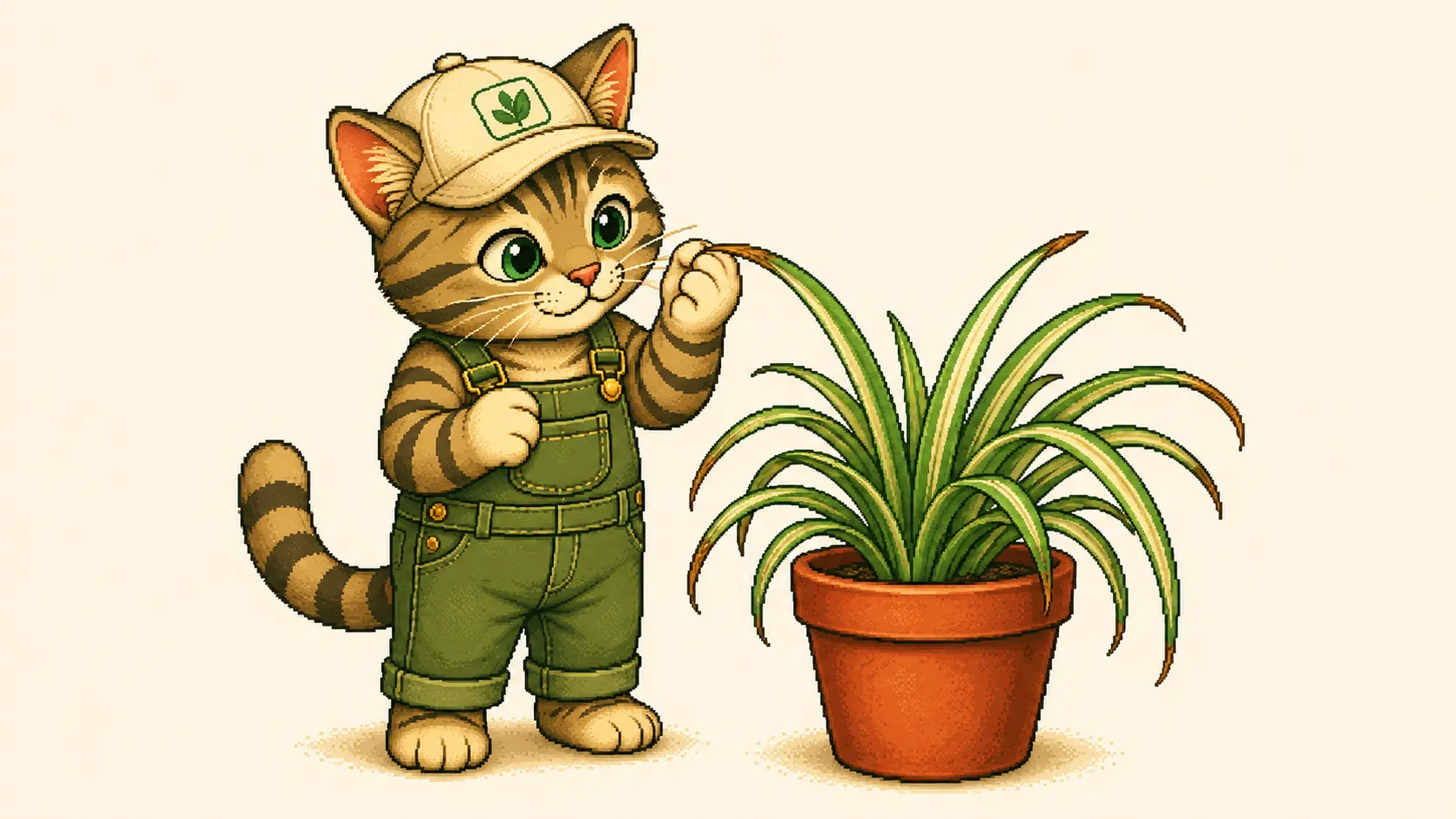
Dry air is one cause of brown leaf tips. It is not the only one, and it is not the most common one in a normally heated home.
Irregular watering does the same thing. A root ball that dries out hard and then gets soaked leaves the tips, which are furthest from the roots, short of water each time.
So does salt build-up from fertilizer and hard water. A white crust on the soil surface or the pot rim points at that, and flushing the pot through with plenty of water helps more than a spray bottle.
Check the soil before you blame the air. Push a finger an inch or two down and see what you find there. If the answer is dry soil and a heavy feeding routine, misting will not touch the problem.
Related plants
Keep reading
Common questions
Does misting plants help?
It helps for a few minutes at the leaf and then the effect is gone. For dust, aerial roots and cuttings under a cover it does a real job. For raising the humidity a plant lives in, grouping pots, a pebble tray or a humidifier do far more.
Should you mist indoor plants every day?
Daily misting adds work without adding much. If the air is genuinely dry, change the setup instead by moving the pot away from the radiator and grouping it with others. Keep the spray bottle for cleaning leaves and for damping a moss pole.
Which plants should not be misted?
Anything with hairy or velvety leaves, such as African violets and many begonias, because the droplets mark the surface. Also plants with a tight crown or deep leaf axils where water collects, and any plant in flower.
Is misting the same as watering?
No. Mist lands on the leaves and evaporates, and almost none of it reaches the roots. The soil stays as dry as it was, so keep checking it with a finger an inch or two down.
Does misting keep spider mites away?
Spider mites do better in dry conditions, so damp leaves are less inviting to them. A short spray does not last long enough to count as control. Rinsing the plant, including the leaf undersides, removes far more of them.
What time of day should you mist plants?
In the morning, so the leaves dry during the day. Wet leaves overnight in a still room are what fungal spots need. If the plant is still visibly wet after ten minutes, wipe it with a soft cloth.
Last reviewed: 2026-09-07