



What a humidity tray does and does not do
Water evaporating from an open surface raises humidity in the air just above it. Set a plant over that surface and the leaves sit in slightly damper air than the rest of the room.
The effect stays local. A single tray does not change the humidity of a room, and in a heated room with the air moving it thins out a foot or two away from the plant.
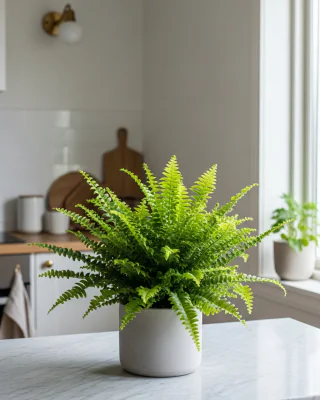
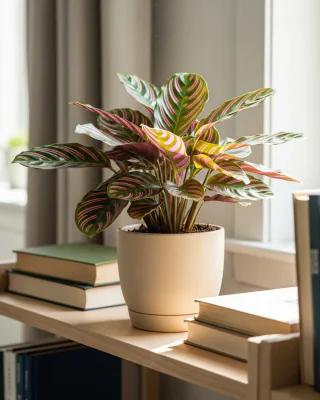
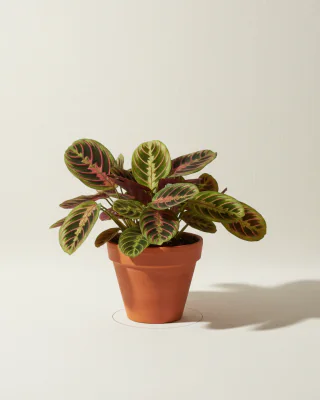
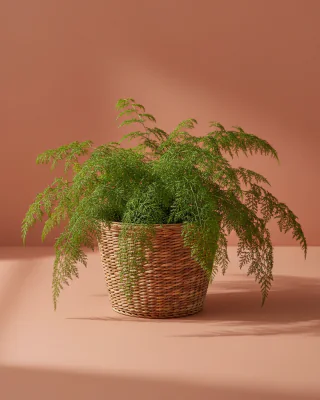
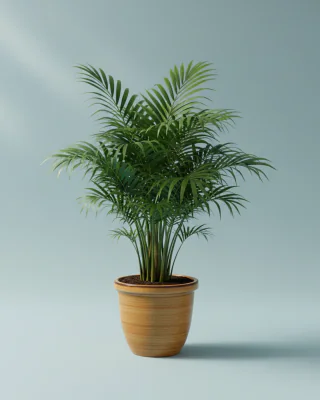
That local pocket is still where the leaves are, which is why the tray helps most with the plants that show dry air first. Ferns, calatheas, prayer plants and thin-leaved palms are the usual candidates.
It does not fix brown tips that come from something else. Salts in the soil, uneven watering and a spot above a radiator produce the same tips, and a tray under the pot changes none of them.
What you need
A shallow waterproof tray, wider than the pot. A plant saucer one or two sizes up, a baking dish or a boot tray all work.
Something to hold the pot above the water. Pebbles, gravel, expanded clay pebbles or glass beads all do it, and expanded clay is lighter to lift when the tray is full.
Enough of it to fill the tray about an inch deep, which is usually more than people buy the first time.
Water, and nothing else. Fertilizer in the tray only grows algae, and it never reaches the roots.
How to build it
The whole build takes a few minutes and the only detail that matters is the water line.
- Rinse the pebbles first, so the tray does not go cloudy in a week.
- Spread them across the tray in an even layer about an inch deep.
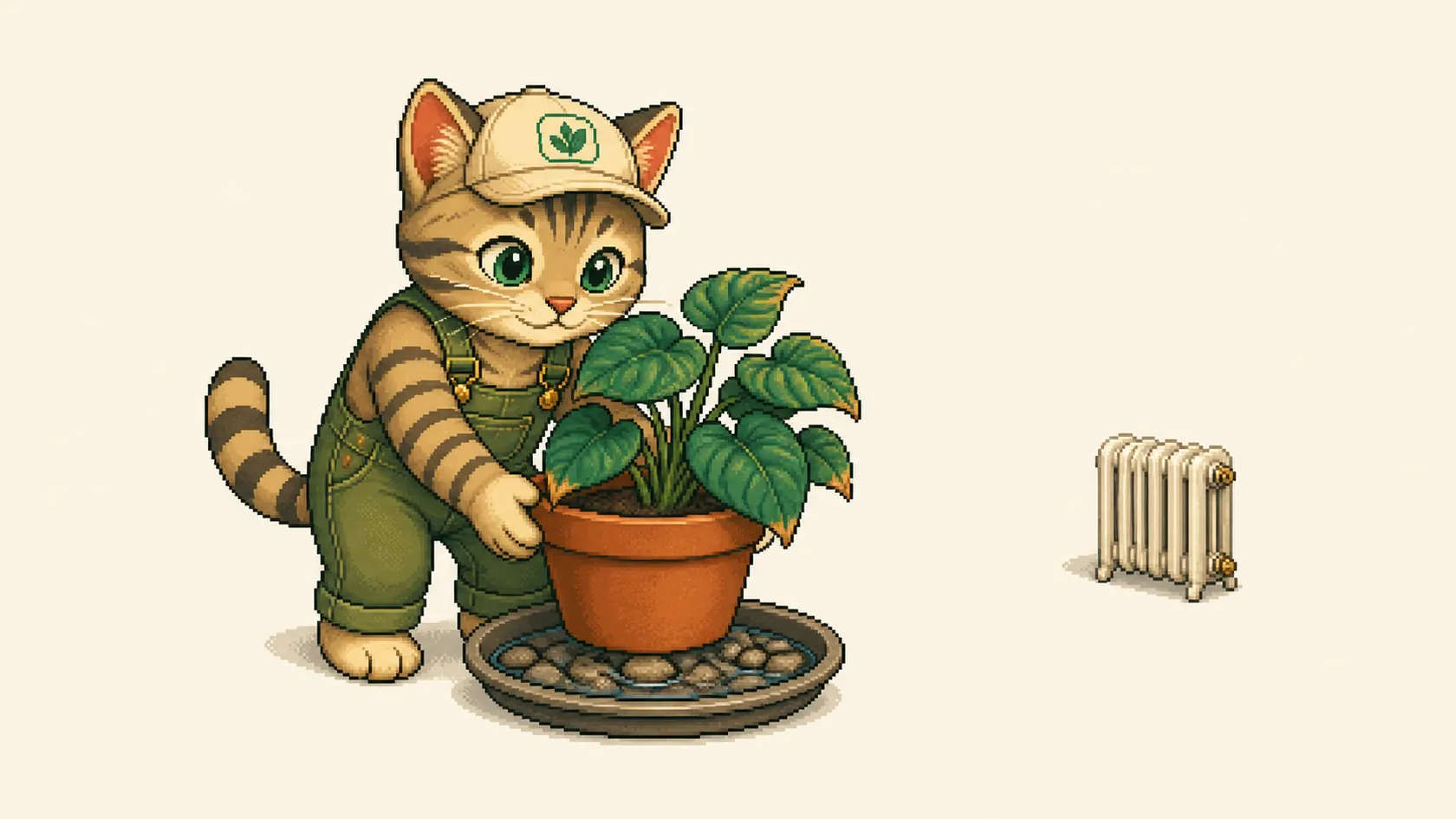
- Pour in water until it stands just below the top of the pebbles.
- Set the pot on top and check that its base is clear of the water.
- Water the plant as usual, over the sink, and let it drain before it goes back on the tray.
Where to put it
Put the tray where the plant already stands well. A humidity tray is not a reason to move a plant into worse light.
Keep it away from a radiator and out of a draft. Warm dry air moving past the plant carries the damp pocket off as fast as it forms.
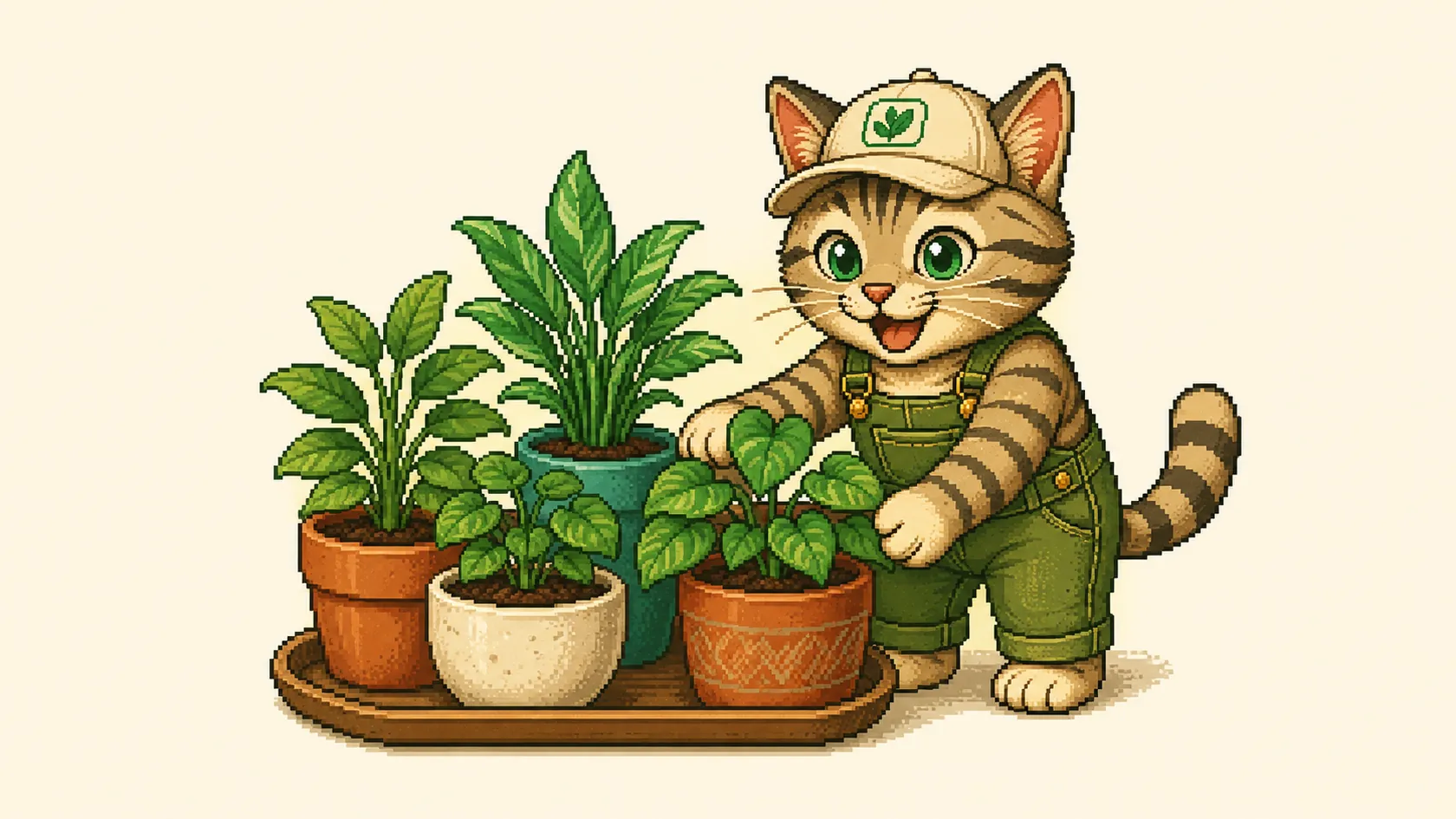
Group plants on one larger tray when you can. Several plants together release water from their own leaves as well, and the shared pocket of air holds better than a single pot does.
Do not stand a pot in the tray water to save watering. A pot with its drainage hole under water has no air at the roots, and that is how root rot starts.
Keeping it clean
Top the water up when the level drops below the pebbles. In a heated room that is every few days, and in summer far less often.
Rinse the pebbles and the tray every few weeks. Standing water grows algae and leaves a mineral crust, and hard water builds a white rim on the tray.
Wipe the underside of the pot when you lift it. Anything growing on the tray belongs there rather than against the pot base.
Standing water indoors can breed insects in warm weather. Rinsing the tray on a regular schedule is what prevents it, and a lidless tray you never refresh is the one that causes complaints.
What works better in a dry room
Grouping is the cheapest step and often the most noticeable. Plants standing close together share the water their own leaves give off.
A cooler room raises humidity by itself, because the same amount of water in cooler air reads as higher relative humidity. Moving a difficult plant out of the warmest room does more than any tray.
A room humidifier is the reliable option when the air is dry all winter and you want the whole room changed rather than the inch above a tray.
Misting is not on this list. It wets the leaf for a few minutes, then the air is what it was, and water sitting in leaf joints overnight invites fungal spots.
Choosing plants that take dry air is the option with the least maintenance. In a room that runs dry all winter, that decision outlasts every accessory.
Related plants
Keep reading
Common questions
How do you make a humidity tray for plants?
Fill a shallow waterproof tray with an inch of rinsed pebbles, add water until it sits just below the top of the pebbles, and stand the pot on top. The base of the pot has to stay clear of the water.
Do humidity trays actually work?
They raise humidity in the air right above the tray, where the leaves are, and they do not change the humidity of the room. Expect a small local effect rather than a different climate.
Can the pot sit in the water?
No. A pot standing in water has no air at the roots and the soil stays wet from below, which leads to root rot. The pebbles are there to hold the pot above the water line.
How often do you refill a humidity tray?
Whenever the water drops below the top of the pebbles, which in a heated room is every few days. Rinse the tray and the pebbles every few weeks so algae and mineral crust do not build up.
Is a humidity tray better than misting?
Yes, because it keeps working between visits. Misting wets the leaf for a few minutes and leaves the air unchanged, and water left in leaf joints overnight can start fungal spots.
Which plants benefit most from a humidity tray?
The ones that show dry air first, such as ferns, calatheas, prayer plants and thin-leaved palms. Succulents, cacti and thick-leaved plants gain nothing from one.
Last reviewed: 2026-09-07