Watermelon peperomia care guide
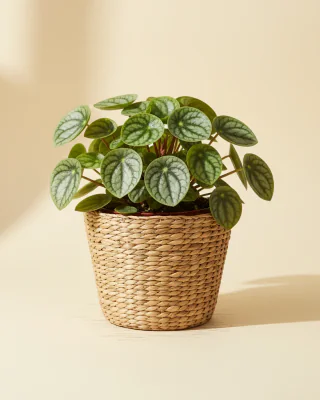
Peperomia argyreia
Watermelon peperomia likes bright, indirect light. Let the soil surface dry to the touch before watering, and water less in winter. Keep it away from cold drafts and avoid leaving the soil soggy.
 Not sure it’s this plant?Check yours with a photo, free
At a glance
- Light
- Bright, indirect light
- Water
- Let the surface dry before watering
- Climate
- 18–30 °C (64–86 °F)
- Humidity
- Normal household humidity
- Pet safety
- Non-toxic to cats and dogs
Striped leaves and a compact shape
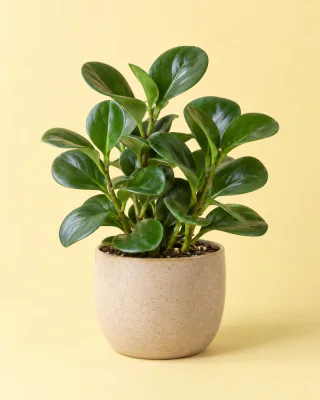
Watermelon peperomia is a small tropical plant from Brazil. Its round, waxy leaves have silver-green bands and dark green stripes that resemble a watermelon rind. The leaves sit on red stems, and the plant stays compact indoors.
It grows slowly and is comfortable slightly snug in its pot, so it does not need frequent repotting. Give it bright, indirect light, keep it out of cold drafts, and let the top of the soil dry before you water again.
Let the soil surface dry
Check the soil with a finger. When the surface feels dry to the touch, water the pot, then let excess water drain away. The soil should not stay soggy, since too much water can rot the roots.
Water less often in winter. Very dry soil can also make the plant wilt, so check it now and then rather than leaving it dry for a long time.
Light and placement
Choose a bright spot with indirect light. Direct sun can scorch the leaves. The plant can tolerate lower light, but bright indirect light suits it best.
Feeding
Feed at half strength every two weeks from April to October.
Temperature & humidity
Climate18–30 °C (64–86 °F)
Keep it between 18 and 30 °C (64–86 °F), and protect it from cold drafts.
Peperomias adapt to the humidity in most homes. If your room is very dry, a room humidifier can help. Avoid wetting the leaves, and keep some air moving around the plant.
Toxic to pets?
No. Pet-safe.
The ASPCA lists watermelon peperomia (Peperomia argyreia) as non-toxic to cats and dogs.
Pet-safety information in the JungleBook uses ASPCA reference data where available. It is reference information, not veterinary advice.
Common questions
How often should I water watermelon peperomia?
Check the soil rather than following a fixed calendar. Water when the surface feels dry to the touch, let excess drain, and water less often in winter.
Why are the leaves drooping?
Both very dry soil and overwatering can make this plant wilt. Check the soil first. If it is soggy, let it dry and make sure water can drain from the pot.
What light does watermelon peperomia need?
Give it bright, indirect light. Direct sun can scorch the leaves, while the plant can tolerate lower light.
Is watermelon peperomia safe for cats and dogs?
Yes. The ASPCA lists Peperomia argyreia as non-toxic to cats and dogs.
Sources
- This guide follows established plant-care guidance and official ASPCA pet-safety references. How we verify our plant data →
- Sources: NC State Extension’s watermelon peperomia profile supports the striped leaves, compact size, bright indirect light, watering when the soil surface is dry, reduced winter watering, avoiding very dry or soggy soil and cold drafts, infrequent repotting, and the plant’s non-toxicity to cats and dogs. The NC State Extension peperomia guide supports tolerance of typical household humidity, protection from cold drafts, slow growth, infrequent repotting, avoiding wet leaves, and air circulation. The ASPCA watermelon peperomia record lists it as non-toxic to cats and dogs. The RHS peperomia growing guide recommends feeding at half strength every two weeks from April to October and keeping the plant between 18 and 30 °C (64–86 °F).
Last reviewed: