



So the question is not which water is better in principle. It is whether your water is hard enough, and your plants sensitive enough, for the difference to show up on a leaf.
What actually separates the two
Rain has fallen through air rather than through rock, so it arrives with very few dissolved minerals. Tap water picks up calcium and magnesium from the ground it moved through, plus whatever the utility adds to keep it safe to drink.
Those minerals do not disappear when the water does. Every watering leaves them in the mix, and over a couple of years they slowly raise the pH around the roots. In an alkaline mix a plant takes up iron less easily, and you see that in young leaves going pale while the veins stay green.
The second difference is temperature. Rain out of a barrel in winter is cold enough to stall tropical roots for hours, and water straight from the cold tap does the same. Both want to sit in the room until they are no longer cold to the hand.
Rainwater brings one thing tap water does not, which is whatever it touched on the way down. Roof grit, algae in a warm barrel and bird droppings are all part of the deal, and they are the reason collection method matters more than collection itself.
When tap water is the right answer
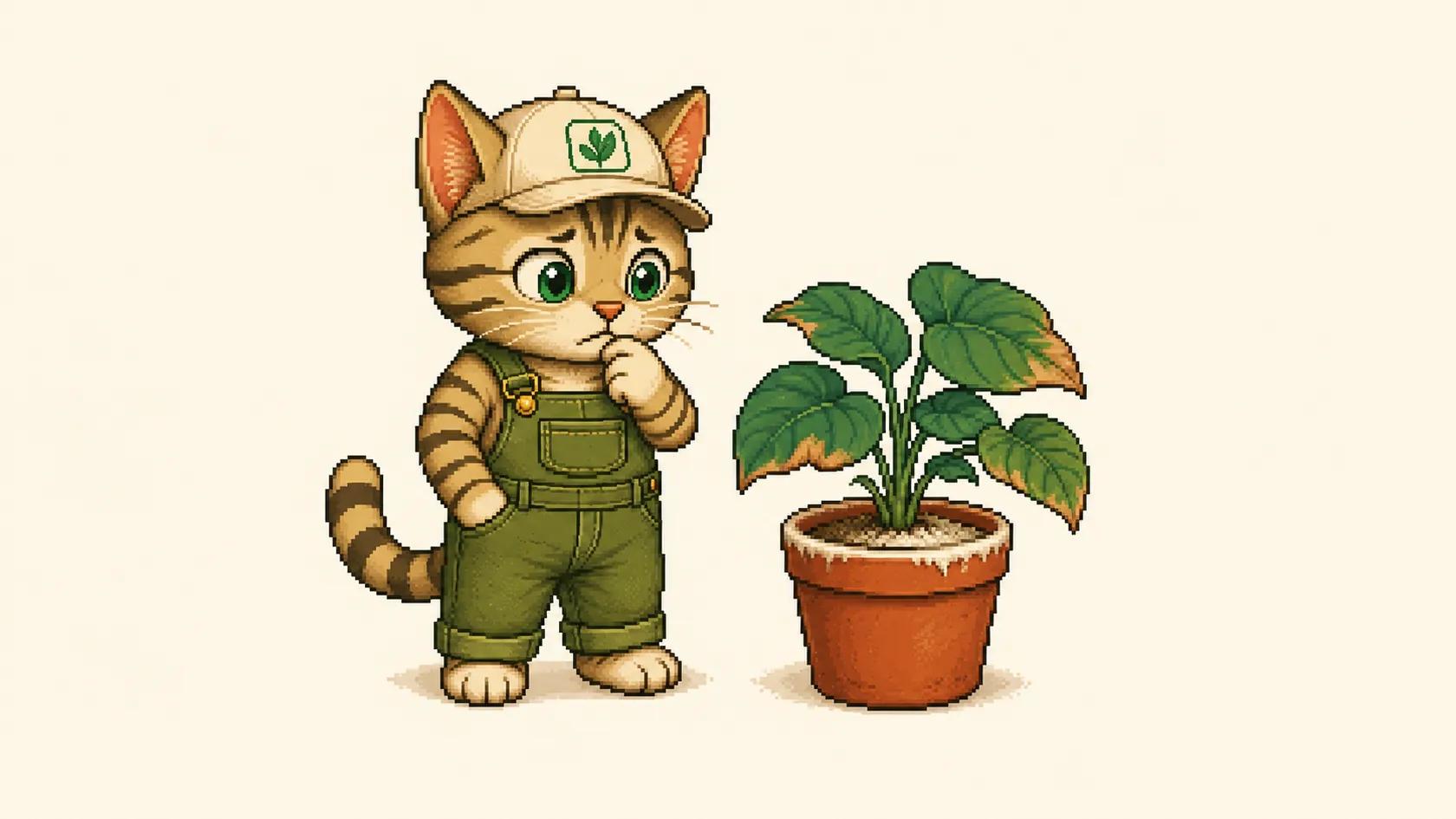
Pothos, philodendrons, monstera, snake plants, spider plants, succulents and most other common houseplants take ordinary tap water without complaint. If your leaves look right and you see no white crust building up, there is nothing to fix.
Soft municipal water makes the whole question moot. Your utility publishes a water quality report with the hardness in it, and that number varies so much from city to city that no general rule about tap water can be true everywhere.
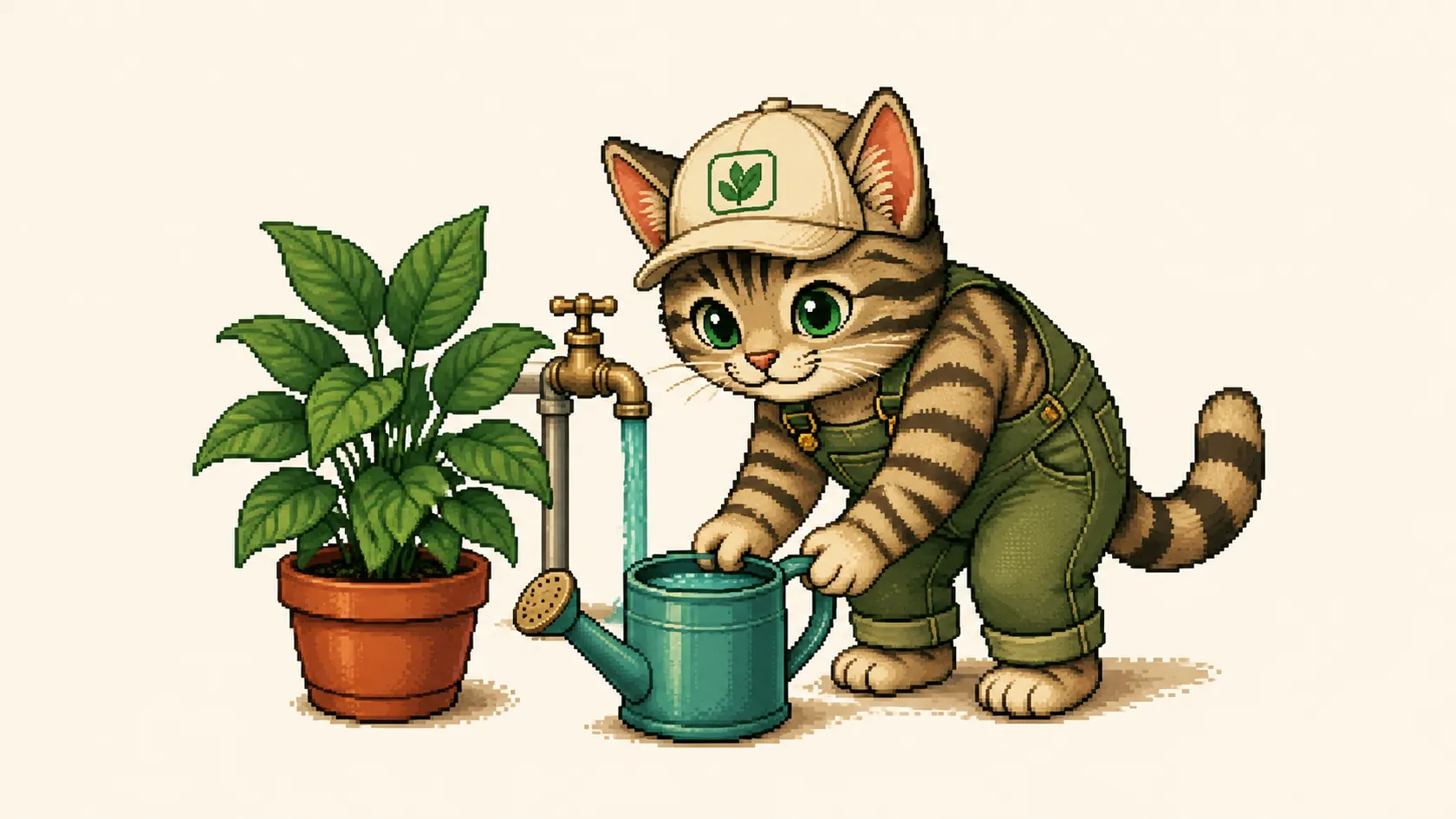
Thorough watering keeps mineral buildup in check on its own. Water until it runs out of the drainage hole, and a share of the accumulated salts leaves with it. Small daily splashes do the opposite, because the water evaporates and the minerals stay.
Repotting resets the count. Fresh mix every year or two removes the salts that have collected, which is often all a plant on hard water needs.
Which plants notice the difference
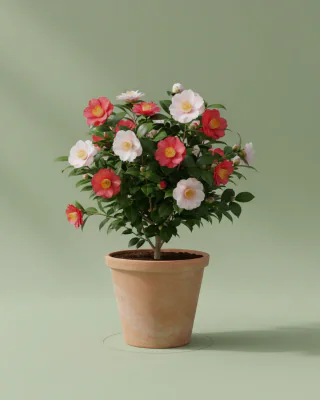
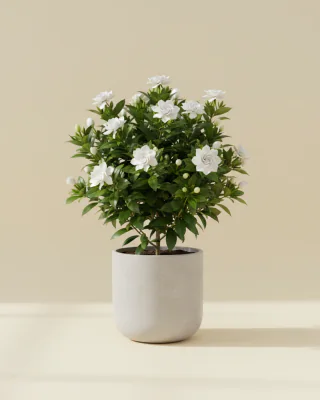
Azalea, camellia and gardenia grow in acid soil in the wild and go pale between the veins on hard water fairly quickly. They are the classic case for collecting rain.
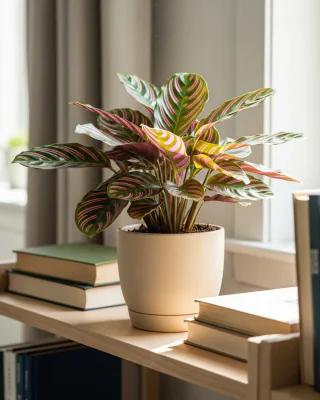
Calatheas, prayer plants and other thin-leaved tropicals answer hard water with dry brown leaf edges. Dry indoor air produces the same edges, so on those plants the two causes are hard to tell apart and it is worth changing only one thing at a time.
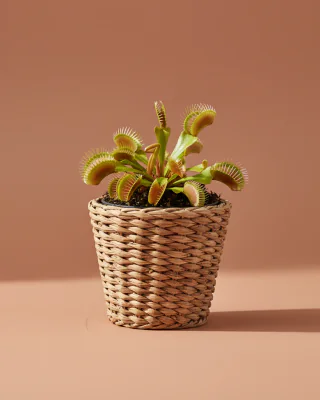
Carnivorous plants are the strict case. Venus fly traps, sundews and pitcher plants are adapted to nutrient-poor bog water and are damaged by the dissolved salts in ordinary tap water, so they get rain or purified water only.
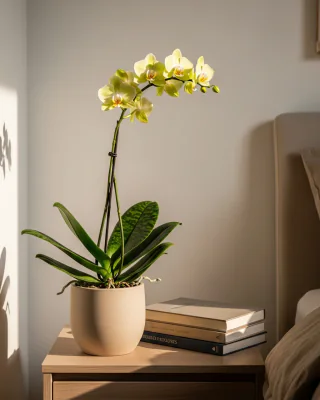
Orchids in bark usually manage on medium-hard water. Where the water is very hard you see white deposits on the roots and the bark itself, and collected rain is the better choice from then on.
Collecting rain so it stays usable
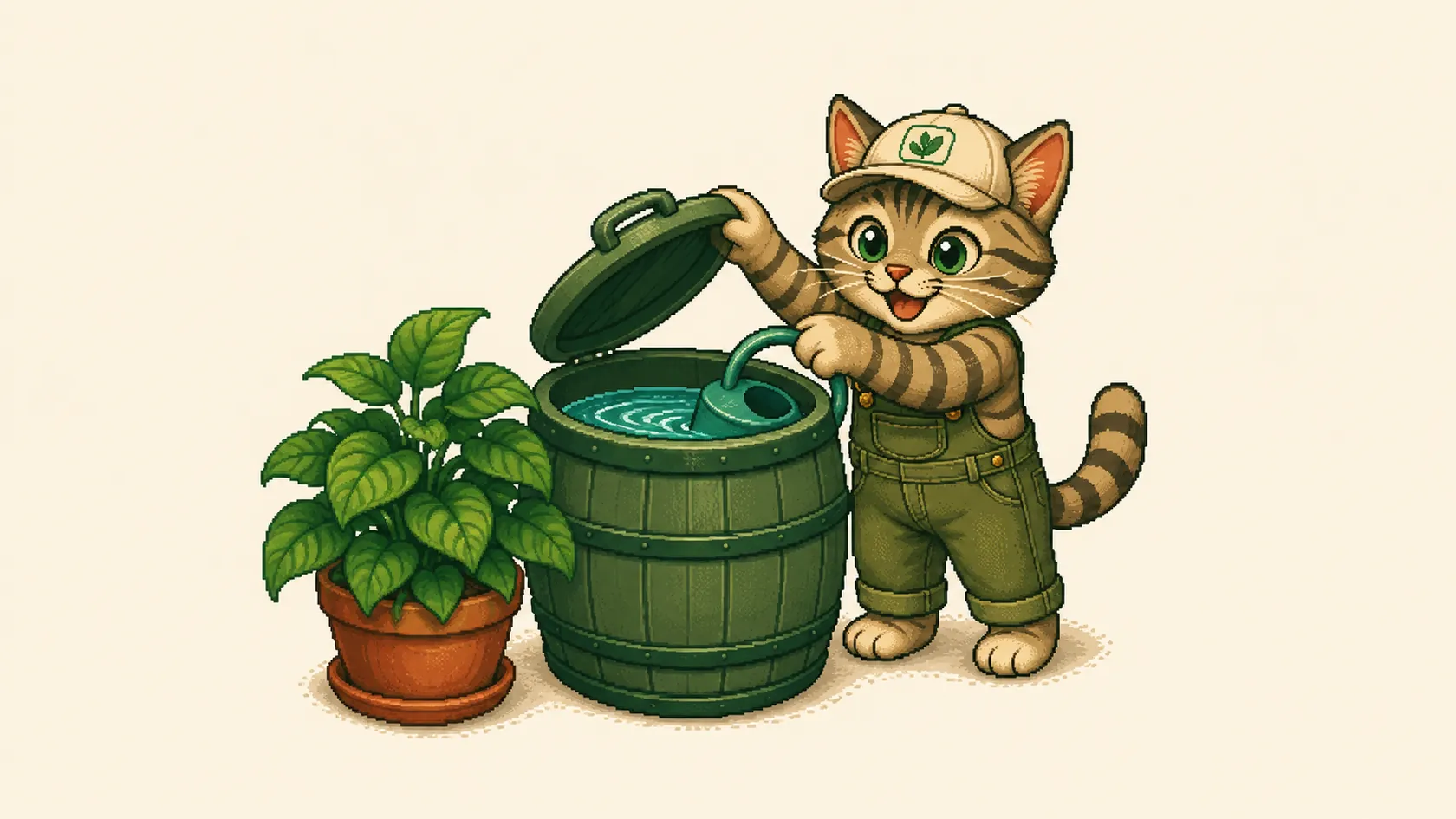
Catch it from a covered container rather than an open bucket. Water standing open collects leaves and droppings, and a warm barrel starts to smell after a few weeks. Fresh rain from the last few days is the safest thing in the barrel.
Let the first few minutes of a downpour run off before you collect. That first flush carries the dust and grit that settled on the roof between storms.
Skip runoff from copper, zinc or treated wood surfaces, since metal and preservatives dissolve into it. An asphalt shingle roof is the common case and its runoff is fine for pots, though it is not drinking water.
Bring the water indoors before you use it. Straight from a cold barrel it chills the root ball, and a filled can left in the room for a few hours solves that without any effort.
- Covered container, not an open bucket
- Let the first minutes of rain run off
- No runoff from copper, zinc or treated wood
- Use it within a few weeks, at room temperature
What to do without a yard
In an apartment, distilled water and reverse osmosis water do what rain does. They contain no calcium and no sodium, and the nutrients come from fertilizer rather than from the water, so nothing is missing.
Buying it for a whole collection gets expensive fast. The practical version is to use it for the handful of plants that need soft water and keep everything else on tap water.
Mixing works as well. Half tap and half distilled cuts the hardness roughly in half, which is often enough for a calathea that browns at the edges.
A pitcher filter reduces hardness only partly, so treat it as a stopgap for a few pots rather than a solution. Melted ice from a freezer and condensate from a dehumidifier are free of calcium but can carry residues from the appliance, so leave them out of the can.
Habits that matter more than the water
Check the mix before every watering rather than following a schedule. Push a finger two inches down and water only if it is dry down there. No water quality compensates for a root ball that never dries.
Water thoroughly and empty the saucer twenty minutes later. Roots standing in water get no air, and that damages a plant faster than any amount of calcium.
Wipe the white specks off leaves with a damp cloth. Splashes from hard water leave marks that look worse than they are and come off without any treatment.
If a plant that has been on tap water for years is going pale and crusty at the rim, repot it into fresh mix instead of changing only the water. The buildup is already in the old mix.
Related plants
Keep reading
Common questions
Is rainwater better for plants than tap water?
It is softer and leaves no mineral buildup in the mix, which helps the plants that react to hard water. For most houseplants the difference is too small to see, and how thoroughly you water matters more.
Why do plants grow better with rainwater?
Rain carries almost no dissolved calcium or sodium, so the pH around the roots stays where the plant likes it and iron stays available. On very hard tap water the same plant can go pale between the veins over time.
Can I use rainwater for all my houseplants?
Yes, as long as you collect it clean. Use a covered container, let the first minutes of a storm run off, avoid runoff from copper or zinc, and bring the water up to room temperature before you pour it.
How long can I store collected rainwater?
Keep it covered and use it within a few weeks. Warm water standing open grows algae and starts to smell, and a barrel that smells sour is better emptied onto the yard than into a pot.
Is snow melt the same as rainwater?
Chemically it is close, since it also fell through air rather than through rock. Melt it fully indoors and let it reach room temperature first, because near-freezing water is hard on tropical roots.
Which plants really need rainwater?
Carnivorous plants are the strict case, as the salts in tap water damage them. Azalea, camellia and gardenia benefit clearly on hard water, and calatheas often show fewer brown edges on soft water.
Last reviewed: 2026-09-07