

Camellia care guide
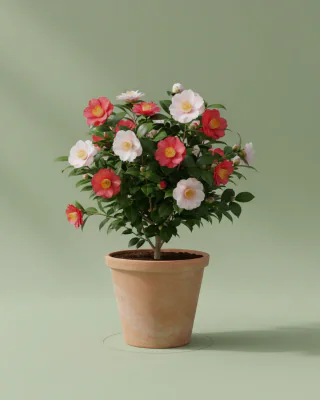
Camellia japonica
How to keep Camellia healthy at home: how much to water it, the light it needs, and how to catch common problems early.
 Not sure it’s this plant?Check yours with a photo, free
At a glance
- Light
- Part shade, outdoors
- Typical interval
- Every 6 to 8 days · summer
Every 8 to 12 days · winter - Climate
- 10–18 °C (50–64 °F)
- Humidity
- 50–70%
- Pet safety
- Pet-safe (non-toxic)
When and how to water
- Summer · Jun–AugEvery 6 to 8 days
- Winter · Dec–FebEvery 8 to 12 days
Camellia in a pot must not dry out, least of all in summer, when it forms next year’s flower buds. Check the compost often and water before it dries, then let the excess drain. Use rainwater where your tap water is hard.
Light and placement
Camellia is an outdoor shrub that grows well in a container in part or dappled shade. Place it outdoors in a sheltered spot, away from cold winds and early morning sun.
Feeding
Feed in early spring with ericaceous fertilizer, following the label dilution and frequency. Stop by the end of July.
Temperature & humidity
Climate10–18 °C (50–64 °F)
Humidity50–70%
Camellia is comfortable between 10 and 18 °C (50–64 °F). It handles a cool room well, even in winter, as long as it stays above 0 °C (32 °F).
It does best at 50–70% humidity. It doesn’t need misting.
Common problems
Yellowing, drooping, and dry edges often point to watering or drainage. Compare the signs before changing the routine.
Find what’s wrong
Toxic to pets?
No. Pet-safe.
Camellia is non-toxic to cats and dogs. Safe to keep in a home with pets.
Pet-safety information in the JungleBook uses ASPCA reference data where available. It is reference information, not veterinary advice.
Sources4 references
- Royal Botanic Gardens, Kew: Plants of the World OnlineTaxonomy · accepted name · native range · classification
- Royal Horticultural SocietyQuick facts · Choosing camellias · Where to plant · Watering · Feeding · Overwintering · Problems
- University of Florida IFAS ExtensionGeneral Culture: Soils · Exposure · Fertilization · Watering · Pests and Diseases
- ASPCA Animal Poison ControlScientific name · non-toxicity classification
Last reviewed: