

Indoor azalea care guide
Rhododendron simsii
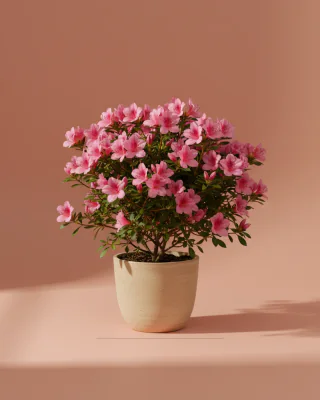
Check the compost surface daily and water when it becomes slightly dry. Keep the root ball evenly moist without leaving it waterlogged. Use rainwater when possible, especially in hard-water areas, and avoid alkaline tap water.
 Not sure it’s this plant?Check yours with a photo, free
At a glance
- Light
- Bright, indirect light
- Typical interval
- Every 2 to 4 days · summer
Every 4 to 6 days · winter - Climate
- 10–18 °C (50–64 °F)
- Humidity
- 60–80%
- Pet safety
- Toxic to cats and dogs
When and how to water
- Summer · Jun–AugEvery 2 to 4 days
- Winter · Dec–FebEvery 4 to 6 days
Check the compost surface daily and water when it becomes slightly dry. Keep the root ball evenly moist without leaving it waterlogged. Use rainwater when possible, especially in hard-water areas, and avoid alkaline tap water.
Light and placement
Bright, indirect light
Indoor azalea thrives in bright, indirect light. Direct midday sun can scorch the leaves. Place it 1–2 meters back from an east or west window, or behind a sheer curtain on a south window.
Feeding
Feed lightly: give a general liquid fertilizer at half the recommended rate two or three times between the first new growth and the end of June.
Temperature & humidity
Climate10–18 °C (50–64 °F)
Humidity60–80%
Indoor azalea is comfortable between 10 and 18 °C (50–64 °F). It handles a cool room well, even in winter, as long as it stays above 5 °C (41 °F).
It does best at 60–80% humidity. It doesn’t need misting.
Toxic to pets?
Yes. Keep it out of reach.
Pet-safety information in the JungleBook uses ASPCA reference data where available. It is reference information, not veterinary advice. ASPCA lists the whole Rhododendron genus, so this applies to every Rhododendron species, including this one.
Full indoor azalea toxicity guide →
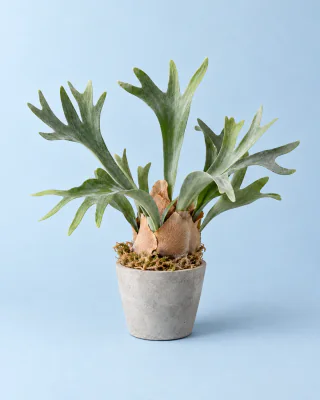
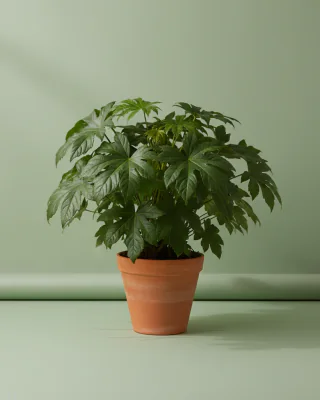
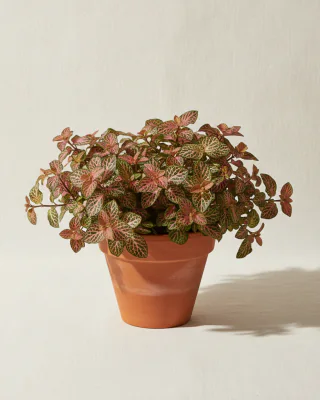
Pet-safe alternatives with similar light
Sources3 references
- Royal Botanic Gardens, Kew: Plants of the World OnlineAccepted name · synonyms · taxonomy
- Royal Horticultural SocietyBotanical name · growing conditions · watering · feeding · repotting · problems · propagation · Plant profile · position · soil · hardiness and under-glass context
- ASPCA Animal Poison ControlScientific name · toxicity · grayanotoxin · clinical signs · toxic principle · animal classes
Last reviewed: