


Venus flytrap drooping
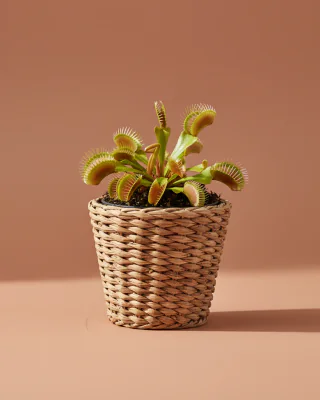
Dionaea muscipula
Quick answer
Keep Dionaea muscipula in rainwater or distilled water with its pot in the saucer. Check light, temperature, and winter rest before treating a limp trap as a whole-plant collapse.
 Not sure it’s this plant?Check yours with a photo, free
Pet-safe
Is the plant leaning or limp?
Record whether traps and petioles are limp, blackening, or merely lying flatter during winter rest. A single closed or dead trap is not the same as a collapsed rosette.
Check whether the medium is continuously wet, whether the water is rainwater or distilled rather than tap water, the depth of the saucer, light, temperature, and whether the plant is in seasonal rest.
Possible causes and next checks
Drooping can follow a dry root zone, unsuitable tap-water minerals, weak light, an overly warm winter without rest, and normal seasonal die-down. Persistently poor drainage or an inappropriate medium can also damage the plant.
Keep the pot in the rainwater or distilled-water saucer, never allow the medium to dry, provide the required bright light, and give a cooler winter rest. Remove only clearly black dead traps rather than triggering healthy traps.
What to watch next
Recheck the saucer, water source, medium condition, light, and emergence of new traps as the plant exits rest. Continuing blackening during active growth warrants a root and medium review.
What drooping cannot tell you
The plant may die back during its natural winter cycle. Do not treat a limp trap as proof of water chemistry or root damage without checking the setup, and do not add fertilizer or use tap-water rescue as a default.
All Venus fly trap guides
Keep reading
Related plants
Last reviewed: