Purple pitcher plant care guide
Sarracenia purpurea
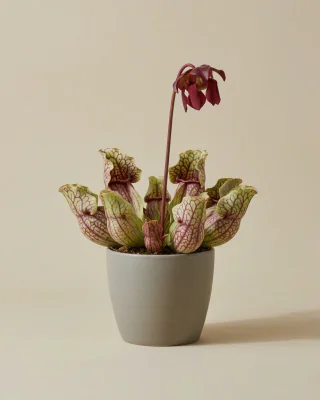
The purple pitcher plant is a hardy bog plant, not a year-round houseplant. Give it full sun, stand its pot in a tray of rainwater all summer and never fertilize it. In winter it needs a cold rest, outdoors or in a cold, bright place, when growth stops and many pitchers die back.
 Not sure it’s this plant?Check yours with a photo, free
At a glance
- Light
- Full sun, 6 hours or more
- Water
- Pot in a tray of rainwater in summer
- Climate
- Cold rest, protect roots in pots
- Humidity
- No special humidity needed
- Pet safety
- Not confirmed pet-safe
A hardy bog plant that needs a cold winter
The purple pitcher plant, also called the northern or common pitcher plant, grows wild in bogs and wet, acidic peat from Canada to the southeastern United States. Its squat, curved pitchers sit in a rosette close to the ground and are open to the sky, so they fill with rainwater. Insects that fall in drown and are digested. Nodding, deep purple-red flowers rise above the pitchers in late spring.
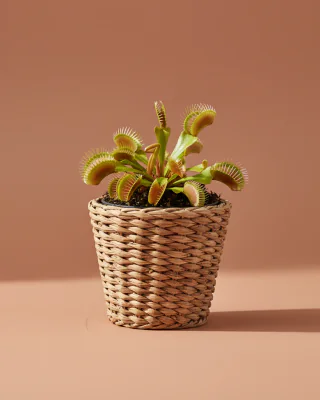
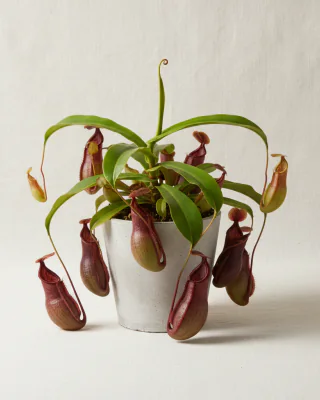
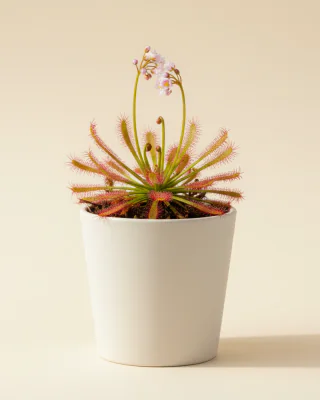
It is a hardy perennial, not a tropical plant. It needs full sun in summer and cold temperatures in winter for its dormancy, which is why it rarely does well as a year-round houseplant. It is a different plant from the tropical pitcher plant, Nepenthes, which must stay warm, and it is often grown alongside the Venus flytrap and the Cape sundew as one of the easier carnivorous plants. Never plant it in ordinary potting compost, which is too rich. Use a carnivorous plant mix such as peat or sphagnum moss with sand or perlite. Large clumps can be divided every few years.
Dormancy is easy to recognize. In autumn growth stops and many pitchers turn brown and die back. That is normal. Cut off only the brown, dead parts, because green pitchers still feed the plant and can last up to two years. Flowers come first in spring, followed by a new set of pitchers.
A tray of rainwater in summer, less in winter
From spring to autumn, stand the pot in a tray of rainwater a few centimeters deep and never let it dry out. Use only rainwater, distilled or reverse-osmosis water, never tap water, because the plant is sensitive to the minerals and chemicals in tap water. Check the tray often in hot weather, since small pots dry out fast.
In winter, while it is dormant, keep the compost damp but not waterlogged. Water from below, then pour away the excess rather than leaving the pot standing in water. The RHS advises keeping it slightly drier, cool and well ventilated in winter, but the compost must still never dry out completely.
Light and placement
Give it full sun, at least six hours of direct sun a day, ideally outdoors. In part shade the pitchers droop and do not color up properly. Behind glass, give it full light with some shelter from the hottest sun so the pitchers do not scorch. An indoor windowsill rarely gives a full-sun plant enough light without a plant light.
Feeding
Do not fertilize it, and never put fertilizer in the compost, which can kill it. Do not feed it insects or food either. Let it catch its own prey outdoors.
Temperature & humidity
It needs cold for dormancy, but first check the exact plant. The northern form, Sarracenia purpurea subsp. purpurea, and southern forms such as subsp. venosa differ in hardiness. NC State and Missouri Botanical Garden list the southern form for milder winter zones. RHS rates the species to around -15 °C (5 °F), but a pot’s root ball is more exposed to frost than roots in a protected in-ground bog. If a severe or prolonged freeze may fall below your plant’s limit, give the pot substantial root-zone protection or use cold, bright protected storage. A warm room starts growth too early.
It needs no special humidity. Outdoor air suits it, and wet compost and a water tray give it the moisture it needs. Good air flow matters more, especially in winter, when old leaves in a closed, stuffy spot can harbor pests and invite mold.
Not confirmed pet-safe
Common questions
Can a purple pitcher plant live indoors?
Not well all year. It needs full sun in summer and a cold winter dormancy, which a warm living room cannot give. Grow it outdoors, or move it to a cold, bright place for the winter.
Does a purple pitcher plant need dormancy?
Yes. It needs cold temperatures in winter. Growth stops in autumn and many pitchers turn brown. New growth starts in spring, with flowers first and then new pitchers.
Why are my pitcher plant’s pitchers turning brown?
In autumn it is usually the start of dormancy, which is normal. In summer, check for too little sun, dry compost or tap water.
Can I water a pitcher plant with tap water?
No. It is sensitive to the minerals and chemicals in tap water. Use rainwater, distilled or reverse-osmosis water.
Should I feed my purple pitcher plant?
No. Do not fertilize it and do not feed it insects or food. Fertilizer in the compost can kill it. Let it catch its own prey outdoors.
Can a purple pitcher plant stay outside in winter?
Only after checking the exact plant and its exposure. Northern Sarracenia purpurea subsp. purpurea is hardier than southern forms such as subsp. venosa. A pot’s root ball is more exposed than roots in a protected in-ground bog. For severe or prolonged freezes below your plant’s limit, protect the root zone substantially or use cold, bright protected storage.
Is a purple pitcher plant safe for cats and dogs?
We cannot confirm that. ASPCA has no record for Sarracenia, and its "California pitcher plant" record is a different plant. Keep it out of reach of pets and call your vet if your pet eats some.
Sources
- This guide follows established plant-care guidance and official ASPCA pet-safety references. How we verify our plant data →
- Sources: the Missouri Botanical Garden Plant Finder supports the full sun, droopy pitchers in shade, the peat and sand or perlite mix, the water tray, the winter dormancy and why it struggles as a houseplant, pitchers dying back in autumn, trimming only dead tissue, pine-needle mulch, shelter from freezing winds, division and no fertilizer or manual feeding. NC State Extension supports the native range, the pitchers open to the sky, full sun of 6 hours or more, rainwater or distilled water instead of tap water, never drying out and no fertilizer or feeding. The RHS Sarracenia purpurea profile supports full light with shelter from hot sun, a slightly drier, cool and ventilated winter and leaf loss during dormancy. The RHS carnivorous plants guide supports hardiness to about -15 °C (5 °F), the cloche, the saucer of rainwater, winter watering from below, no ordinary compost and no fertilizer. The International Carnivorous Plant Society’s Sarracenia guide supports pots standing in water, cool to cold winter storage, early growth in warm storage, removing pitchers only when brown, pitchers lasting up to two years, air circulation in winter and division every few years, its windowsill guide supports extra light for full-sun plants indoors, and its leaf cuttings guide defines pure water as distilled or reverse-osmosis water. The ASPCA plant database has no record for Sarracenia, so pet safety is not confirmed.
Last reviewed: