Cape sundew care guide
Drosera capensis

A Cape sundew wants as much light as you can give it, a peat or moss mix that stays wet, and rainwater, distilled or reverse-osmosis water, never tap water. Stand the pot in a saucer of water while it is actively growing. In a cool winter room, water from below and pour away the excess while keeping the mix moist. Do not fertilize it. If the leaves lose their sticky dew, check the light, the humidity and the water first.
 Not sure it’s this plant?Check yours with a photo, free
At a glance
- Light
- Full light, shade from hot sun
- Water
- Pot in a saucer of rainwater
- Climate
- Room temperature, no frost
- Humidity
- Higher than most homes
- Pet safety
- Not confirmed pet-safe
A sundew that catches gnats with sticky dew
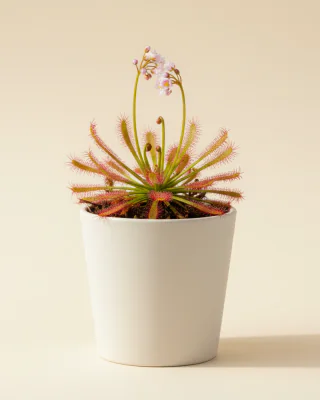
The Cape sundew comes from the southwestern Cape of South Africa, where it grows in marshes, along streams and in damp seeps. It forms rosettes of long, narrow leaves, usually about 15 cm (6 in) tall, covered in red or pink glandular hairs. Each hair carries a drop of sticky dew that traps small insects, and the leaf then slowly curls around its catch. Pink flowers appear on tall stems from spring to autumn.
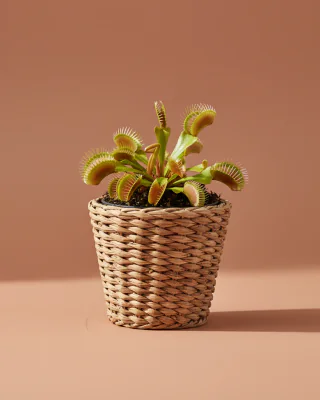
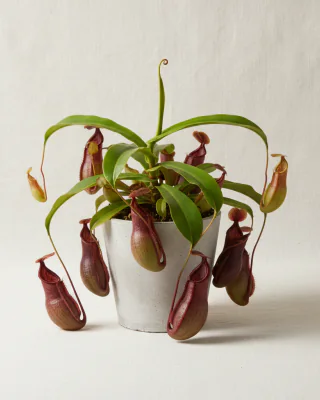
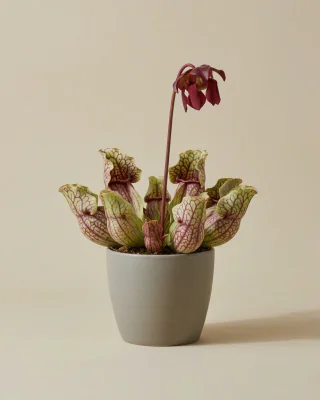
It is one of the easiest carnivorous plants to grow, together with the Venus flytrap and the purple pitcher plant (Sarracenia purpurea). Unlike the purple pitcher plant, it needs no cold winter rest and grows all year, and it is far less demanding than the tropical pitcher plant, Nepenthes. A few sundews near your houseplants also help keep fungus gnats down. New plants come easily from seed sown on the surface of damp mix, or from leaf and root cuttings laid on damp mix and kept humid under plastic.
The dew is the best health check. A plant covered in glistening drops is doing well. When the leaves lose their dew, it usually needs more light, more humid air or more water. Repotting it or touching the leaves also stops the dew for a while, but new leaves make dew again. Mature plants sometimes die back and then sprout again from the base, so wait a few weeks before you give up on one.
A water tray during active growth, less in a cool winter
Keep the mix wet all the time. The easiest way is to stand the pot in a saucer or tray with about 1 to 3 cm (0.4–1.2 in) of water and top it up before it runs dry. Use only rainwater, distilled or reverse-osmosis water, never tap water. Minerals from tap water build up in the mix over time and harm the plant.
If the mix dries out, the leaves droop and make less dew. Watering and keeping it moist usually revives it. In winter, when growth slows in a cool room, the RHS advises watering from below and then pouring away the excess rather than leaving the pot standing in water.
Light and placement
Give it the brightest spot you have, such as a sunny window. Behind glass, the RHS advises full light with some shade from hot summer sun so the leaves do not scorch. Most windowsills give less light than it wants, so many growers keep it under a plant light instead.
Feeding
Do not fertilize it and never put fertilizer in the mix. It catches its own food, such as fungus gnats and other small insects, and needs no extra feeding. Never give it meat.
Temperature & humidity
Normal room temperature suits it all year. Subtropical sundews like this one grow well between about 10 and 35 °C (50–95 °F) and need no winter dormancy. It is not frost hardy, so the RHS advises growing it under glass where frosts are common. Keep it away from cold drafts and heaters.
Subtropical sundews like this one prefer more humidity than most homes have. Keep it away from drafts and heaters, which dry the air. A bright terrarium, or a plant shelf under lights in a humid room, works well. If the dew dries up even though light and water are right, dry air is the likely cause.
Not confirmed pet-safe
Common questions
Why has my Cape sundew lost its dew?
Usually it needs more light, more humid air or more water. Repotting or touching the leaves also stops the dew for a while, and new leaves make dew again. Mature plants sometimes die back and resprout from the base.
How do I water a Cape sundew?
During active growth, stand the pot in a saucer with about 1 to 3 cm (0.4–1.2 in) of rainwater, distilled or reverse-osmosis water, and top it up before it runs dry. In a cool winter room, water from below and pour away the excess. Keep the mix moist.
Can I use tap water for a sundew?
No. Minerals in tap water build up in the mix and harm the plant. Use rainwater, distilled or reverse-osmosis water.
Should I feed my Cape sundew?
No. It catches fungus gnats and other small insects on its own. Never fertilize the mix and never give it meat.
What soil does a Cape sundew need?
A low-nutrient mix, such as equal parts peat or sphagnum moss and sand or silica grit, in a pot about 10 to 15 cm (4–6 in) wide. Never use regular potting compost or garden soil.
Does a Cape sundew need a winter dormancy?
No. It grows all year at room temperature. It is not frost hardy, so keep it indoors or under glass in winter.
How do I propagate a Cape sundew?
Sow fresh seed on the surface of damp mix without covering it, or lay leaf or root cuttings on damp mix and keep them humid under plastic in bright light out of direct sun. Leaf cuttings also root floating in a jar of distilled or reverse-osmosis water.
Is a Cape sundew safe for cats and dogs?
We cannot confirm that. ASPCA has no record for sundews. It lists the Venus flytrap as non-toxic, but that is a different plant. Keep it out of reach of pets and call your vet if your pet eats some.
Sources
- This guide follows established plant-care guidance and official ASPCA pet-safety references. How we verify our plant data →
- Sources: the RHS Drosera capensis profile supports the leaves, the flowers from spring to autumn, full light with shade from hot sun under glass, standing in a saucer of rainwater, growing under glass where frosts occur, and seed and root cuttings. The RHS carnivorous plants guide supports the Cape sundew as an easy starter, sundews against fungus gnats, rainwater and mineral build-up from tap water, watering from below in winter, no fertilizer and no ordinary compost. SANBI PlantZAfrica supports the native habitat, the 15 cm (6 in) height, how the dew traps prey, the 1 to 3 cm (0.4–1.2 in) water saucer, the peat and sand mix, the pot size, seed, leaf and root cuttings, dew lost after drying out, repotting or handling, and dieback with resprouting. NC State Extension supports the peat and sand mix kept moist, full sun, no fertilizer and rainwater or distilled water. The International Carnivorous Plant Society’s subtropical sundew guide supports the 10 to 35 °C (50–95 °F) range, no dormancy, the preference for more humidity and light than most homes give, plant lights, drafts and no fertilizer in the soil, and its leaf cuttings guide supports cuttings in distilled or reverse-osmosis water. The ASPCA plant database has no record for Drosera, so pet safety is not confirmed.
Last reviewed: