Nepenthes care guide
Nepenthes spp.
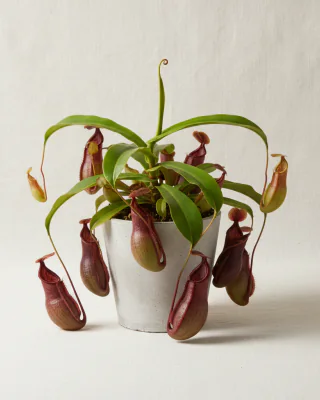
A nepenthes, or tropical pitcher plant, wants bright light with a few hours of gentle sun, humidity above 60 % and a moss-based mix that never dries out. Water it only with rainwater, distilled or reverse-osmosis water, never tap water. When it stops making pitchers, the cause is usually too little light or too little humidity.
 Not sure it’s this plant?Check yours with a photo, free
At a glance
- Light
- Bright, a few hours of gentle sun
- Water
- Always moist, rainwater or distilled
- Climate
- Lowland 21–35 °C (70–95 °F), highland cool nights
- Humidity
- Above 60 %
- Pet safety
- Not confirmed pet-safe
Lowland or highland: know which one you have
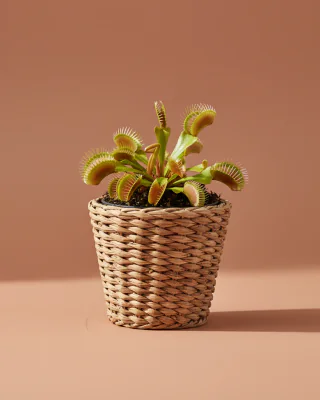
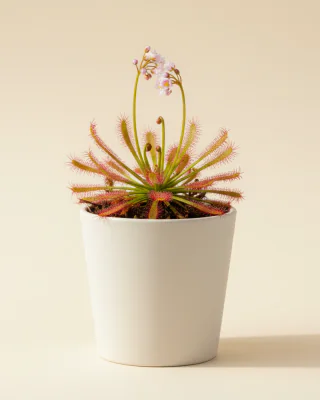
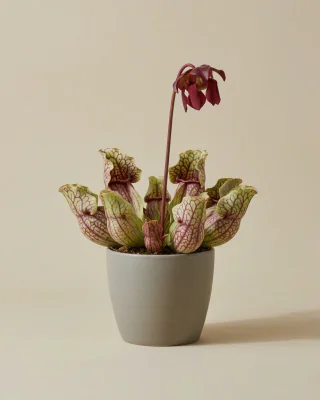
Nepenthes are tropical pitcher plants from Southeast Asia, Madagascar and nearby islands. In nature they grow as climbing or scrambling vines, and each pitcher forms at the tip of a tendril that grows out of a leaf. Most plants sold are hybrids, and vigorous hybrids are the easiest to keep. They are a different plant from the hardy purple pitcher plant (Sarracenia purpurea), which needs a cold winter, and they need far more warmth and humidity than the Venus flytrap or the Cape sundew.
The species come from two kinds of habitat. Lowland types grow in hot, humid places and like warmth day and night. Highland types come from mountains with warm days and cool nights, and their pitchers tend to be smaller and less colorful. Many hybrids sold as houseplants tolerate a wider range of temperatures than the pure species.
Two things decide success: humidity and light. In dry air or dim light the leaves keep growing but the pitchers fail to form or wither. Each pitcher also has a limited life, about 2 to 3 months on fast growers and 6 to 12 months on slower ones, so a pitcher turning brown is normal. Cut it off at the leaf tip, where the pitcher starts. Never pot it in ordinary compost or garden soil, which is too rich. New plants are grown from stem cuttings.
Rainwater only, and never let it dry out
Keep the mix moist all the time and do not let it dry out. Use only rainwater, distilled or reverse-osmosis water, never tap water. The minerals in tap water build up in the low-nutrient mix and harm the plant.
Indoors a nepenthes uses a lot of water and a light mix dries out quickly. For a windowsill plant, a mix of about three parts long-fibered sphagnum moss to one part perlite holds more water, and it is fine to let the pot stand in water for a day or two so the moss can soak it up. The mix should stay moist but drain well, so do not leave it standing in water all the time.
Light and placement
Give it bright, diffused light with a few hours of direct sun in the morning or late afternoon, such as near an east or west window. Too little light is one of the two common reasons it stops making pitchers. Keep it out of hot midday sun behind glass, which can scorch the leaves.
Feeding
Do not fertilize it, and never put fertilizer in the mix. A nepenthes gets its nutrients from the insects its pitchers catch, and indoors it usually catches a few on its own. Never feed it meat.
Temperature & humidity
Lowland types like it warm day and night, about 21 to 35 °C (70–95 °F). Highland types like days of about 21 to 27 °C (70–81 °F) and cooler nights of about 10 to 16 °C (50–61 °F). Most hybrids sold are fairly tolerant of normal room temperatures. In winter keep it away from cold windows, because cold drafts can kill the growing tip and stop new pitchers.
Keep the humidity above 60 %. Dry air is a common reason pitchers fail to form or die back. A bright terrarium or greenhouse keeps humidity high. On a windowsill, keep it away from radiators and heating vents, which blow dry air over the plant, and choose a type with thick, leathery leaves, which copes best with drier air.
Not confirmed pet-safe
Common questions
Why is my nepenthes not making pitchers?
Usually too little light or too little humidity. Move it to brighter light with a few hours of gentle sun and keep the humidity above 60 %. Cold drafts from a window in winter can also stop new pitchers.
Should I cut off dead pitchers?
Yes. Each pitcher lives from a few months to about a year and then turns brown or black. Cut it off at the leaf tip, where the pitcher begins. Several pitchers drying at once point to a sudden change in humidity, temperature or watering.
What is the difference between highland and lowland nepenthes?
Lowland types like warmth day and night, about 21 to 35 °C (70–95 °F). Highland types like warm days of about 21 to 27 °C (70–81 °F) and cool nights of about 10 to 16 °C (50–61 °F). Many hybrids tolerate normal room temperatures.
Can I water a pitcher plant with tap water?
No. Use rainwater, distilled or reverse-osmosis water. Minerals in tap water build up in the mix and harm the plant.
What soil does a nepenthes need?
A light, low-nutrient mix that holds moisture, such as long-fibered sphagnum moss with some perlite and orchid bark. Never use ordinary potting compost or garden soil.
Should I feed my pitcher plant?
No. It catches insects on its own. Never put fertilizer in the mix and never feed it meat.
How often should I repot a nepenthes?
Every 2 to 3 years, when it outgrows its pot or the mix breaks down. Move it to a slightly larger pot and disturb the roots as little as you can.
Sources
- This guide follows established plant-care guidance and official ASPCA pet-safety references. How we verify our plant data →
- Sources: Clemson Extension supports the light, the humidity above 60 %, keeping it moist, the temperatures, missing pitchers from low light and humidity, the pitcher lifespan, cutting off old pitchers, the moss, perlite and bark mix and repotting every 2 to 3 years. NC State Extension supports the native range, lowland and highland types, the temperatures, rainwater or distilled water instead of tap water, no meat, and pitchers failing in low humidity. The RHS carnivorous plants guide supports the warm, humid conditions, no ordinary compost or soil, no fertilizer, mineral build-up from tap water, leaf scorch behind glass, removing faded pitchers and stem cuttings. The International Carnivorous Plant Society’s Nepenthes guide supports the easy hybrids and a window with some sun, its windowsill guide supports the sphagnum and perlite mix, standing in water for a day or two, thick-leaved types in dry air, radiators and cold window drafts, its stem cuttings guide supports propagation, and its leaf cuttings guide defines pure water as distilled or reverse-osmosis water. The ASPCA plant database has no record for Nepenthes, so pet safety is not confirmed.
Last reviewed: