


Soil for a Venus flytrap
Dionaea muscipula
Quick answer
Use an acidic, low-nutrient carnivorous-plant medium. Ordinary potting mix or garden soil is too rich for Dionaea muscipula.
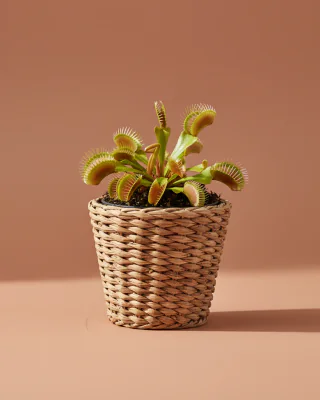
 Not sure it’s this plant?Check yours with a photo, free
Pet-safe
Soil for a Venus flytrap
- 01
Best soil mix
Use an acidic, low-nutrient specialist carnivorous medium. An acidic potting medium mixed with moss works, and peat-free mixes built from moss, bark, sand or perlite are also fine. You do not need an exact ratio.
The medium should stay evenly damp while remaining well drained. You can stand the pot in a saucer or tray of water, but avoid stagnant water and unsuitable media. Any pot and saucer setup that does this is fine.
- 02
Match the mix to the pot and setting
This soil decision belongs to a low-nutrient carnivorous-plant container, commonly under glass or indoors in bright light. Ordinary garden soil and standard potting mix are too rich for this use.
- 03
Soil pH
Dionaea muscipula needs an acidic medium. There is no exact pH number to aim for, so do not adjust it with household products by guesswork.
- 04
When soil alone is not the problem
Do not use regular soil, ordinary potting mix, or fertilizer as a substitute for specialist carnivorous medium. Exact peat-free ratios, water chemistry, and pot configuration remain species- and setup-dependent.
All Venus fly trap guides
Keep reading
Sources3 references
- Royal Botanic Gardens, Kew: Plants of the World OnlineTaxonomy · accepted name · classification
- North Carolina State University Extension Gardener Plant ToolboxHouseplant context · light · wet medium · water quality · humidity · pests · disease
- Iowa State University Extension and OutreachMedium · light · temperature · humidity · water quality · feeding · terrarium care
Last reviewed: