What you see
The mix is still damp deep in the pot a week or more after watering, the surface grows mold or gnats, and the pot never feels much lighter.



A pot much wider than the root ball holds water the roots never reach. That wet mix is the whole problem.
Water goes everywhere in the pot, and roots only take it up where roots are. So a wide ring of unrooted mix stays wet for weeks, and the roots in the middle sit in it.
That is the entire case against an oversized pot. Everything else, from stalled growth to yellow lower leaves, follows from the wet mix rather than from the size itself.
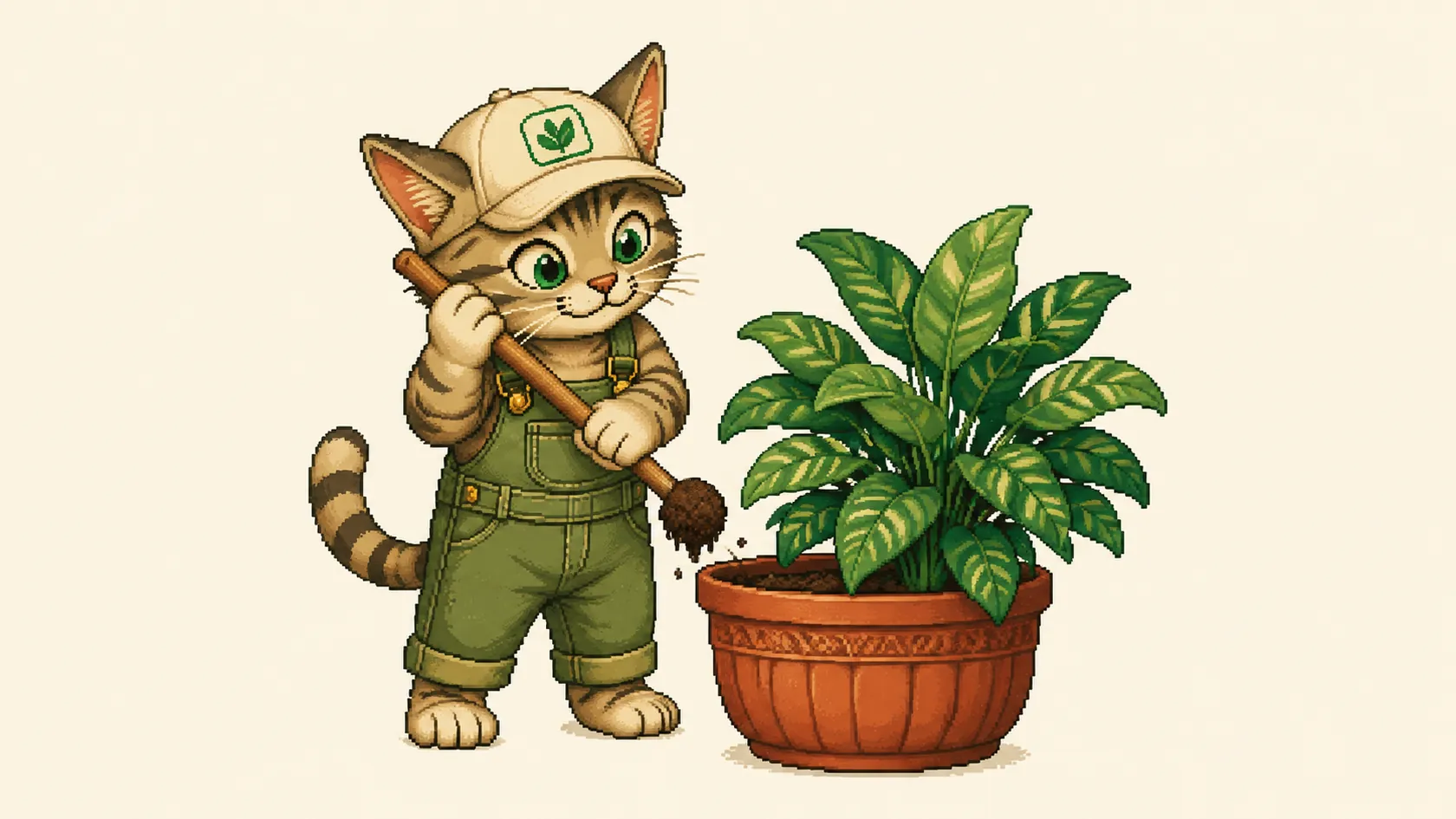
Push a wooden stick most of the way to the bottom of the pot and pull it out. Mix clinging damp to the lower end a week after watering is the signal that matters, whatever the pot looks like.
Then lift the plant out and look. A root ball that keeps the shape of the old pot with loose mix all around it has not grown into the new one, and that outer ring is what stays wet.
Compare the width. A pot an inch or two wider than the root ball on each side is normal after repotting. A pot that holds several times the root ball is where the trouble starts.
A very large pot on a fast growing plant in a bright warm room is a different case from the same pot on a slow grower in a dim corner. Speed of growth decides how long the unrooted mix stays a problem.
Look at
Most likely cause
This is the case that costs plants. The pot is watered, the roots use the water in their own small area, and the rest of the mix holds it because nothing is drinking there.
Roots sitting in wet mix run short of air. They go brown and soft, the plant stops taking water up, and it wilts while standing in a wet pot, which usually leads to more watering.
Mold on the surface, fungus gnats, a sour smell and a pot that never seems to get lighter all point the same way.
The fastest fix is to move the plant into a pot that fits the roots. If you would rather not repot again, water much less and only into the area above the root ball rather than around the whole rim.
Take the plant out first and look at the roots either way. Brown and soft means cutting the damaged parts away before it goes into fresh mix.
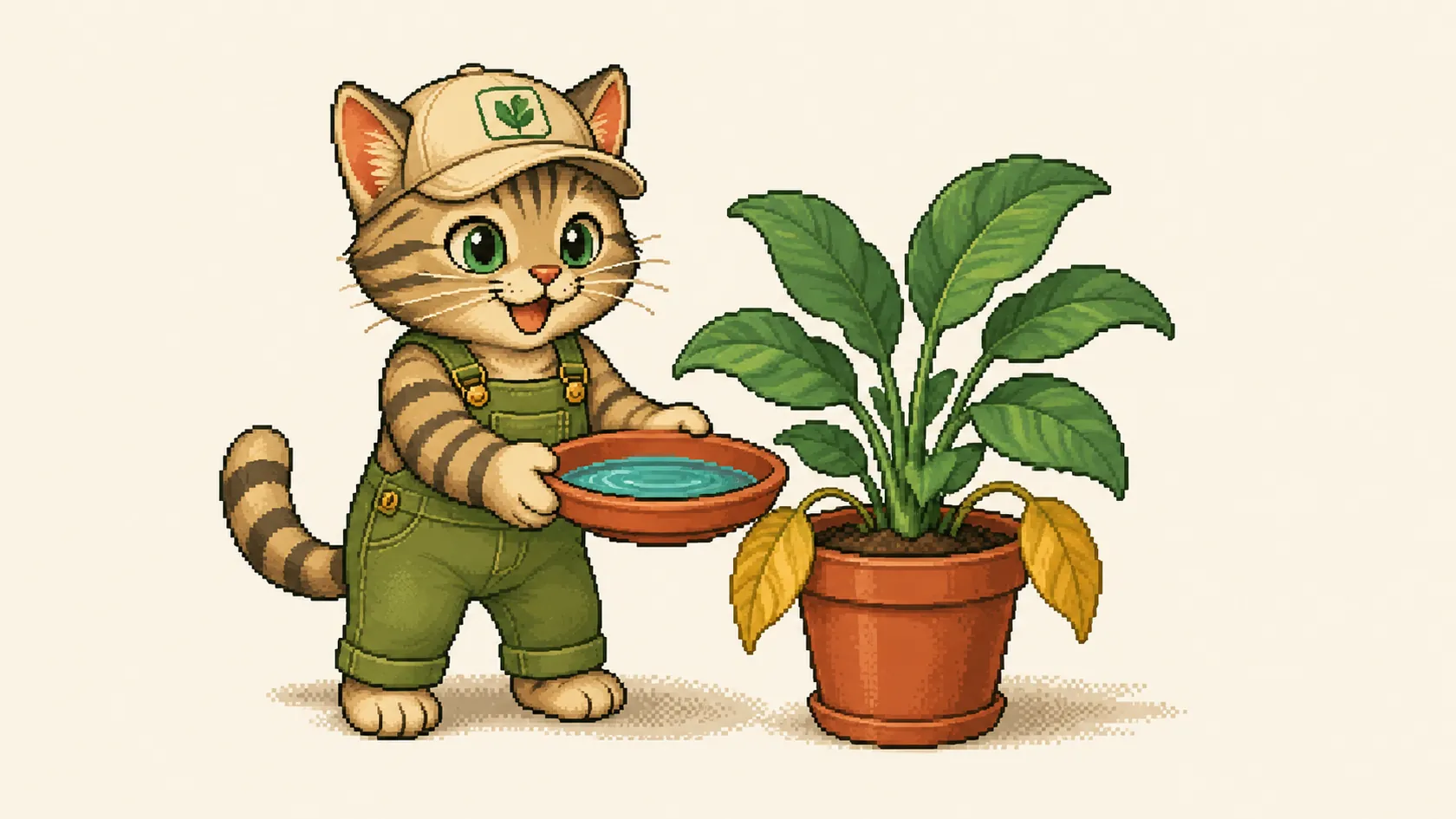
A plant moved into a far bigger pot often does nothing visible for months. Roots spread into the new space first and leaves come later, so the top of the plant looks stuck while the work happens underground.
That alone is not damage, and it is not a reason to feed it or move it again. A plant that is not growing does not need fertilizer, and salts build up in a pot that is not being flushed by regular watering.
The stall becomes a problem only if the leaves start yellowing from the bottom, which means the wet mix is affecting the roots rather than just slowing them down.
Leave the plant alone, water only when the mix has dried at depth, and give it a season. If nothing has changed by then, look at the roots.
A tall plant in a wide shallow pot tips over, and a small plant in a deep one gets lost. Neither is a health problem, but both usually get solved by moving to a different pot anyway.
The heavier problem is a plant that has grown top heavy in a light plastic pot. A heavier pot or a few stones on the surface of the mix fixes the balance without changing the volume the roots sit in.
For a tall stem, a stake tied loosely to the plant does more for stability than a bigger pot does.
If the pot is only wrong to look at, the simplest answer is a cachepot. Leave the plant in the nursery pot that fits its roots and stand that inside the large decorative one.
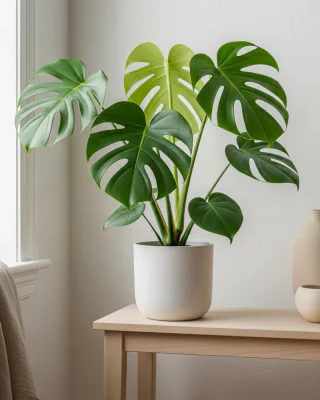
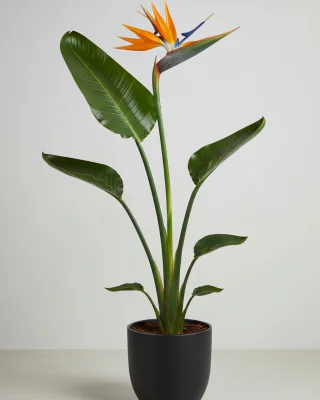
Some plants earn the space. Fast growers such as monstera, large philodendrons and bird of paradise fill a generous pot within a season, so the unrooted mix does not stay unrooted for long.
Large floor plants and trees also need the weight and the stability, and repotting them every year is not realistic.
Open, coarse mix changes the calculation. A pot filled with material that carries plenty of perlite, pumice or bark drains fast enough that the extra volume matters much less.
Unglazed terracotta helps for the same reason, since water leaves through the wall as well as the drainage hole.
So the honest rule is not a pot size. It is that the mix in the pot has to dry out at depth within a reasonable time, and pot size, material and mix all feed into that.
Go up by an inch or two of width, which is usually the next pot in the range. That gives the roots somewhere to go without leaving a wide ring of wet mix.
Repot when the plant asks for it rather than on a schedule. Roots out of the drainage hole, roots circling the inside of the pot and water running straight down the side are the signals.
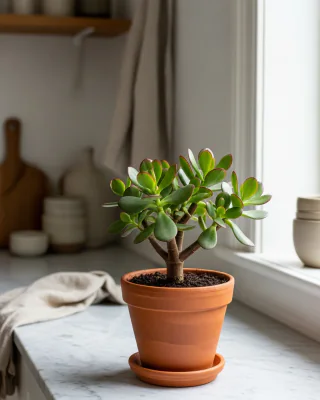
Match the depth to the plant. Shallow rooted plants and most succulents do better in a wide low pot than a deep one, because a deep pot holds a column of wet mix under the roots.
Whatever the size, the pot needs an open drainage hole. A layer of gravel at the bottom does not replace one and does not improve drainage.
Water the new pot through once, then let it dry further than you normally would before the next watering. The plant is using less than it did while it settles in.
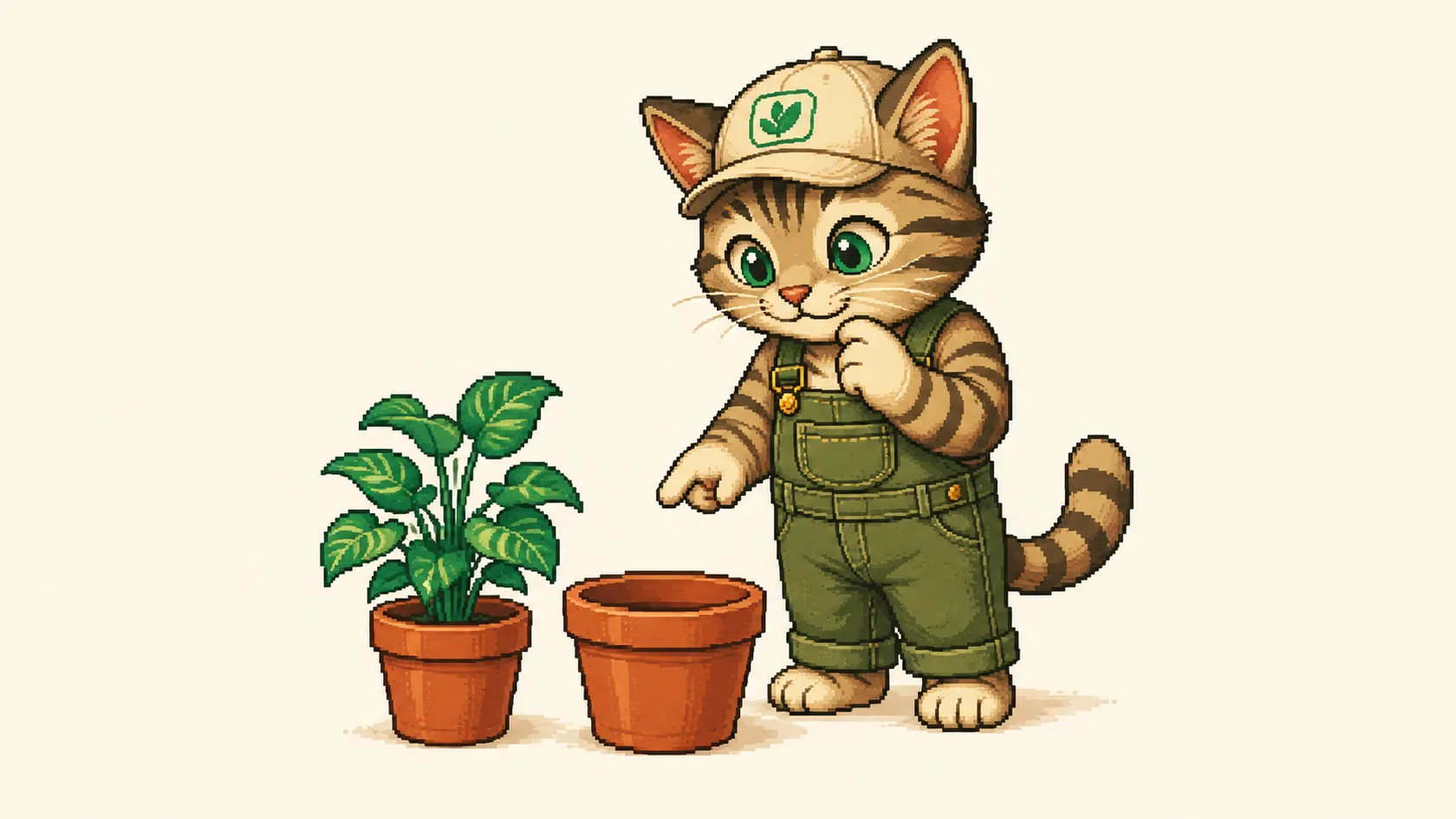
Yes, though the size itself is not what harms the plant. A wide ring of mix with no roots in it stays wet for weeks after watering, and roots sitting in wet mix run short of air and rot.
The mix stays damp far longer than it should. That shows up as mold on the surface, fungus gnats, yellowing lower leaves and a plant that wilts even though the pot is wet.
An inch or two wider than the current root ball, which is usually the next size in the range. That leaves room to grow without a large volume of mix the roots cannot reach.
Yes, if the mix stays wet at depth for a week or more and the plant is showing it. Lift the plant out, check the roots, cut away anything brown and soft, and pot it into something that fits the root ball.
Keep it in a nursery pot that fits its roots and stand that inside the decorative one. You get the look without the wet mix, and the inner pot lifts out for watering.
It is usually putting roots into the new space before it makes leaves, which takes months in a much larger pot. Water only when the mix has dried at depth and hold the fertilizer until new growth appears.
Last reviewed: 2026-09-07