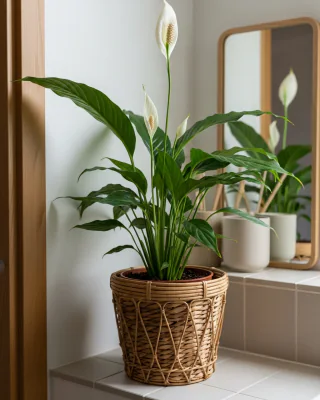
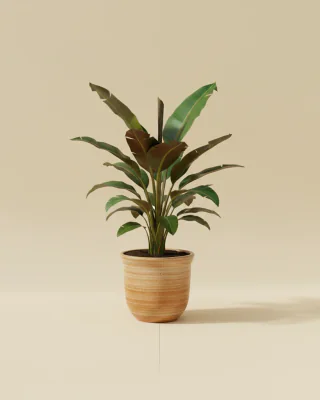
What you see
Even pale green from the bottom of the plant upward, small new leaves, and soil the plant has sat in for a year or more with no feeding through the growing season.



Pale green all over, lowest leaves first, growth slowed. Check the feeding history before you reach for food.
The oldest leaves at the bottom go first. A plant moves nitrogen out of old leaves and into new growth, so the bottom pays for the top.
Pale leaves on their own do not prove a shortage. Several ordinary problems in a home produce the same color, and feeding the wrong plant makes two of them worse.
Hold a pale leaf up against a window. A nitrogen shortage fades the whole blade to a soft light green, veins and all. A pale blade with dark green veins still showing is a different pattern and points somewhere else.
Look at where the pale leaves sit on the plant. A nitrogen shortage starts at the bottom and works upward. Pale new leaves at the top over healthy green leaves below is not this picture.
Check the newest leaves for size. A plant running short makes small pale leaves with long gaps of bare stem between them, and in time it stops making them at all.
Look at
Most likely cause
Potting mix carries a limited amount of food and the plant uses it up. A plant that has stood in the same soil for a year or more, watered every week, has little left to draw on.
Four answers settle whether a shortage is plausible. When you last fed the plant. When you last repotted it into fresh mix. How long it has stood in the soil it is in. How much light it gets.
Until you know that history, a deficiency stays a guess. A plant fed through the growing season and repotted last spring is unlikely to be short of nitrogen, and the pale color has another source.
Where the history points at old soil, fresh potting mix or a general houseplant food covers it. Take the dose and the interval from the label of the bottle you own, because strengths differ from product to product.
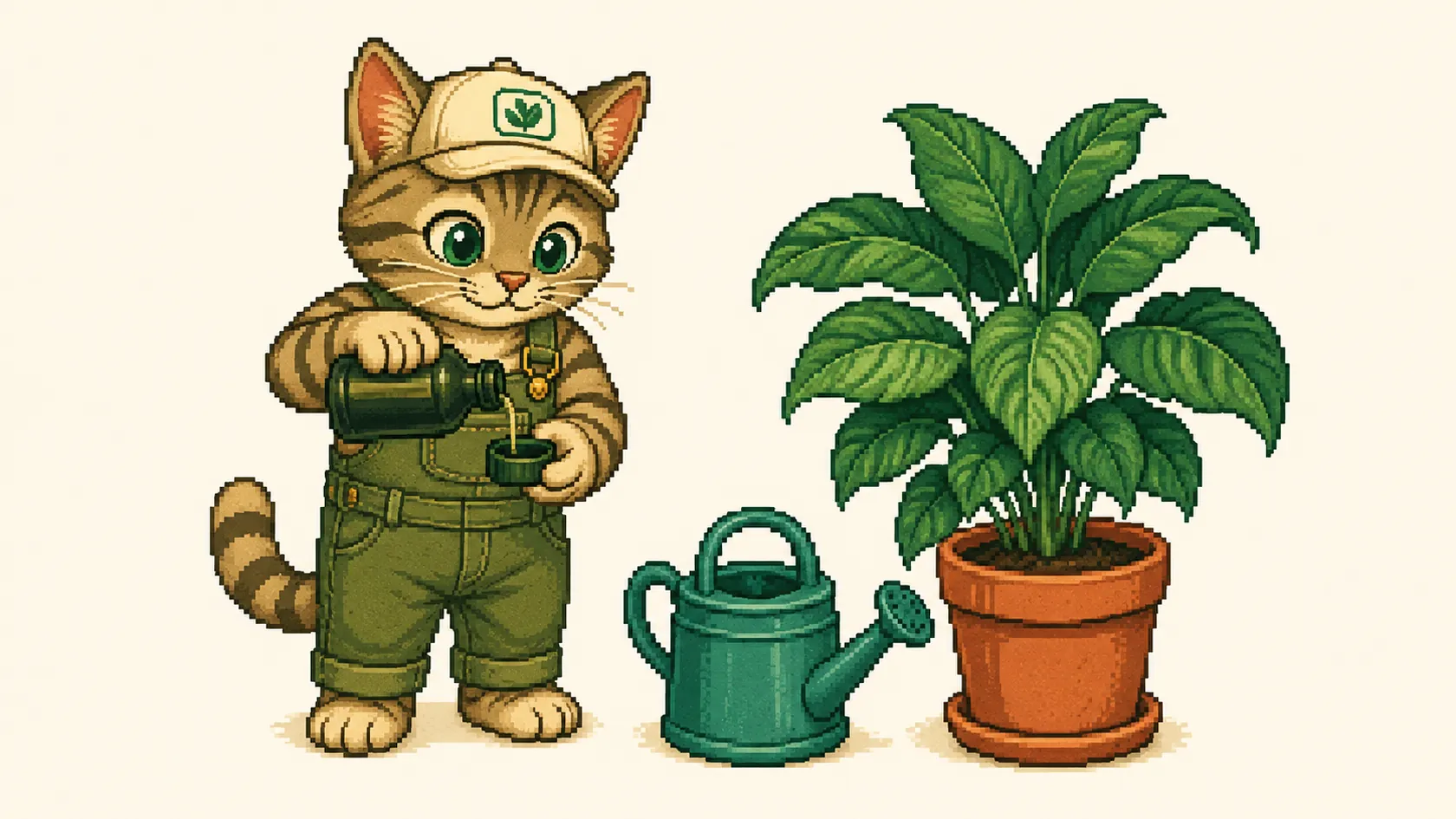
Roots standing in wet soil die back, and dead roots take up nothing. The leaves go pale even where food is present, because nothing is carrying it up the plant.
Lift the pot and feel the soil two inches down. A heavy pot with dark soil, water standing in the saucer, or soil that smells sour all point this way. The pale leaves feel soft rather than dry.
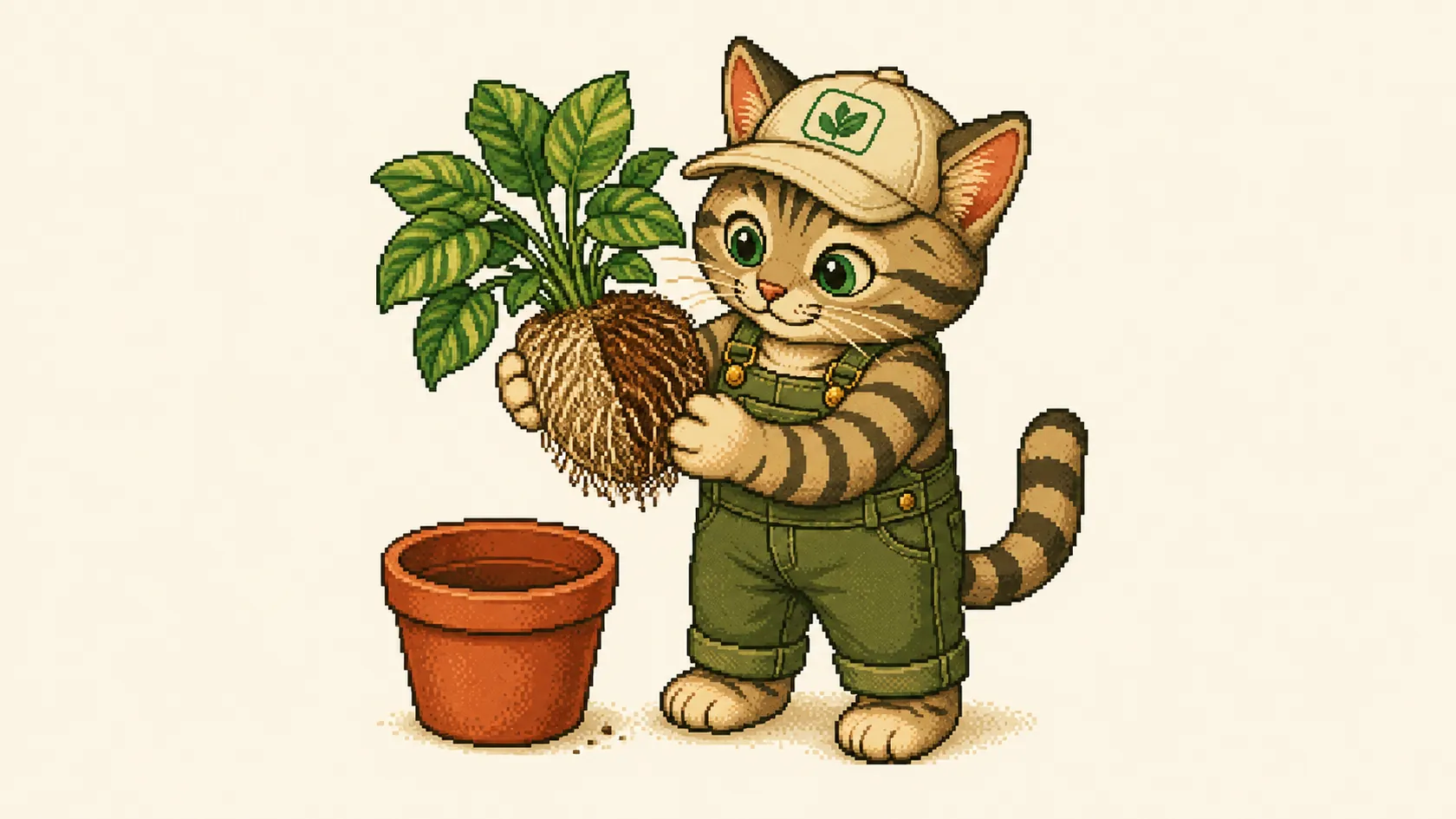
Tip the plant out and look at the roots. Healthy roots are pale and firm. Dark soft roots that slip out of their skin have rotted. Cut those away, repot into fresh open mix and water sparingly until new growth appears.
Feeding a plant in this state adds salts to soil the roots cannot work in. Get the roots going again first.
A plant in a dark corner makes thin pale leaves and long bare stretches of stem. The color sits close to a nitrogen shortage, and food does not fix it.
Compare the leaves the plant made in your home with the ones it arrived with. Newer leaves that are paler, thinner and further apart tell you the light is the limit.
Move the plant closer to the window and clean the glass. A window with nothing in front of it delivers more than a bright-looking spot in the middle of the room.
Judge the change by the next few leaves. A plant in better light greens up in its new growth, not in the leaves it already carries.
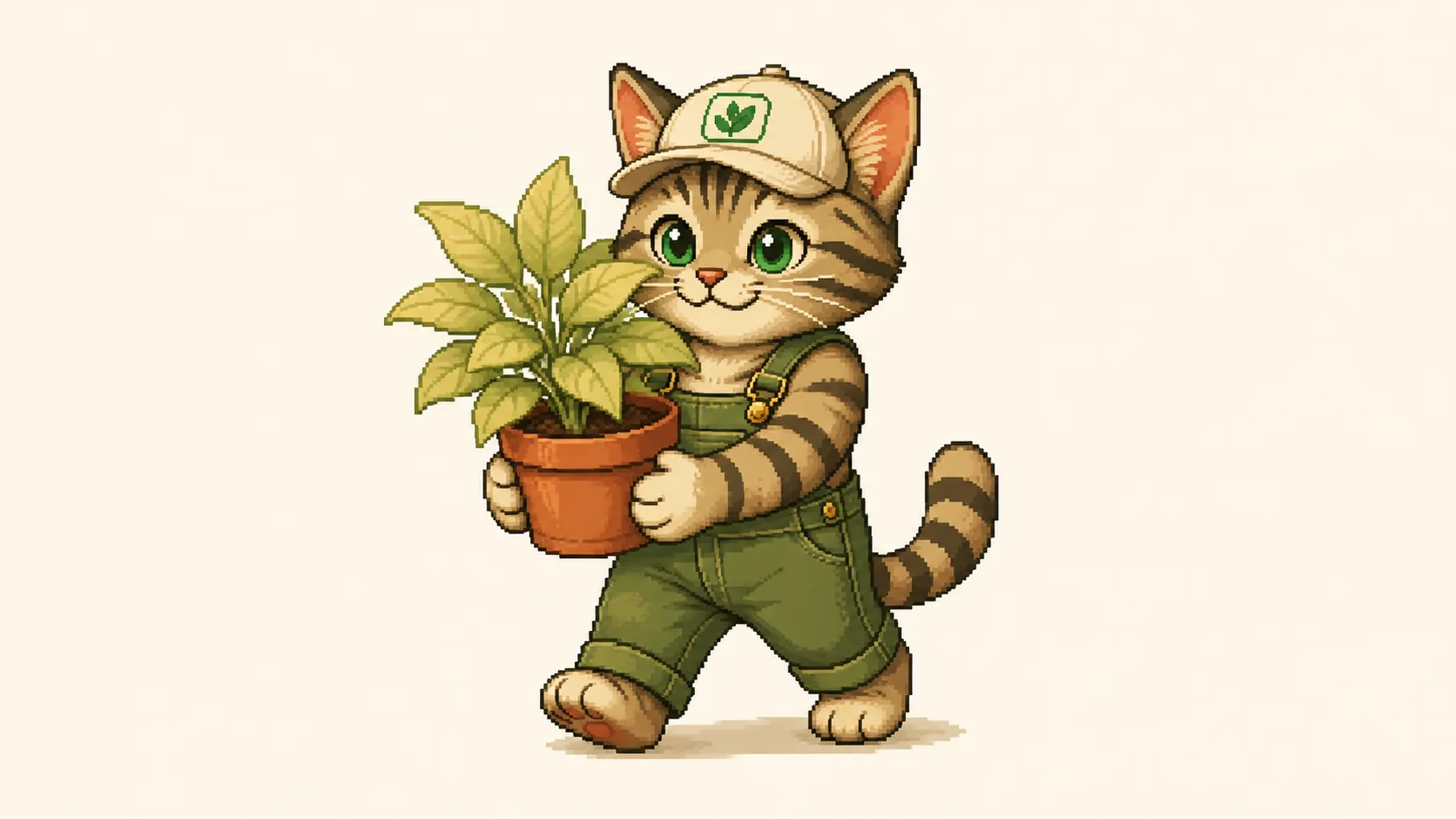
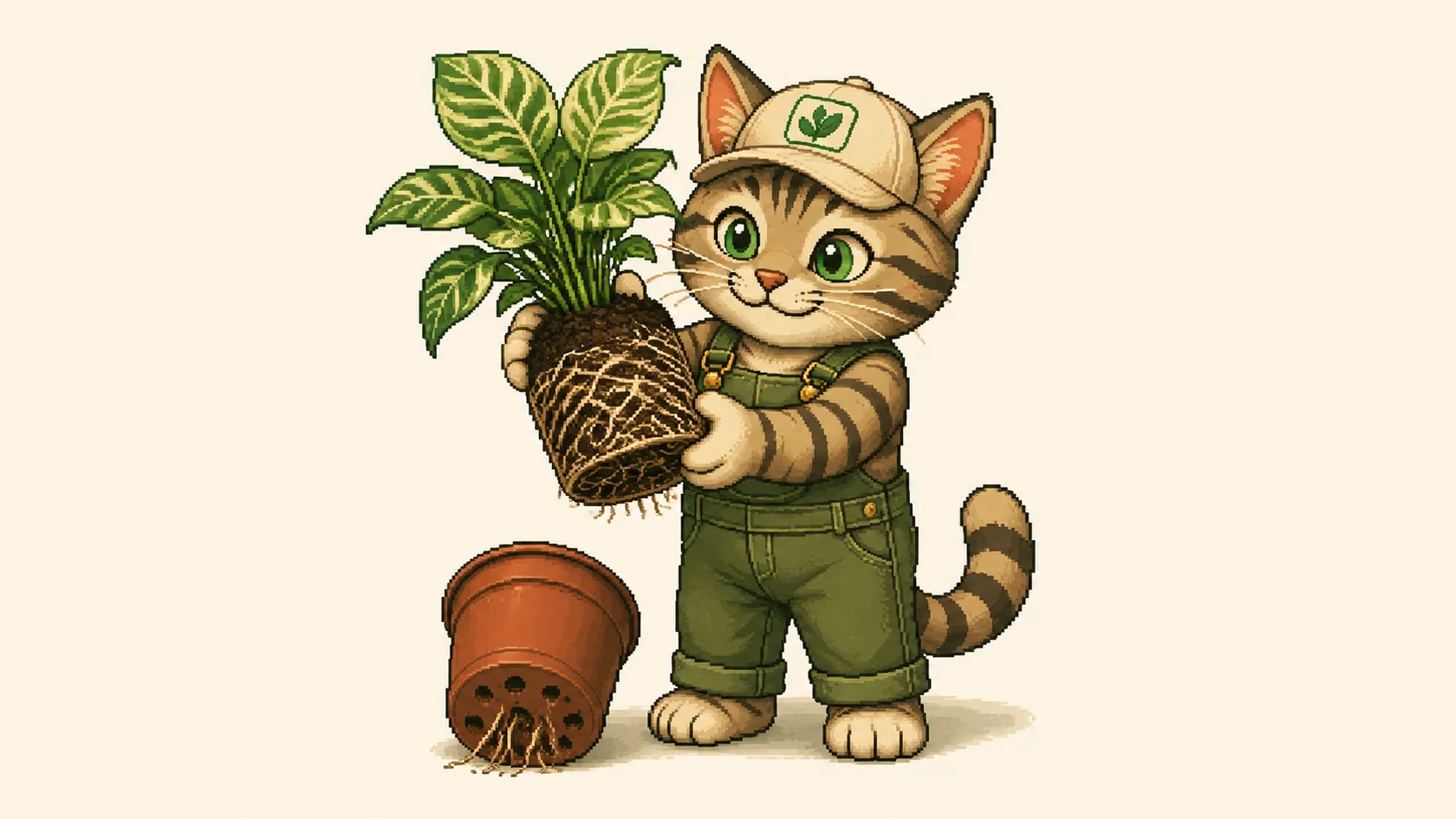
A root ball with almost no soil left in it holds little food and little water. Roots circle the inside of the pot, push out of the drainage holes and stand on the surface.
The plant dries out within a day or two of watering and the leaves go evenly pale. Food poured into a pot in that state runs straight through it.
Repot into a pot one size larger with fresh mix. Loosen the outside of the root ball first so the roots grow outward instead of continuing their circle.
A white crust on the soil surface or around the pot rim is mineral left behind by water and fertilizer. It builds up over months, and roots work poorly in soil loaded with it.
Water thoroughly until it runs out of the bottom, then empty the saucer. Watering that only wets the top inch leaves the salts where they are and adds more.
To clear a heavy crust, flush the pot over the sink several times in a row and let it drain fully. Scrape the crust off and replace the top layer of soil with fresh mix.
A nitrogen shortage and the problems that copy it call for opposite actions. Food helps a plant with working roots in decent light. It does nothing for a plant in the dark and it harms one whose roots have rotted.
Settle the pot before anything else. The weight, the soil two inches down, the saucer and the roots take a minute between them and rule out the two cases where feeding is the wrong move.
Then change one thing and read the answer in the leaves the plant makes next. Leaves that have already gone pale rarely turn green again, so new growth is the evidence.
Dose and interval belong to the fertilizer you own. Take both from its label rather than from a general page, because concentrations differ from bottle to bottle.
An even pale green over the whole leaf, starting with the oldest leaves at the bottom. New leaves come in small and pale, and growth slows or stops. There are no spots, no crisp brown edges and no pattern of dark veins on a pale blade.
Fresh potting mix or a general houseplant food during active growth covers it. Read the dose and the interval from the label of the bottle you own. Water the plant first so the food does not sit against dry roots.
Yes, and it is the most common mix-up. Roots in wet soil die back and stop carrying food, so the leaves pale even in freshly fed soil. The pot weight, the saucer and the state of the roots separate the two cases.
Mostly not. A leaf that has lost its color keeps it. Read the result in the leaves the plant makes over the following weeks, which should come in larger and darker than the last set.
They do not work as a fertilizer in a pot. Fresh grounds release very little the plant can take up, and they grow mold when they sit wet on the surface. A thin dried layer or composted grounds do no harm and replace nothing.
No. Green veins on a pale blade is a separate pattern and usually shows on the newer leaves at the top. A nitrogen shortage fades the whole leaf, veins included, and starts at the bottom of the plant.
Last reviewed: 2026-09-07