What you see
Dry and crumbly an inch or two down, the pot noticeably lighter than after watering, leaves soft rather than crisp and the mix pulling away from the wall.



Feel the soil and lift the pot. Drooping leaves alone never tell you whether a plant is dry or drowning.
Leaves are the unreliable part. Wilting looks the same whether the roots are parched or sitting in water, and the wrong answer makes the plant worse within a week.
So the check runs bottom up. Soil first, weight second, leaves last.
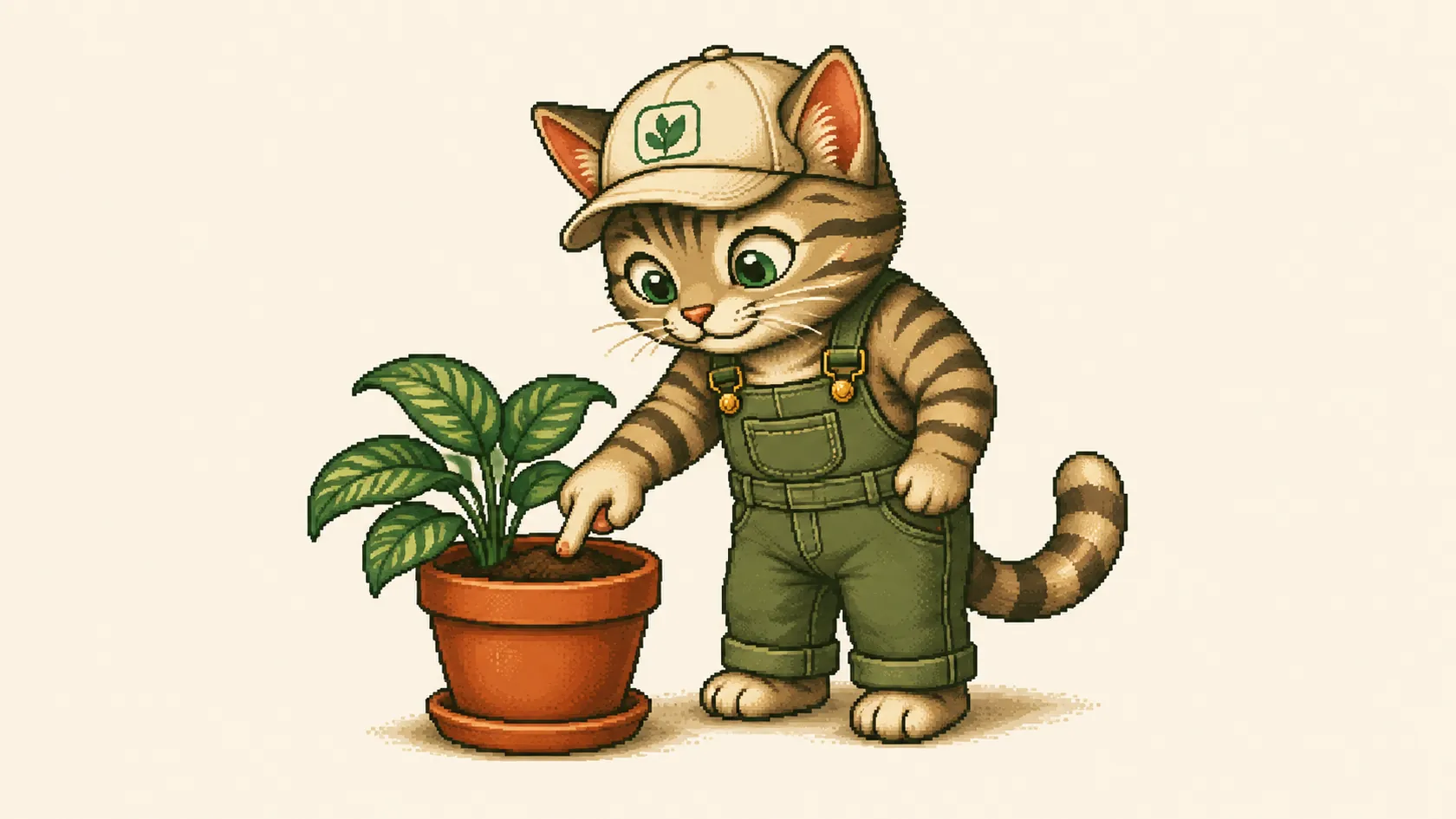
Push a finger into the mix an inch or two down, away from the stem. Dry and crumbly at that depth means most houseplants are ready for water. Cool and damp means you wait.
In a deep pot a finger only reaches the top layer, which dries first and says little about the root ball. A wooden stick pushed most of the way to the bottom and pulled out again reads the rest. Mix clinging to the lower end means there is still water down where the roots are.
Then lift the pot. Right after watering it is as heavy as it gets, and once you have felt that weight a couple of times you can tell a full pot from an empty one in a second. On a shelf of plants this is far quicker than testing each one.
Look at
Most likely cause
This is the ordinary case. The mix is dry at finger depth, the pot has lost weight, and the leaves are either still fine or hanging softly. The soil may have shrunk back from the wall of the pot.
Water now, and water properly rather than in sips. Small amounts wet only the top layer and leave the lower roots dry while the surface looks watered.
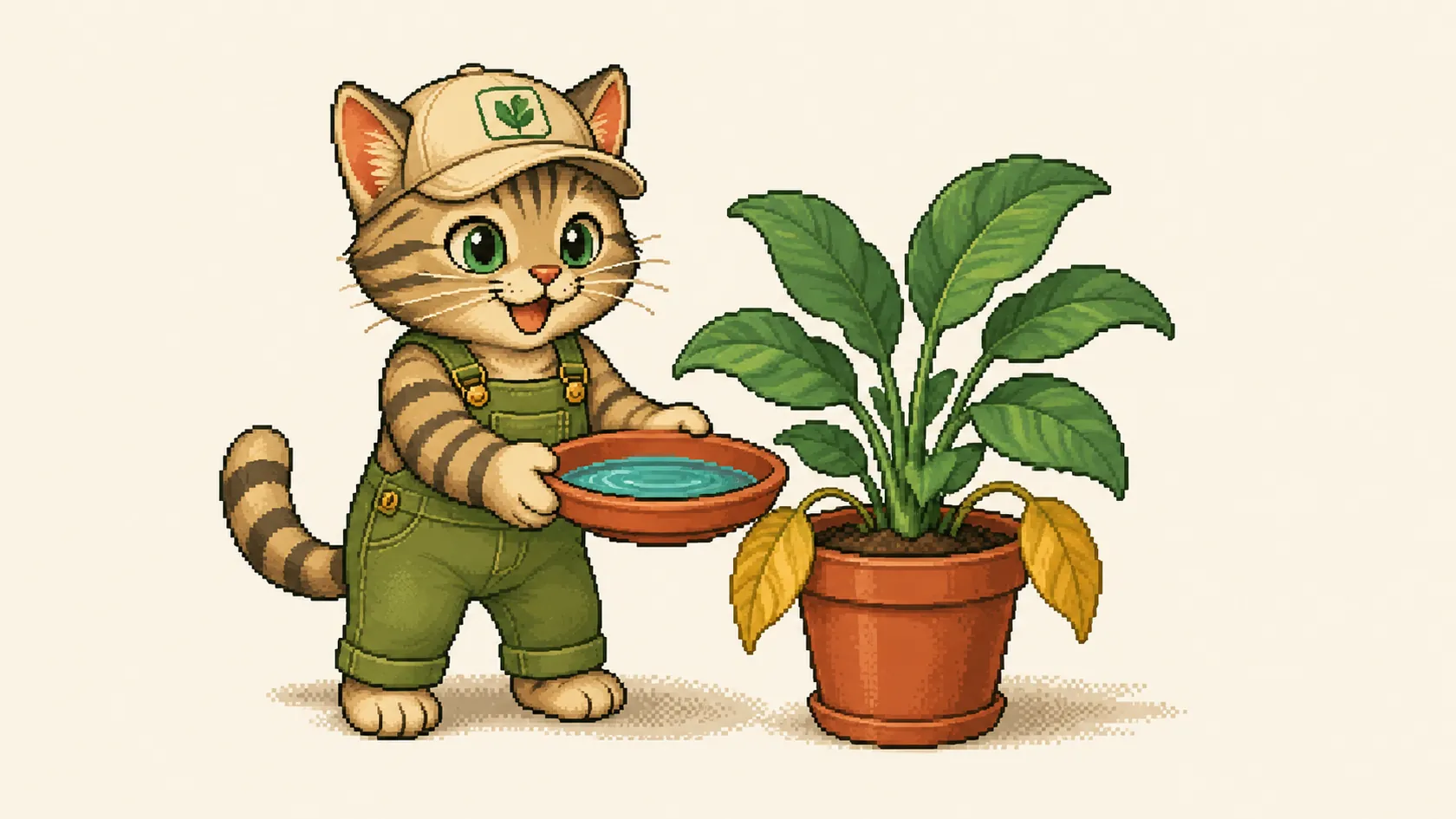
If the mix has dried out completely and water runs straight down the gap at the side, stand the pot in a bowl of water until the surface turns damp, then let it drain.
Drooping on damp soil is the case that costs plants their lives, because the reaction is to water again. Damaged roots cannot take water up, so the plant wilts in a wet pot and looks thirsty while it drowns.
The signs sit lower down. Yellow leaves at the base, a stem that feels soft just above the surface, water standing in the saucer or the cachepot, and a smell from the mix that was not there before.
Stop watering and lift the plant out of the pot. Firm, pale roots are healthy. Brown, soft roots that slip apart between your fingers are rotted and need cutting away before the plant goes into fresh mix and a clean pot.
Dry tips and brittle edges on a plant whose soil is damp are usually about the air around it rather than the water in the pot. Radiators, a heating season and a spot in a draft all dry the leaf out faster than the roots can replace what it loses.
Watering more in that state only puts the roots at risk. Move the plant away from the heat source, group pots together so the air between them stays damper, and stand it on a tray of pebbles and water if the room is very dry.
Hard tap water leaves the same brown edges on sensitive species over time. That one is about what is in the water rather than how much of it there is.
The two get confused because both end in a plant that looks tired. The difference is timing. A dry plant changes within a day and recovers within hours of being watered. A plant short on light changes over weeks and does not react to a watering can at all.
Light shows in the new growth. Leaves that come in smaller and paler than the older ones, long bare stretches of stem between them and shoots leaning hard toward the window all say the plant is reaching for light.
Stand where the plant stands and look toward the window. How much open sky you can see from there is roughly the light it gets. A yard further into the room is a much bigger drop than it looks.
A plant in dim light also needs less water, because it grows slowly and the mix stays damp for longer. Moving it closer to the window and watering it the same way as before is the combination that rots roots.
Water the mix, not the leaves, and keep going until it runs out of the drainage hole. That wets the whole root ball and carries built up salts out with it.
Half an hour later, tip out whatever stands in the saucer or the cachepot. Roots left sitting in water are the most common way a houseplant dies indoors.
Room temperature water is easier on roots than cold water straight from the tap. Filling the can the evening before is enough.
Bottom watering suits plants with fine hairy leaves and pots whose surface has gone water repellent. Stand the pot in a few inches of water, wait until the surface darkens, then take it out and let it drain.
No interval in days survives contact with a real home. A small pot in a bright warm room dries in a fraction of the time a large pot in a dim corner takes, and the same plant needs a different rhythm in July than in January.
Pot material matters too. Unglazed clay loses water through the wall, so those pots dry faster than plastic ones of the same size.
Plants with thick leaves or fat stems carry their own reserve and go far longer between waterings than thin leaved ones. Ferns and species from wet ground sit at the other end.
The habit worth building is the check rather than the schedule. Look at the plants on a fixed day, then water only the ones that come up dry.
Feel the mix an inch or two down and lift the pot. Dry at that depth and light in the hand means water it. Damp at that depth means wait, whatever the leaves are doing.
Watch how fast it changed. Thirst shows up within a day and reverses within hours of watering. Too little light shows over weeks in smaller, paler new leaves and stretched stems, and no amount of water fixes it.
No. A plant with damaged roots wilts in wet soil because the roots can no longer take water up. Check the mix before you water. Damp soil plus drooping leaves points to too much water rather than too little.
By the state of the mix rather than by a day of the week. Pot size, material, light, temperature and species all change the interval, and the same plant needs longer gaps in winter than in summer.
It reaches deeper than a finger, which helps in a large pot. The reading depends on how compact the mix is and on the salts in it, so treat it as a second opinion rather than a verdict. A wooden stick does much the same job.
No. Small daily amounts wet the top layer and leave the roots below it dry, and the surface stays damp enough for fungus gnats. Water thoroughly, then wait until the pot has dried out again.
Last reviewed: 2026-09-07