



How a moisture meter reads the soil
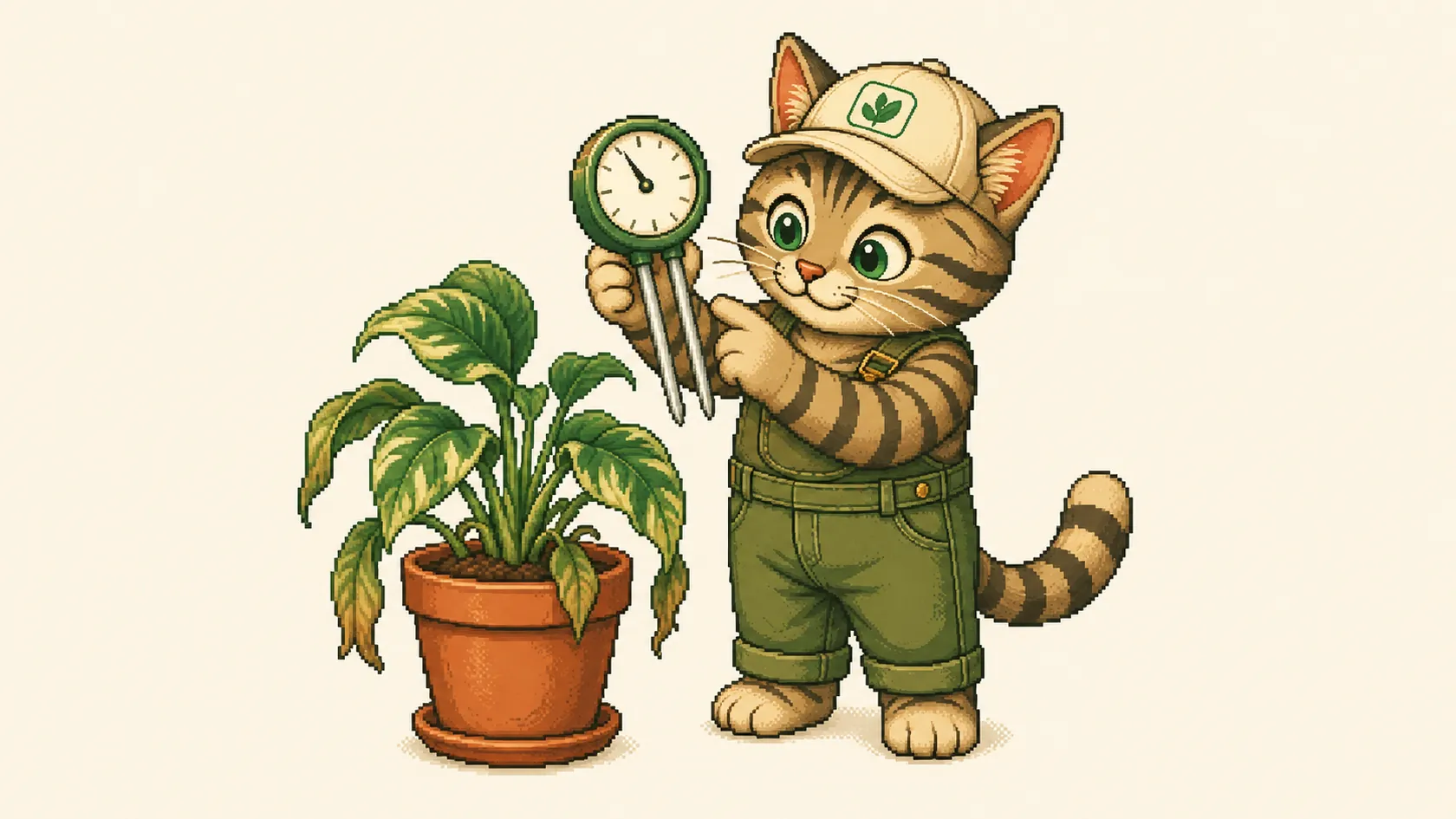
The common meters with one or two metal probes and a needle dial run without a battery. They measure how well the soil between the probes conducts electricity, and the scale turns that into a range from dry to wet.
So the needle does not answer to water alone. Dissolved fertilizer salts conduct as well and push the reading toward wet while the root ball is already dry. Soil you fed recently often shows wetter than it is.
Contact with the soil changes the result too. In a loose, coarse mix less material touches the probe and the reading comes out too low. In compacted soil it comes out too high.
The scales are not calibrated to any shared unit. Two models standing in the same pot regularly show different values, and neither of them is the correct one.
In mineral mixes, cactus soil and clay pebbles these meters barely work. The even contact the reading depends on is missing there.
How to take a useful reading
A value becomes usable once you measure the same way every time and calibrate it against your own experience with that plant.
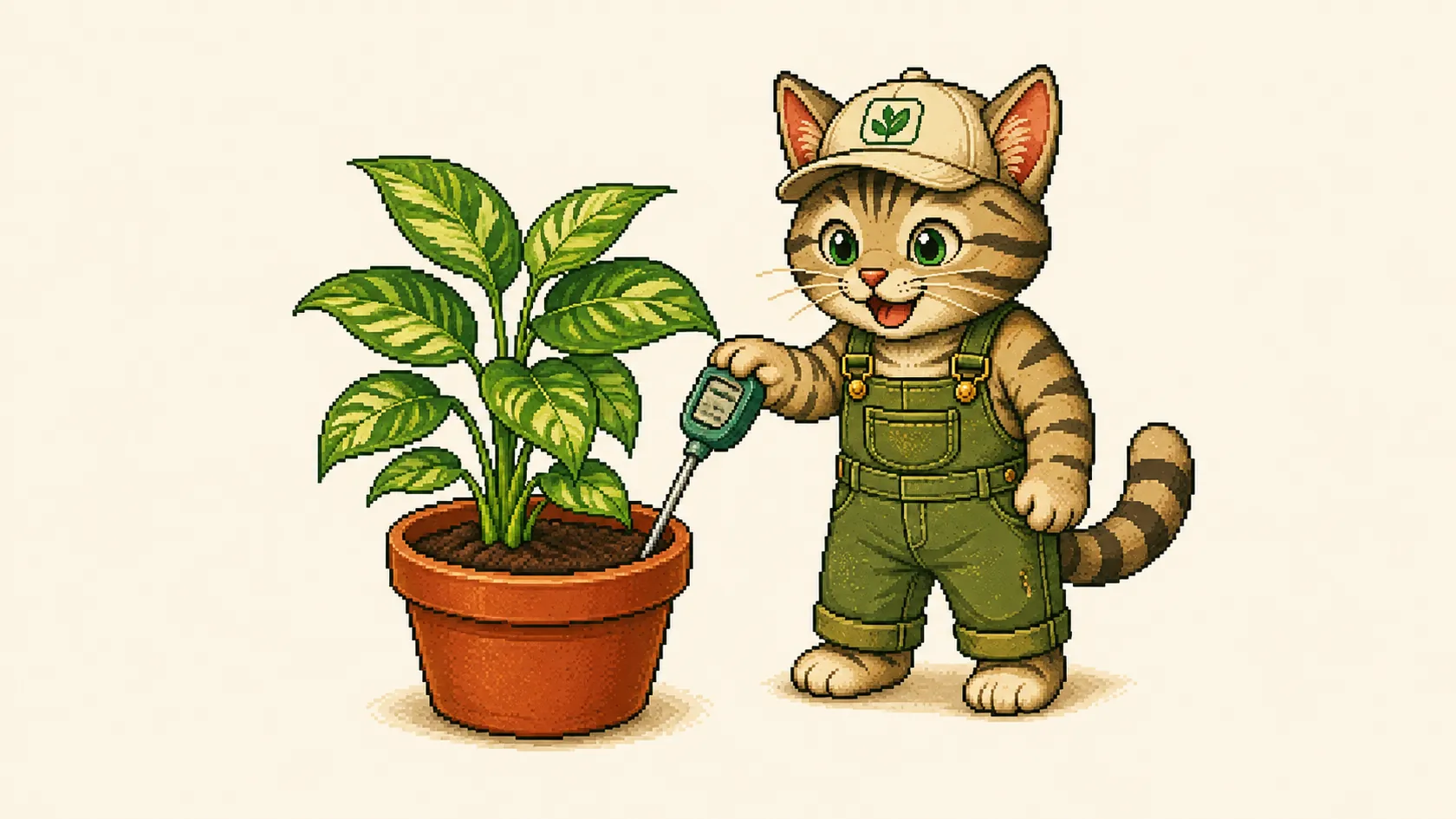
- Push the probe in slowly and at an angle, down to about two thirds of the pot depth, where most of the roots sit.
- Stay away from the stem and away from the rim. Soil at the rim is usually drier, and soil in the middle is often wetter.
- Read the value after a few seconds, while the probe is still in the soil.
- Take a second reading somewhere else in the same pot. Two very different values mean the root ball is wetted unevenly, and that is the real finding.
- Pull the meter out afterward, wipe the probe and dry it. A meter left standing in the soil corrodes and reads wrong from then on.
- Note the value once right after you have watered thoroughly, and once when your finger finds dry soil in the same pot. Your personal scale runs between those two points.
What the reading does not tell you
The meter reads the soil and not the plant. Whether a species wants to stand wetter or drier is in its own care guide and not on the dial.
It also reads a single point. A root ball can be dry at the edge and wet in the core, and an oversized pot makes that more likely.
A high value does not separate soil you watered an hour ago from soil that has not dried out in weeks. For the roots that is the difference that counts, and it shows up only in two readings a few days apart.
A soil meter says nothing about the air in the room. Brown leaf tips from dry heated air cannot be settled with it.
The check without a device
The finger test stays the fastest route. Push a finger an inch or two into the soil. If it feels dry down there, most houseplants are ready for water.
Pot weight is the most reliable method for small and medium pots. Lift the pot right after watering, then lift it again a few days later. The difference is obvious, and it judges the whole root ball instead of one spot.
A wooden skewer replaces the finger in a deep pot. Push it down to the bottom, pull it out and look at it. Dark soil clinging to the wood means wet, and a clean dry stick means dry.
Look in the saucer and inside the cachepot as well. Water still standing there after ten minutes gets tipped out, whatever a reading says.

When a meter earns its place
In a large planter a meter makes sense. A finger reaches only the top layer while the roots sit much deeper, and the pot is too heavy to lift.
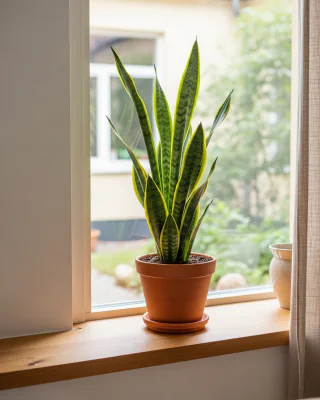
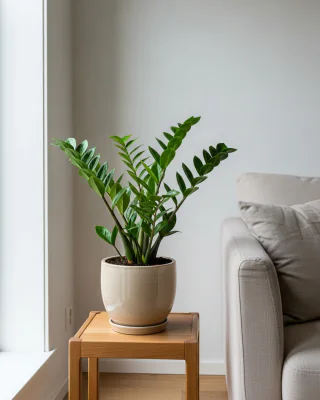
A second opinion also helps with plants that take badly to too much water. Snake plant, ZZ plant and other water-storing species show wet soil only once the roots have already suffered.
For pots you can barely reach, such as a hanging basket near the ceiling, a long probe is easier than a finger.
In hydroculture you need no moisture meter. The water level indicator does that job there.
Digital meters and soil sensors
Digital meters show a number in percent. That number looks more precise than a needle. It rests on the same measuring principle and on the same interference from salts and substrate.
Sensors that stay in the pot and report to a phone mainly give you a curve. Their use is in the shape of it, because you can read off how fast this particular pot dries out.
Never take such a number without a reference point of your own. Measure once after watering through, and once at the point where you would normally water, then work from those two values.
A reading does not replace looking at the plant. Drooping leaves, yellow lower leaves and a musty smell from the pot are findings no device delivers.
Related plants
Keep reading
Common questions
How does a moisture meter for plants work?
The metal probe measures how well the soil conducts electricity at that spot, and the scale turns it into a range from dry to wet. Wet soil conducts better than dry soil. Dissolved fertilizer salts conduct as well and shift the value upward.
Are moisture meters for plants accurate?
Not as an absolute measurement. The scales are not calibrated, and two devices show different values in the same pot. As a comparison against yourself they are usable, once you know which deflection means freshly watered and which means dry on your own plant.
What number on a moisture meter means water now?
There is no number that holds for every meter, because each scale is divided differently and every plant stands differently. Compare two readings on the same plant instead, one right after watering and one when the soil is dry at finger depth.
Can you leave a moisture meter in the soil?
With the simple probe meters it is better not to. The probe corrodes in permanently wet soil and the value drifts wrong over time. Measure at intervals, wipe the probe and store the meter dry.
Does a soil moisture meter work in cactus soil?
Barely. Coarse mineral mixes do not sit evenly against the probe, so the display reads too low. For cacti and succulents, pot weight and a wooden skewer are the better checks.
Do you need a moisture meter for indoor plants at all?
For ordinary pots the finger test and pot weight are enough. In large planters, on deep-rooting plants and in spots you can hardly reach, a long probe removes real uncertainty.
Last reviewed: 2026-09-07