



How the setup is put together
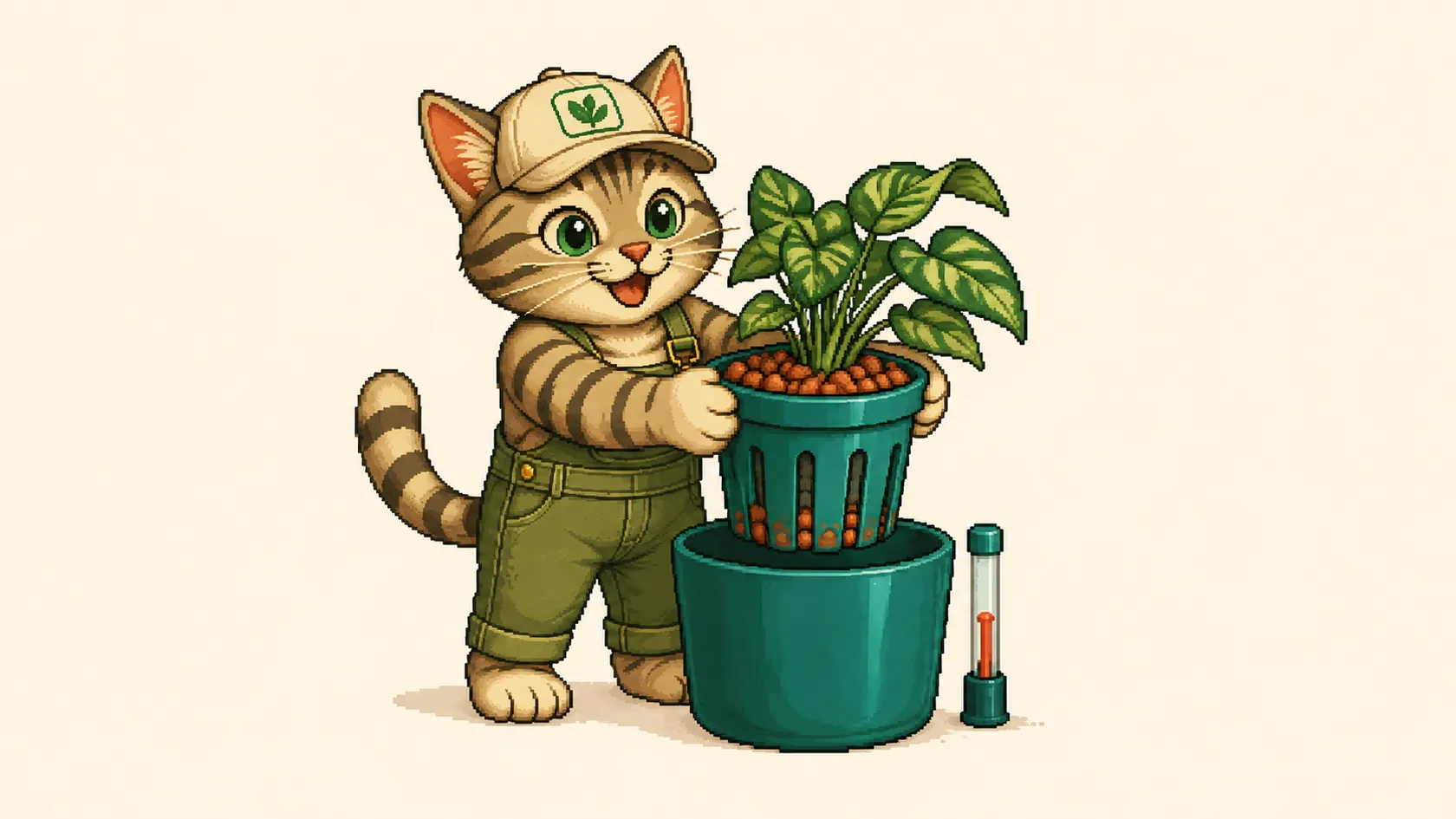
There are three parts. The plant sits in clay pebbles inside an inner pot with slots in its sides, that pot stands in a watertight outer container with no hole, and a water gauge shows how much water is left in the bottom.
The pebbles are fired clay. They hold almost no water themselves and have two jobs: holding the plant upright and keeping air between the roots.
The gauge is a float in a tube with a scale from minimum to maximum. It reads the water level in the container rather than the needs of the plant, and that is exactly how to read it.
Roots grown in water look different from soil roots. They are thicker, paler and far less branched. That is why moving a plant between the two systems is a rebuild of its root system rather than a change of pot.
Refilling and the dry stretch
Only ever fill to the maximum mark. Above that the base of the stem stands permanently in water, and that is where rot starts.
Then wait until the gauge reads minimum, and leave the container standing empty for another two or three days. In that stretch the lower roots get air. That pause is the core of the method and the reason a setup like this fails less often than soil kept permanently wet.
Use water at room temperature. Cold water straight from the tap is a shock to roots sitting in a heated room.
Without a gauge, work with a clear outer container you can see into, or fit a gauge. Refilling by feel almost always ends with the water level too high.
In winter the plant uses much less, because it grows and transpires less. The gap between refills gets longer on its own.
Feeding
Every nutrient comes from the water. Without fertilizer a setup like this looks fine for a few months and then yellows from the bottom up.
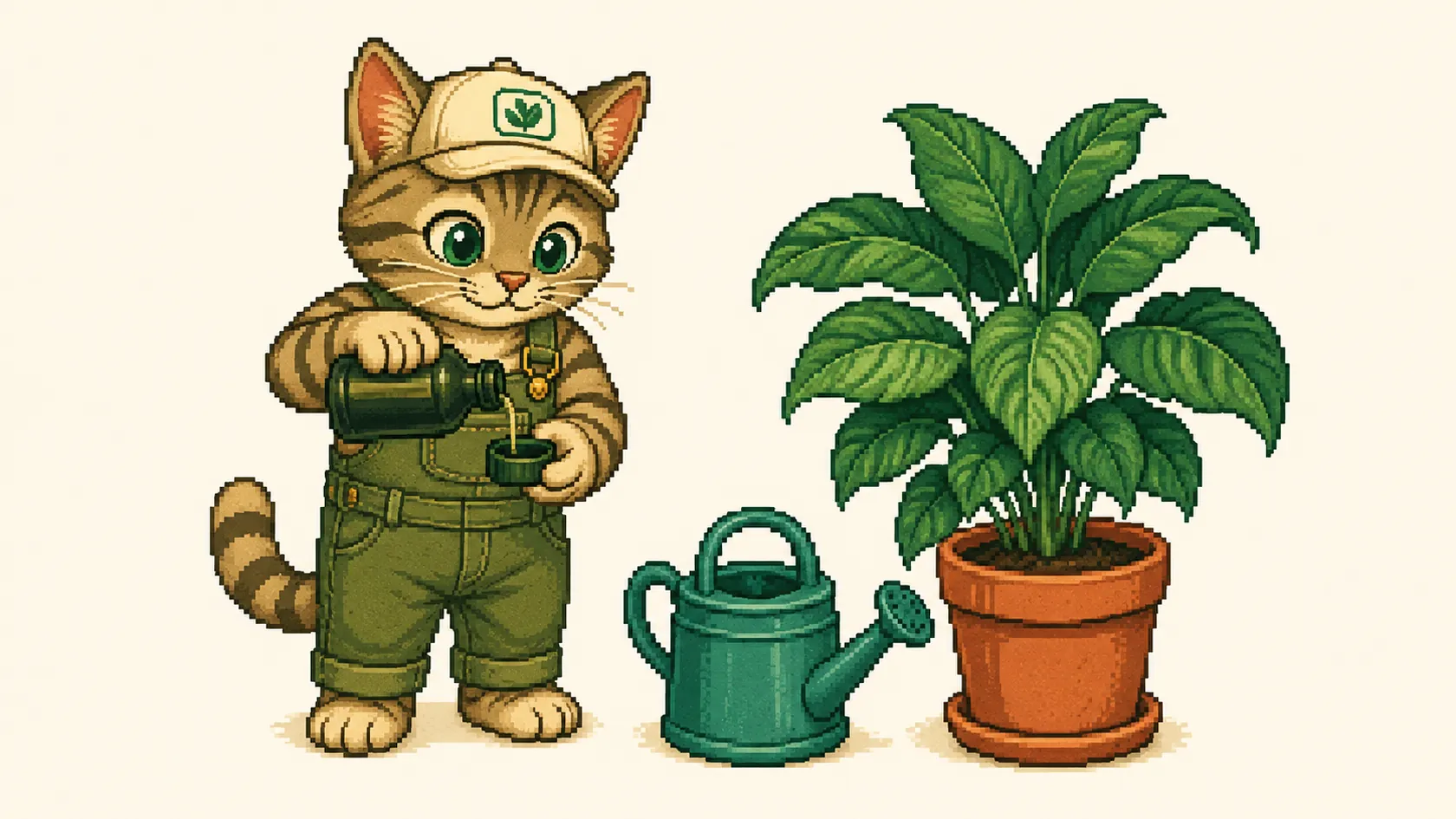
There are two practical routes. A liquid fertilizer made for hydroponic growing goes into the refill water at the dilution on the label. An ion exchange fertilizer is mixed into the pebbles once and releases nutrients into the water over months.
Ordinary houseplant fertilizer is formulated on the assumption that soil buffers part of the salts. In a container of standing water that buffer is missing, and the concentration climbs with every dose.
Flush the whole thing through every few months. Lift the inner pot out, run lukewarm water through the pebbles and set it back. That clears the salt and mineral residue that otherwise shows as white crust on the pebbles.
Feed less in the dark months. A plant that is barely growing takes up almost nothing, and the rest stays in the water.
Which plants suit it
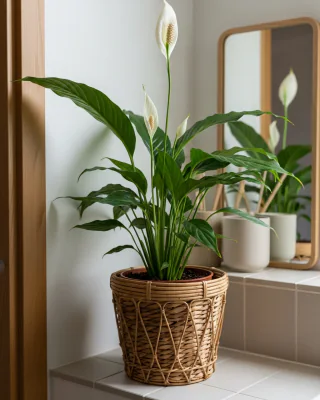
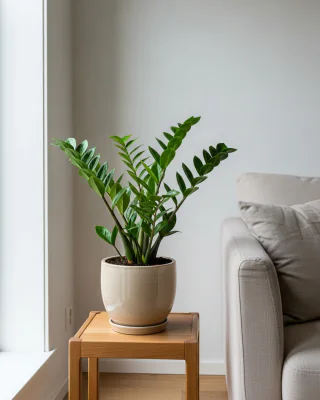
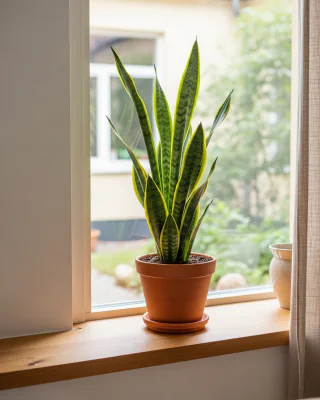
The good candidates are species that take some steady water in soil too and have strong, unfussy roots. Pothos, peace lily, ZZ plant, snake plant, corn plant, kentia palm, chinese evergreen and anthurium all belong here.
Cacti and succulents do not. Their roots need a real dry period between waterings, and this system is built around a reservoir rather than a drought.
Orchids do not grow in clay pebbles either. They want coarse bark with a lot of air, and the water culture some growers use for them is a separate method with its own rules.
Plants sold already growing this way come with roots that are adapted. They are the easiest entry point, because the conversion is done.
Moving a plant from soil
Convert in spring, while the plant is growing and makes new roots quickly. Young plants and rooted cuttings handle the switch far better than a large old specimen.
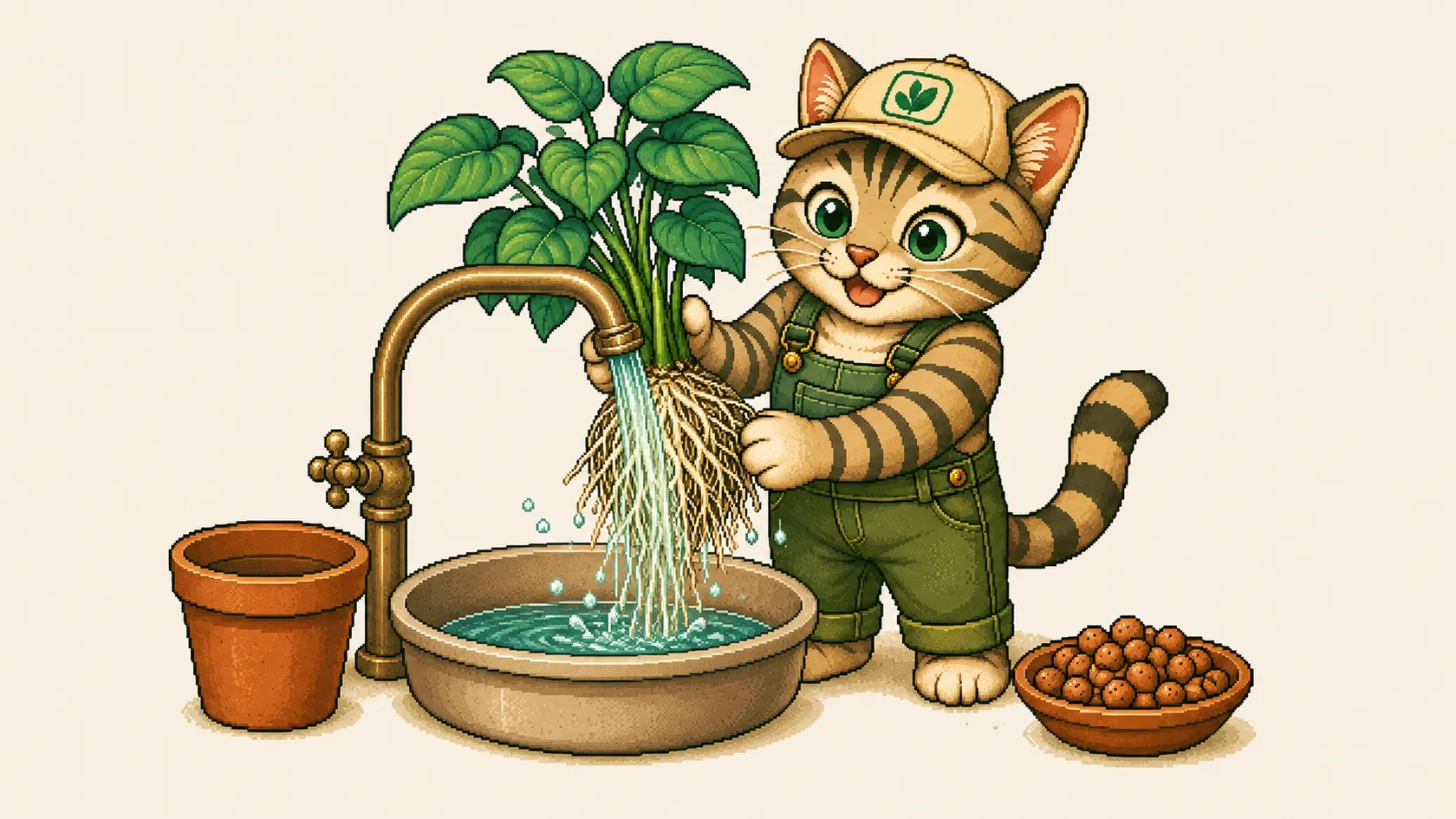
Wash the root ball completely clean. Hold the roots under lukewarm water and work every trace of soil out. Soil left between the pebbles packs down there and rots.
Cut soft brown roots away with a clean blade. Firm pale roots stay, even when washing has left them shorter than they were.
Set the plant into the inner pot and fill clay pebbles around it. Keep the water level low for the first weeks, right at minimum, so the roots grow downward and adapt to the water.
Do not feed until a new shoot appears. Until then the plant can take up very little and the fertilizer sits unused in the container.
Expect drooping and dropped leaves in the first weeks. The old soil roots are barely working and the new ones are still forming. A plant that stays bare after that had a root ball too old for the switch.
What can go wrong
Green growth on the top layer of pebbles is algae. It comes from light and nutrients and does the plant no harm. Swap the top layer out if it bothers you, or move the container somewhere less bright.
Soft brown roots and a stale smell from the container mean the water level has been too high for too long. Flush it through, cut the rotted parts away, and refill only after the gauge has sat at minimum for a few days.
Brown leaf tips here usually come from too much fertilizer in the water or from dry heated air. Flushing settles the first, and the second is a question of where the plant stands.
Fungus gnats are rare, because clay pebbles give them no organic material to lay in. When they do appear, there is usually a pocket of old soil left in the root ball.
Related plants
Keep reading
Common questions
How often do you water hydroponic houseplants?
As often as the gauge asks. Fill to maximum, wait until it reads minimum, then leave the container empty for two or three days. Depending on the plant, the size and the season, that works out anywhere from a week to several.
Which houseplants grow well hydroponically?
Tough foliage plants with strong roots, such as pothos, peace lily, ZZ plant, snake plant, corn plant and kentia palm. Cacti and succulents are out, because they need a real dry period.
Can you switch a houseplant from soil to hydroponics?
Yes, ideally in spring and with a young plant. The roots have to be washed completely free of soil, and the plant then grows new water adapted roots. That takes a few weeks and usually costs a few leaves.
What fertilizer do hydroponic houseplants need?
One labeled for hydroponic growing, either liquid in the refill water or an ion exchange type mixed into the pebbles. Regular houseplant fertilizer counts on soil buffering the salts, and here there is no soil to do it.
What is the difference between hydroponics and semi-hydroponics?
Semi-hydroponics is the houseplant in clay pebbles over a still reservoir with a gauge. Hydroponics is the wider term for growing without soil and includes systems where a pump keeps the nutrient solution moving.
Why is there green growth in my clay pebbles?
That is algae, formed from light and the nutrients in the water. It does not harm the plant. Replacing the top layer of pebbles is usually enough.
Last reviewed: 2026-09-07