



Which plants root in water
Plants with visible nodes along a soft stem are the dependable ones. Golden pothos, heartleaf philodendron, monstera and inch plant all root in a glass on a bright sill.
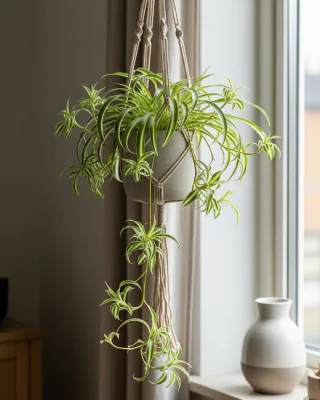
Spider plant is easier still. The plantlets on the runner already carry root buds, so a plantlet snipped off and stood in water roots within days.
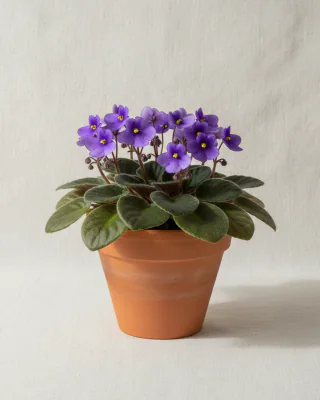
African violet and begonia grow from a leaf rather than a stem, and they do better pressed into damp substrate than left in water. A snake plant leaf will root in water over months, and a variegated one comes back plain, because the pale edge does not carry through a leaf cutting.
Succulents and cacti rot in water. Their cuttings dry for a few days and then sit on a mineral mix.
A plant that grows from one stem with no side shoots, most palms among them, cannot be propagated this way at all. Those come from seed or from an offset at the base.
- Golden pothos, heartleaf philodendron, monstera, inch plant: stem cuttings with a node.
- Spider plant: a plantlet off the runner.
- African violet, begonia: leaf cuttings, in substrate rather than water.
- Succulents and cacti: let the cut dry, then use a mineral mix.
- Palms and other single-stem plants: not from cuttings at all.
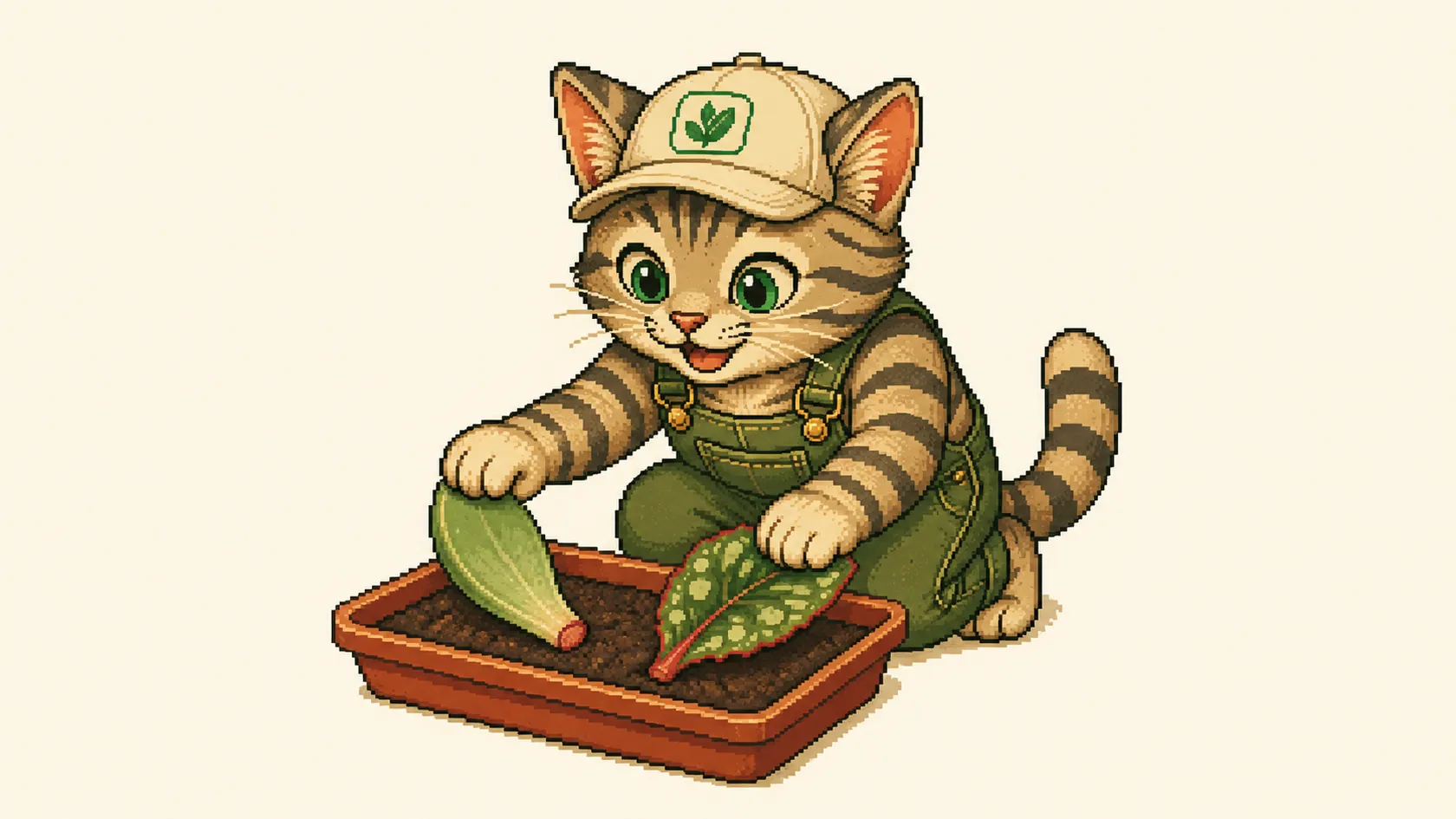
Where to cut
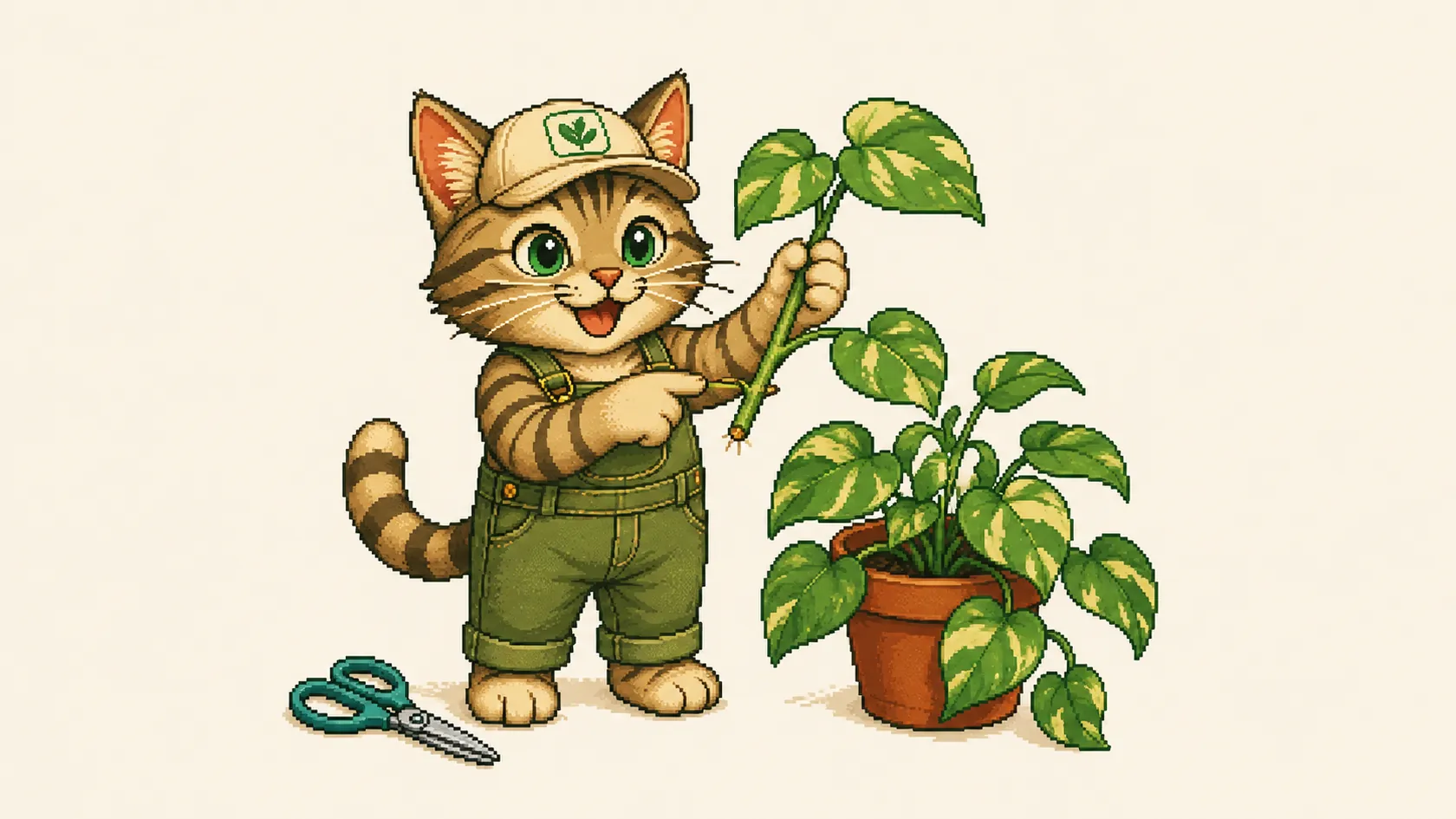
Find a node first. On a pothos or a philodendron it is the slight bump where a leaf sits, often with a small brown nub beside it. That nub is a root waiting to start.
Cut about a quarter inch below the node with clean scissors or a clean blade. One or two leaves and at least one node is enough, and a longer piece is not better.
Take off any leaf that would sit under the water. A submerged leaf turns to slime within days and fouls the whole glass.
Cuttings taken in spring and summer root faster, because the plant is already in growth. The same cutting taken in midwinter can sit for weeks doing nothing.
Setting the glass up
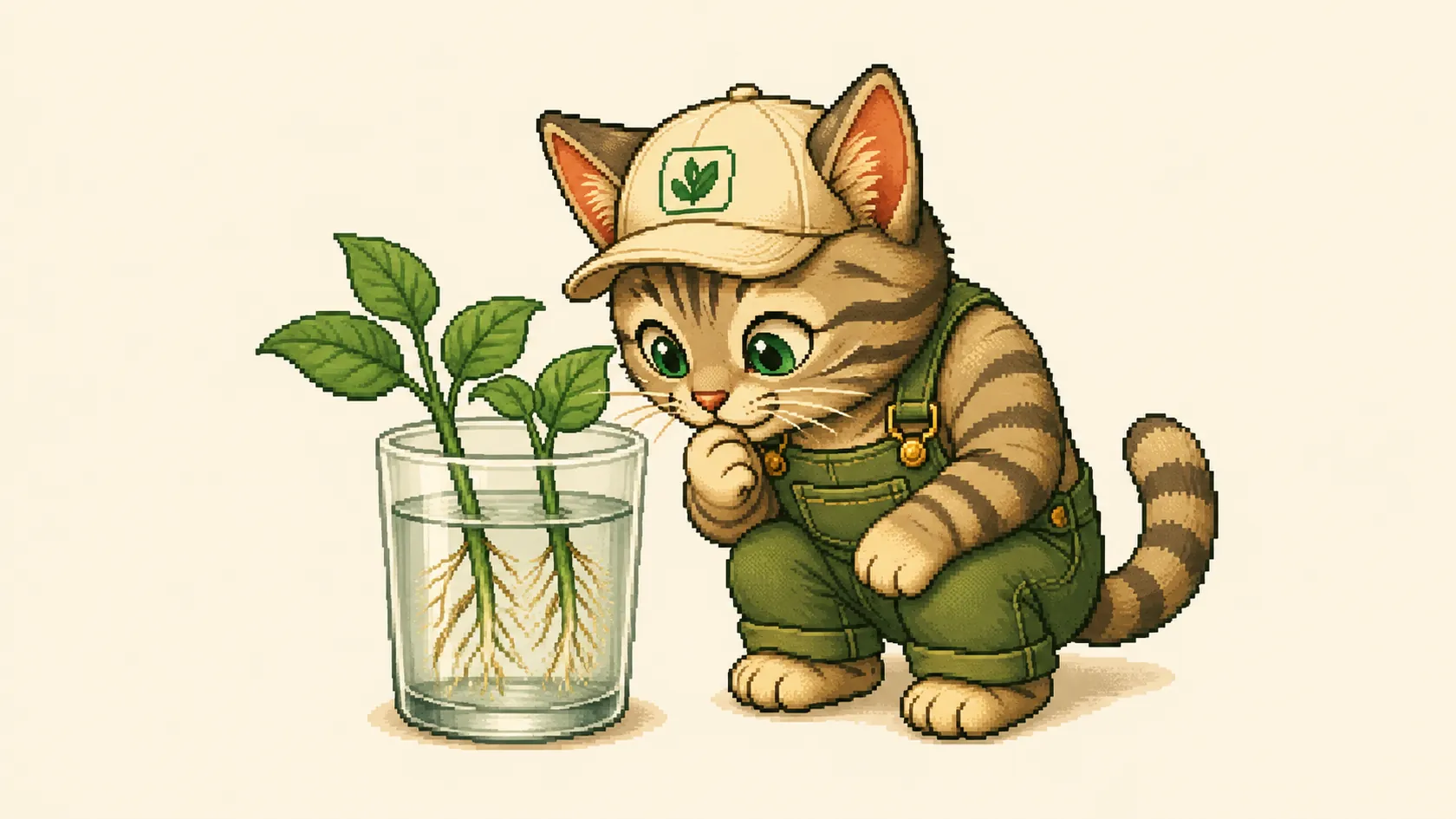
Any container works and a clear one lets you watch the roots. Fill it with room temperature water so the node is covered and the leaves stay above the surface.
Stand it in bright light out of direct sun. A window with full afternoon sun heats the water and the cut end goes soft.
Change the water about twice a week, and any time it turns cloudy. Rinse the glass as well, since the film on the inside is where the trouble starts.
Rooting hormone belongs to cuttings going into substrate. In a glass of water it does little, and honey or cinnamon in the water replace nothing that changing the water does better.
What you should see, and when
First a white bump swells at the node, then a root pushes out of it. On a pothos that often happens within one to two weeks. A monstera or a rubber plant can take a month or more.
A cut end that goes brown and soft is rotting. Cut back into firm tissue above the damage, rinse the cutting, and start again in clean water.
Nothing at all after several weeks usually means too little light, a piece taken without a node, or a cutting made while the plant was resting over winter.
Roots that grow long and pale with no branching are normal in water. They branch after the cutting goes into soil.
Moving the cutting into soil
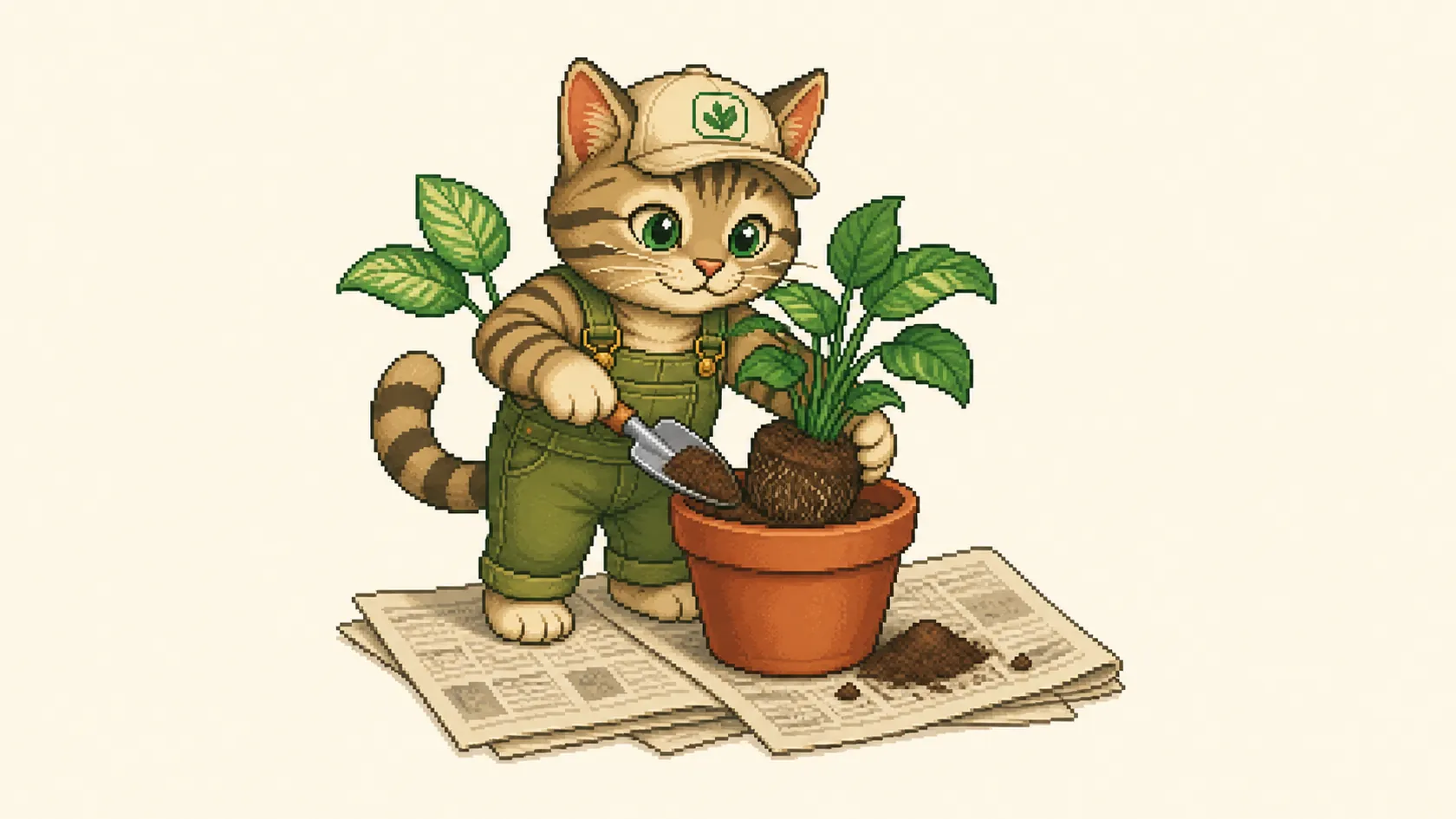
Pot it up once several roots are one to two inches long. Waiting for a large tangle makes the move harder, because water roots are brittle and break as you fill mix in around them.
Water roots and soil roots are not the same thing. The ones grown in a glass are thinner and softer, and part of them dies back after potting while the plant builds roots suited to soil.
Use a small pot with a drainage hole and an ordinary houseplant mix. Hold the cutting upright, fill in around the roots, tap the pot on the table instead of pressing down, and water it in.
Keep the mix damp rather than dry for the first two weeks, then go back to letting the top inch dry between waterings. Some drooping in the first days is normal and passes as the new roots take over.
Leaving a cutting in water for good
A cutting can live in water for a long time. Pothos and inch plant often do it for years. Growth stays slower than in soil, because plain water carries almost nothing to live on.
If you keep one that way, change the water weekly and add a very dilute liquid feed every few weeks once the roots are established. Use less than the label dose rather than more, since there is no soil to buffer it.
Brown slimy roots, water that smells, or leaves yellowing one after another are the point to refresh everything or pot the plant up.
A cutting kept in water for a year adapts to it, so a late move into soil is harder than an early one.
Related plants
Keep reading
Common questions
How long does it take for plant cuttings to root in water?
One to two weeks for pothos and philodendron, four weeks or more for monstera, rubber plant and other thick stems. Warmth and bright light shorten it. A cutting taken in midwinter often waits until spring.
Which houseplants can be propagated in water?
Ones with a node on a soft stem. Golden pothos, heartleaf philodendron, monstera and inch plant are the reliable ones, and spider plant plantlets root in days. Succulents and cacti rot instead.
Do you need a node to propagate in water?
For a stem cutting, yes. A single leaf can grow roots in a glass and still never produce a shoot, so it stays a leaf forever. African violet and begonia leaves are the exception and they root in substrate.
How often should you change the water?
About twice a week, and any time it turns cloudy. Rinse the glass when you do. Water left standing is the usual reason a cutting rots instead of rooting.
When should I move a water cutting into soil?
Once several roots are one to two inches long. Longer roots break more easily during potting and take the change harder.
Why is my cutting rotting instead of rooting?
Usually a leaf sitting under the water, water left too long, or a spot that is warm and sunny. Cut back to firm tissue, strip the lower leaves and start again with clean water in a cooler spot.
Last reviewed: 2026-09-07