



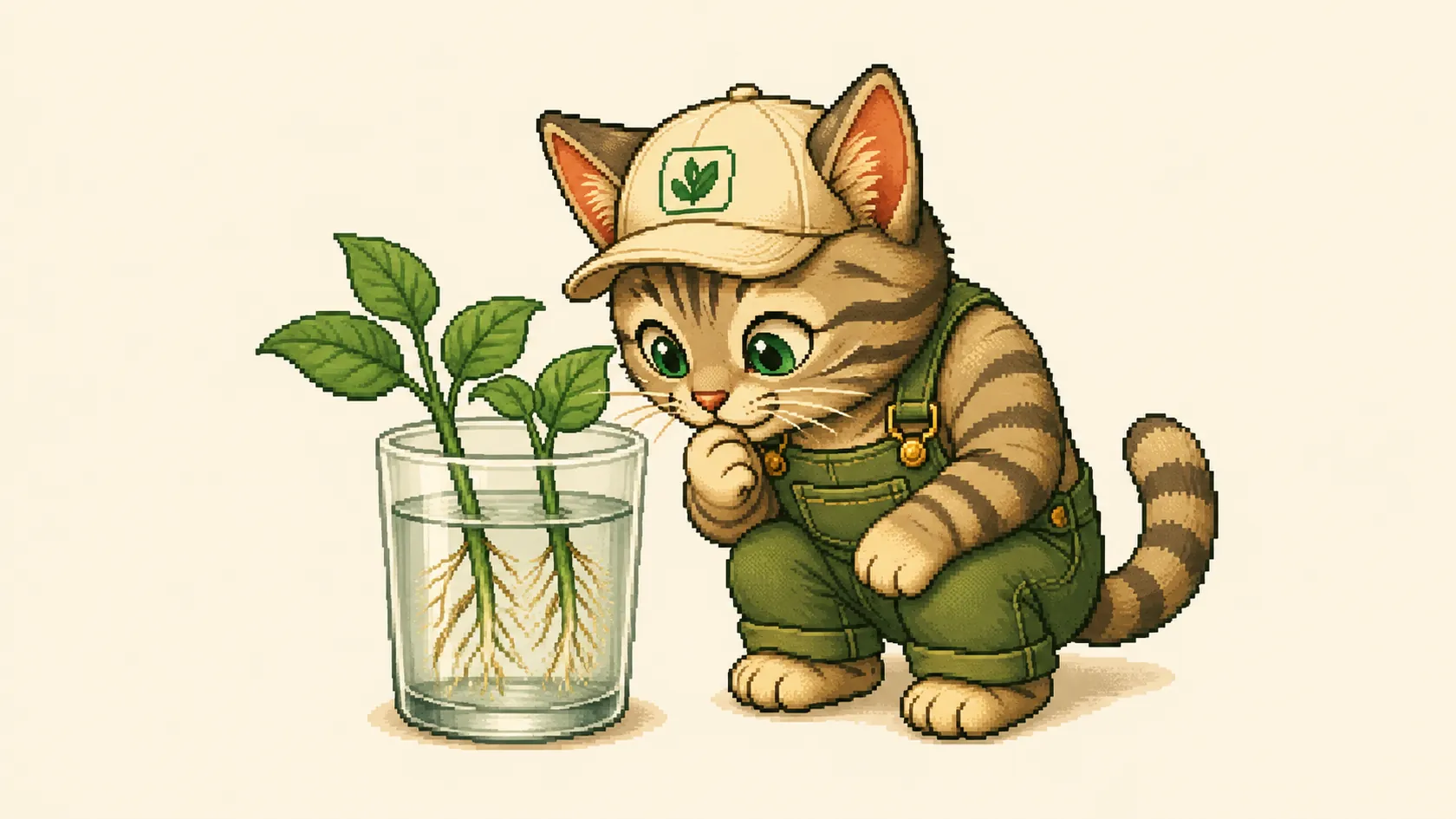
So use it where it earns its place, which is with woody and slow stems. The easy houseplants root in a glass of water in a couple of weeks and gain nothing from it.
What it does and what it cannot do
Auxin collects at the base of a cut stem naturally and starts the process of forming roots there. Adding more of it concentrates that signal, so roots usually appear earlier, in greater number and around the whole rim of the cut rather than from one side.
More roots at the start matter later. A cutting with a spread of roots takes hold in the mix faster and is less likely to sit and rot while it decides what to do.
It changes nothing about the rest of the conditions. Warmth at the base, light without hard sun, humidity around the leaves and a mix that drains all still have to be right.
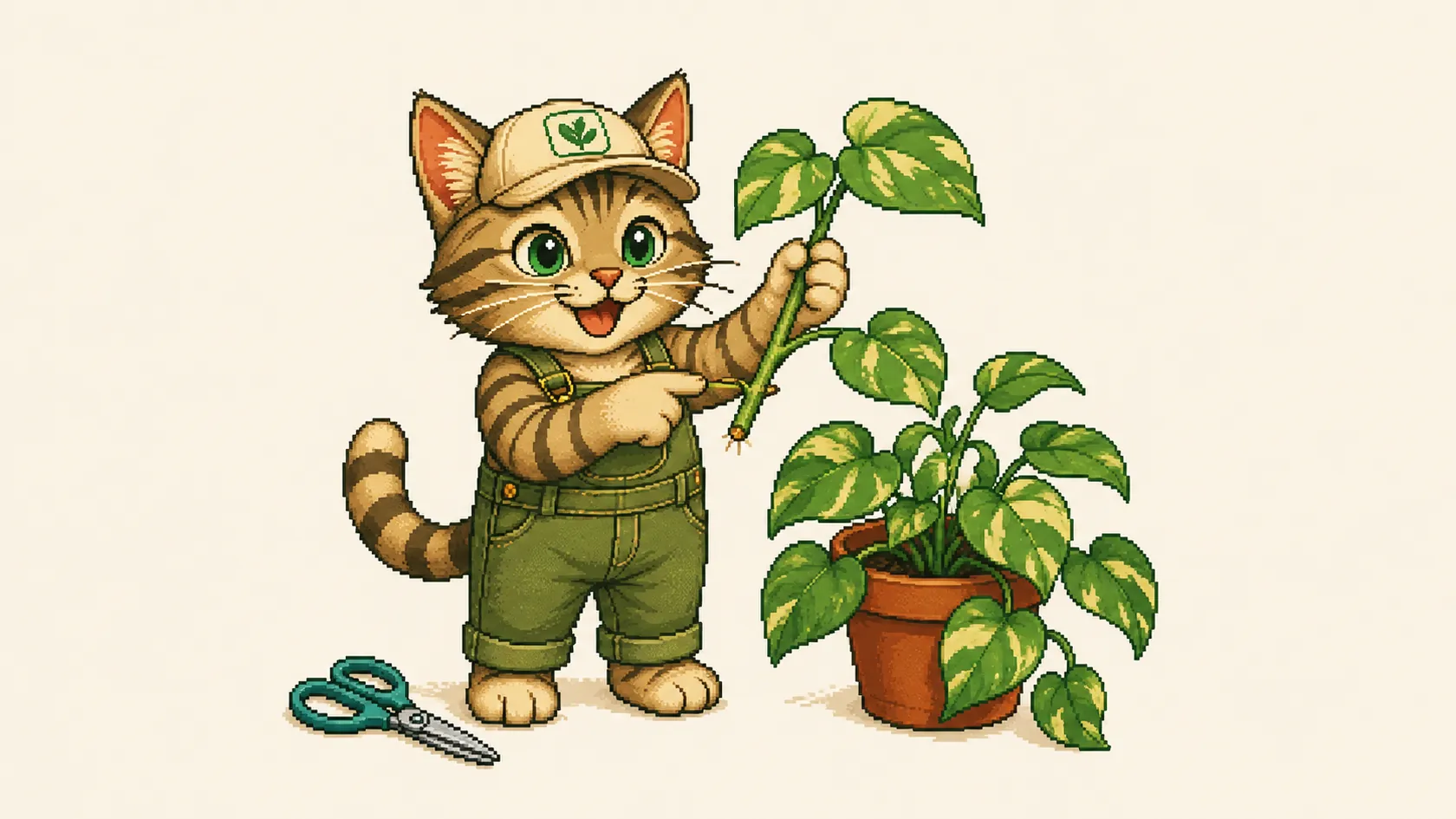
It cannot replace a node either. Most houseplant cuttings root from the node, the slightly thicker point where a leaf or aerial root joins the stem, and a piece cut between two nodes rarely roots no matter what you dip it in.
Cuttings that need it and cuttings that do not
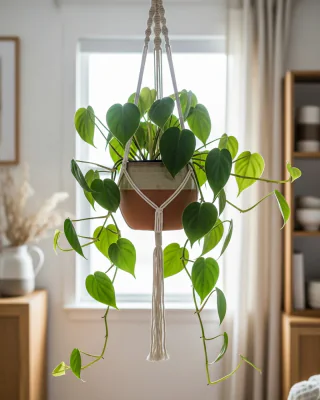
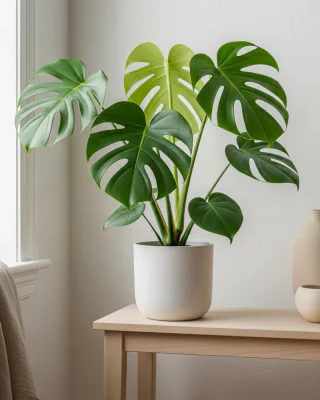
Skip it for pothos, heartleaf philodendron, monstera, tradescantia, spider plant runners and most soft-stemmed trailing plants. They root within one to three weeks in water or damp mix and are not waiting on a signal.
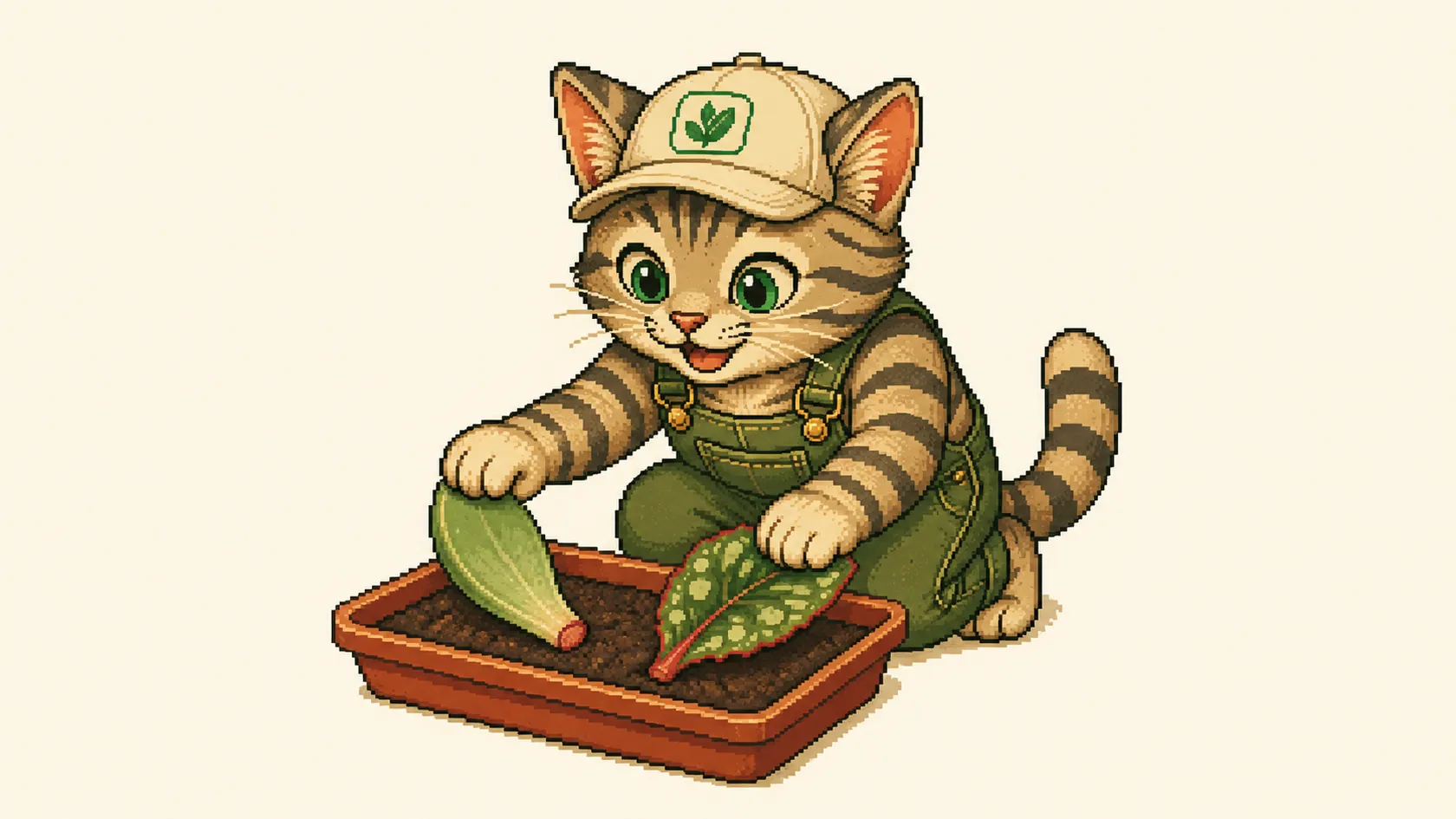
Skip it for succulents and cacti as well. Their cuttings are callused over for a few days first, and a wet powder on that cut surface works against the drying they need.
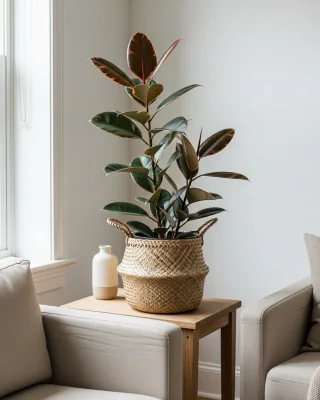
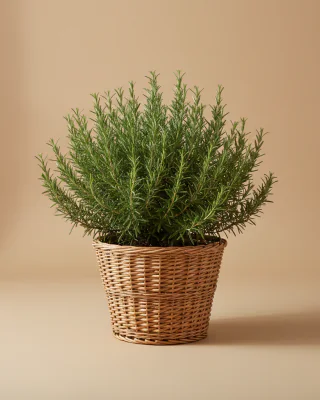
Use it on the harder cases. Woody and semi-woody stems such as rubber plant, fiddle-leaf fig, hibiscus, oleander, rosemary, bay laurel, camellia and gardenia root slowly and unevenly, and that is exactly the gap the hormone closes.
Use it on large batches too. When you are rooting a dozen cuttings at once, a more even start means fewer of them sit around long enough to rot.
- Worth it: woody and semi-woody stems, slow rooters, large batches
- Not needed: pothos, philodendron, monstera, tradescantia, spider plant
- Leave it off: succulents and cacti, which callus dry instead
- No help at all: a cutting without a node or a growing point
Powder, gel and liquid
Powder is the common form. You wet the base of the cutting, dip it, tap off the excess and set it in the mix. It stores well and is the easiest to use on many cuttings in a row.
Gel sticks to the cut without needing to be wetted first and stays in place when the cutting goes into the mix. That makes it the tidier option for a few cuttings at a time.
Liquid concentrate is diluted and used either as a quick dip or as a longer soak of the base. It gives the most even coverage and asks for the most care, since strength and timing both come from the label.
All three do the same job, and the form matters much less than getting the dose and the placement right. Follow the strength on the label rather than reasoning your way to a stronger mix, because too much auxin stops root formation instead of driving it.
How to apply it
Cut a healthy shoot with a clean, sharp blade just below a node and remove the lowest leaves so the bottom two inches of stem are bare. A blunt cut crushes the tissue the roots have to come from.
Pour a little of the powder into a separate small dish and work from that. Dipping cuttings into the original container carries sap and bacteria back into your whole supply.
Wet the base briefly, dip about half an inch to an inch of it, and tap the stem so only a thin film stays on. A thick lump of powder holds water against the cut and encourages it to rot.
Make the planting hole with a pencil or a stick first, then lower the cutting in and firm the mix around it. Pushing a dipped cutting straight into the mix scrapes most of the hormone off on the way down.
Wash your hands after handling it and keep the container away from food, children and pets. It is a garden chemical, not a kitchen ingredient.
Honey, willow water and cinnamon
Willow water is the one home remedy with a real basis. Willow shoots contain salicylic acid and small amounts of the same class of hormone, so soaking chopped young stems in water for a day or two gives a weak solution to stand cuttings in. It is weak and variable, and it will not match a labeled product on a woody cutting.
Honey contains no rooting hormone at all. It is used because it discourages microbes on the cut surface, which can help a cutting hold on long enough to root by itself. It speeds nothing up.
Ground cinnamon is used the same way, as a dusting that keeps mold off the cut. Treat both as protection rather than as propagation.
Aspirin and apple cider vinegar circulate as substitutes and neither supplies auxin. If a cutting roots after that treatment, it was a cutting that would have rooted anyway.
After the dip
Set the cutting in a mix that stays damp without staying wet, such as a seed mix opened up with perlite, or damp coarse sand. Wet, dense mix rots the base before roots form.
Keep the air around the leaves humid with a clear bag or a propagator lid, and open it daily for a few minutes so the condensation clears and mold has less chance.
Warmth at the base drives the whole process. A spot around normal room temperature or a little above works, and a cold windowsill in winter is the most common reason a dipped cutting sits and does nothing.
Bright indirect light, no direct midday sun, and no fertilizer until roots have formed. A cutting has nothing to take nutrients up with yet, and the salts only stress the cut.
Test by feel after a few weeks. A gentle tug that meets resistance means roots have taken hold. Pulling cuttings up to look at them repeatedly breaks the first fine roots off.
Related plants
Keep reading
Common questions
Do you really need rooting hormone?
Not for the easy houseplants. Pothos, philodendron, monstera and tradescantia root in water within a few weeks on their own. It pays off on woody and slow stems and when you are rooting many cuttings at once.
How do you use rooting hormone powder?
Cut just below a node, strip the lowest leaves, wet the base and dip about half an inch into powder tipped into a separate dish. Tap off the excess, make a hole with a pencil and lower the cutting in so the powder stays on.
What is a natural rooting hormone for plants?
Willow water is the only common one with a real basis, since willow shoots contain salicylic acid and small amounts of related hormones. It is weak and inconsistent, and honey and cinnamon protect the cut rather than promote roots.
Can you use rooting hormone in water propagation?
Powder washes off in a glass and does little. A liquid concentrate diluted as a short soak of the base before the cutting goes into water is the usable version, and most water-rooted houseplants do not need it.
Can you use too much rooting hormone?
Yes. Above a certain concentration auxin suppresses root formation instead of driving it, and a thick clump of powder holds water against the cut. Use the strength on the label and tap the excess off.
Does rooting hormone expire?
It loses strength over time, faster in warmth and light. Keep it closed, cool and dark, work from a small portion decanted into another dish, and replace it when cuttings that used to root reliably stop doing so.
Last reviewed: 2026-09-07