



Terracotta takes the most work and gives the most back, because everything it absorbed stays in the clay until you take it out.
What the white crust actually is
The pale crust on the outside of a clay pot and around its rim is mineral salts. They come from fertilizer and from the calcium in hard tap water, and they travel out through the porous wall with the water and stay behind when it evaporates.
That is why the crust is heaviest on unglazed terracotta and why plastic pots show it only on the surface of the mix. The clay is doing what it is meant to do.
A light crust harms nothing. A heavy build up blocks the pores, so the pot stops breathing and the mix inside stays wet longer than it should.
Green film on the outside of a pot is algae, which needs light and steady damp. It is a sign about the watering rather than a disease, and it scrubs off.
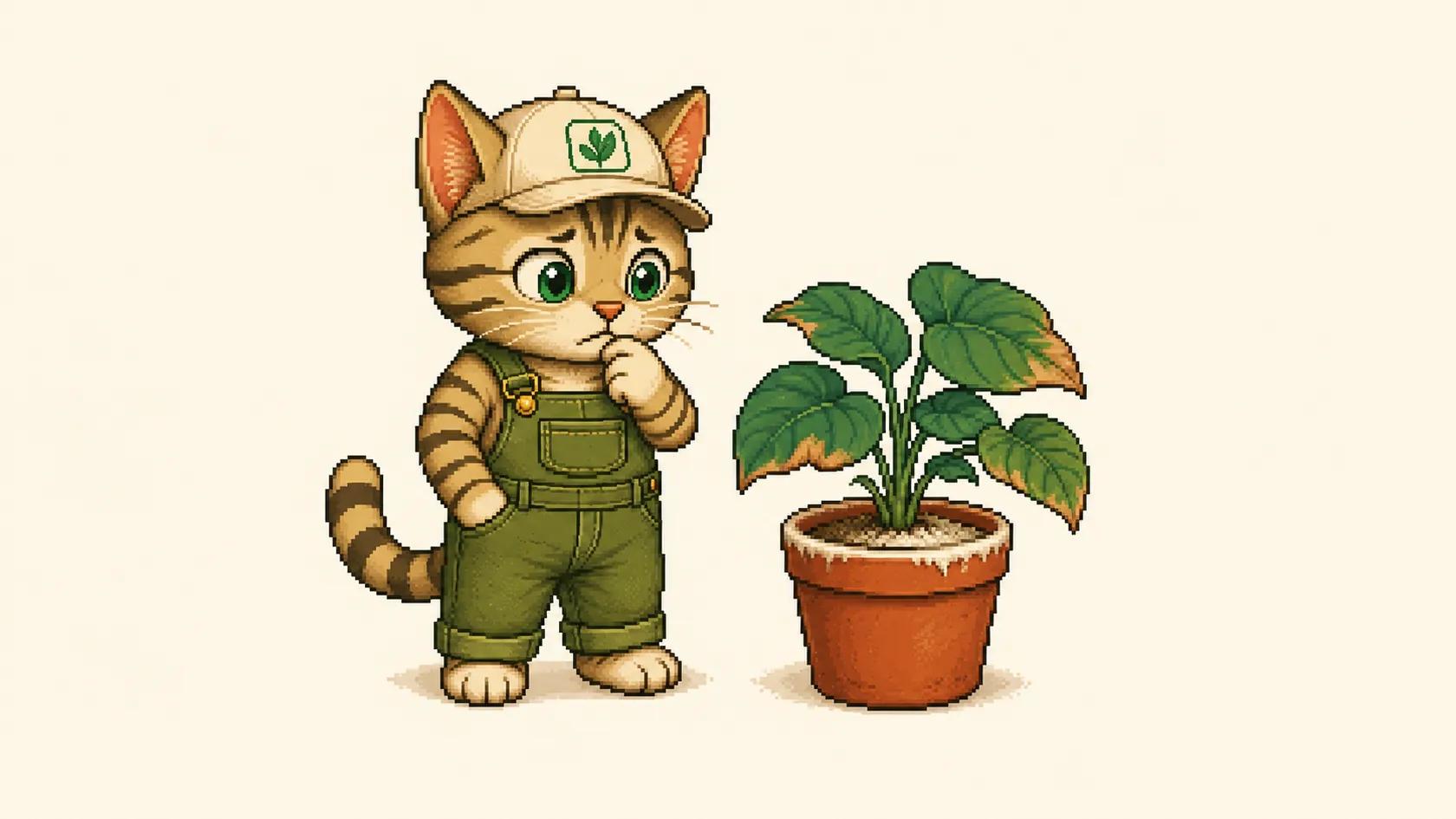
The basic clean for any pot
Tip out the old mix and pull out the roots. A stiff brush or an old kitchen brush takes the layer that clings to the wall, and a screwdriver or a skewer clears the drainage hole.
Wash the pot in warm water with a little dish soap and scrub the inside as well as the outside. Most of the useful work is mechanical rather than chemical, so the brush matters more than the product.
Rinse thoroughly. Soap residue left in a porous pot comes back out into the mix later.
Wash the saucer and the cachepot at the same time. Both hold the same salts and algae and both get forgotten.
Let the pot dry completely before you use it. Damp clay in a stack goes moldy and stays that way.
Taking the mineral crust off terracotta
Scrape the loose crust off dry with a brush or a blunt blade first. Doing it dry takes off far more than scrubbing it wet does.
Then soak the pot in a bath of water with vinegar added. The acid dissolves the mineral deposits and lifts what the brush could not reach. A heavily crusted pot may need an hour or more before the deposit comes away under the brush.
Scrub again after the soak, then rinse the pot thoroughly in clean water and leave it to dry. Vinegar left in the clay is not something you want against fresh roots.
Very old pots keep a stained look after all of this. That is the clay itself and it does the plant no harm.
Glazed and plastic pots do not need the soak. Their surface holds the deposit rather than absorbing it, so it wipes off.
When to disinfect and how
Disinfecting is for a pot whose last plant died of root rot or came out with insects on the roots. A pot that held a healthy plant needs a wash and nothing more.
The established method is a soak in a dilute bleach solution after the pot has been scrubbed clean. Scrubbing comes first, because a disinfectant does little against a layer of dried mix.
Rinse very thoroughly afterward and let the pot dry outdoors or in a ventilated room. Porous clay holds the solution, so give it more rinsing than a plastic pot.
Work with gloves, in a room with the window open, and never mix a bleach solution with vinegar or with any other cleaner.
Sun and full drying do useful work on their own. A washed clay pot left dry for a week is in a different state from one that went straight back into service damp.
When cleaning the pot is not the answer
White fluff on the inside wall of a pot and along the roots is not mineral crust. That is root mealybugs, and washing the pot only matters if the root ball gets washed clear of mix at the same time and the plant goes into fresh mix.
A pot that cracked in frost or has a chipped rim is done. Water runs out of the crack rather than through the mix, and the plant stays dry on one side.
A pot with no drainage hole cannot be fixed by cleaning it. Use it as a cachepot with a nursery pot inside.
If the crust returns within weeks, the answer is in the watering rather than the pot. Water until it runs out of the bottom rather than in sips, so the salts leave with the water, and go easier on the fertilizer.
Storing pots so the job stays done
Store pots dry and upside down, or stacked with a piece of newspaper between them. Clay pots stacked wet stick together and break when you separate them.
Keep terracotta out of winter frost if it stands outdoors. Water in the pores freezes, expands and flakes the surface off.
Clean a pot when it comes empty rather than when you need it. Dried on mix comes off far more easily the same day than after a season in the shed.
Soak a clay pot in water for a while before planting into it. A bone dry pot pulls water out of fresh mix and the new plant dries out faster than you expect.
Related plants
Keep reading
Common questions
How do you clean terracotta plant pots?
Scrape the dry crust off with a brush, wash the pot in warm soapy water inside and out, then soak it in water with vinegar to dissolve the mineral deposits. Scrub again, rinse thoroughly and let it dry completely.
What is the white residue on my clay pots?
Mineral salts from fertilizer and hard tap water. They travel out through the porous wall and stay behind as the water evaporates. A light crust is harmless, a heavy one blocks the pores and keeps the mix wetter.
Do I need to clean a pot before reusing it?
Scrub and rinse it in every case, because old mix and salts do the next plant no favors. Add a disinfecting soak only when the last plant died of root rot or had insects on its roots.
Can I use bleach to clean plant pots?
A dilute bleach soak is the usual way to disinfect a pot, and it goes after the scrubbing rather than instead of it. Rinse very thoroughly, dry the pot fully, wear gloves and never combine bleach with vinegar or another cleaner.
How do I get algae off the outside of a pot?
Scrub it with a brush and soapy water. It grows where the pot stays damp in the light, so it comes back unless the watering or the light changes. On terracotta it fades once the surface dries between waterings.
Should I soak a new terracotta pot before planting?
Yes. Dry clay draws water out of fresh mix, so a new pot straight off the shelf leaves the plant drier than you intend. Soak it in water for a while and plant into it damp.
Last reviewed: 2026-09-07