


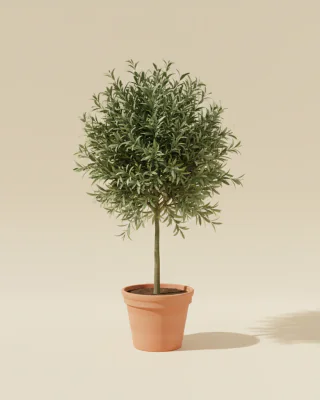
Yellow leaves on indoor olive tree
Olea europaea
Quick answer
Yellow olive leaves do not identify one cause. Compare leaf age and spots, then check wet soil, cold, rainfall and recent watering before changing care.
 Not sure it’s this plant?Check yours with a photo, free
Pet safety unknown
Which leaves are yellow?
The visible problem is leaves turning yellow, sometimes followed by premature leaf fall. Yellowing alone does not tell you whether leaves are old, water-stressed or carrying a leaf-spot problem.
Compare the age and position of yellow leaves, look for circular purple or brown spots with yellow halos, check whether the medium stays wet, and note recent cold, rainfall or watering changes.
Possible causes and next checks
Possible explanations include normal turnover of older leaves, prolonged wet soil or root stress, olive scab when characteristic spots are present, and environmental or cultural stress such as excess water, excess fertilizer or cold exposure.
Match the next action to the observation: improve drainage and stop keeping the root ball wet, protect a container from cold and excess rain, or remove fallen leaves and improve airflow when the scab pattern is present. Avoid adding fertilizer as a blind response.
What to watch next
Recheck the next flush and older leaves after the root-zone and exposure issue has been addressed. Continued spotting, spreading yellowing, premature fall or a wet, declining root ball calls for escalation rather than repeated feeding.
What yellow leaves cannot tell you
You cannot tell the cause of a yellow leaf from a photograph or color alone. No single indoor moisture threshold or fertilizer fix suits every cultivar and every Olea europaea container.
All indoor olive tree guides
Keep reading
Related plants
Last reviewed: