


How to propagate an olive tree
Olea europaea

Quick answer
Grow olive from seed sown in spring or from semi-ripe cuttings taken in summer, just after fruit set.
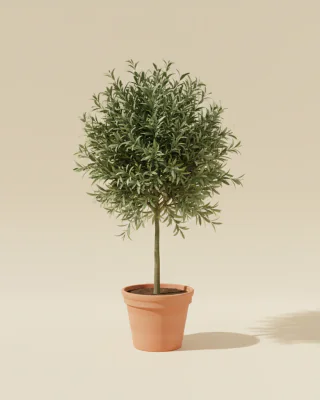
 Not sure it’s this plant?Check yours with a photo, free
Pet safety unknown
What plant material to use
Sow seed in spring at 13–15°C (55–59 °F), or take semi-ripe cuttings in summer, just after fruit set. Terminal, semi-hardwood and hardwood cuttings can all root. The best timing and wood type vary by cultivar.
How to propagate this plant
Grow olives from seed or from semi-ripe or softwood stem cuttings. Root cuttings in a sand-and-peat mix. Cultivars that are hard to root can be grafted onto a hardy rootstock instead.
Germinate seed at 13–15°C (55–59 °F). Under glass, give olives full light and a loam-based potting mix (such as John Innes No. 3) with added sharp sand. Root cuttings in sand-peat or peat-perlite with frequent misting and about 21 °C (70 °F) bottom heat.
Take a terminal or semi-hardwood cutting and, if you like, lightly wound the base. Dip the cut end briefly in rooting hormone and stick it in sand-peat. Keep it humid with frequent misting and bottom heat.
Signs of roots or failure
The first sign of success is visible roots. Harden the cutting off, then transplant it. Even with mist and bottom heat only 60–80% of cuttings root, so do not expect every one to take.
Midsummer cuttings may fail to root, and too much rooting hormone can harm them. Algae on cuttings and trays is also a risk, so keep it under control.
Aftercare and hygiene
Once rooted, harden the young plant off carefully before transplanting. Established olives suit a patio, a container or a greenhouse.
Choose vigorous cuttings before rooting, and keep algae off the cuttings and trays.
All indoor olive tree guides
Related plants

Last reviewed: