



How to repot a spider plant
Chlorophytum comosum
Quick answer
Repot when roots crowd the container, escape through drain holes, or push the plant out, not because a calendar says so.
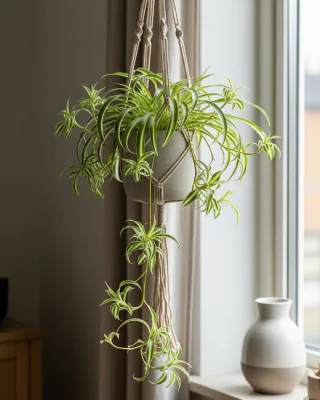
 Not sure it’s this plant?Check yours with a photo, free
Pet-safe
How to repot a spider plant
- 01
When to repot
Repot when Chlorophytum comosum roots are congested, escape through drainage holes, or push the plant out of its current container. A healthy plant does not need a larger pot merely because a set number of months has passed.
Use an active-growth window when possible rather than the darkest winter period. The root condition remains the more useful trigger than an exact calendar interval.
- 02
Choosing the next pot
Choose a container only modestly larger than the current root ball and keep a drainage hole. A large pot can leave extra medium wet around a dry or crowded plant.
- 03
How to repot
Lift the plant and loosen or assess the crowded fleshy roots. Move it into fresh peat-free multipurpose or general potting medium, keep the crown at its former depth, and fill around the roots without compacting a waterlogged mass.
- 04
After repotting
Water the fresh medium thoroughly and let it drain, then return the plant to bright, indirect light while allowing the surface to dry according to its conditions. Never leave the pot standing in runoff.
All spider plant guides
Keep reading
Sources3 references
- Royal Botanic Gardens, Kew: Plants of the World OnlineTaxonomy · accepted name · classification
- Royal Horticultural SocietyPosition · watering · feeding · repotting · brown tips · pests
- Clemson University Cooperative ExtensionLight · soil · water · temperature · feeding · pests · tip burn
Last reviewed: