



How to propagate spider plant
Chlorophytum comosum
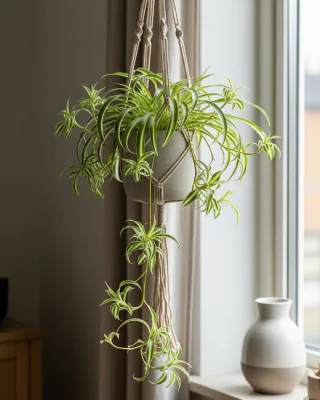
Spider plant makes plantlets on runners. Root a plantlet in a small pot while it remains attached, then sever the runner once roots form.
 Not sure it’s this plant?Check yours with a photo, free
Pet-safe
How to propagate by offsets / pups
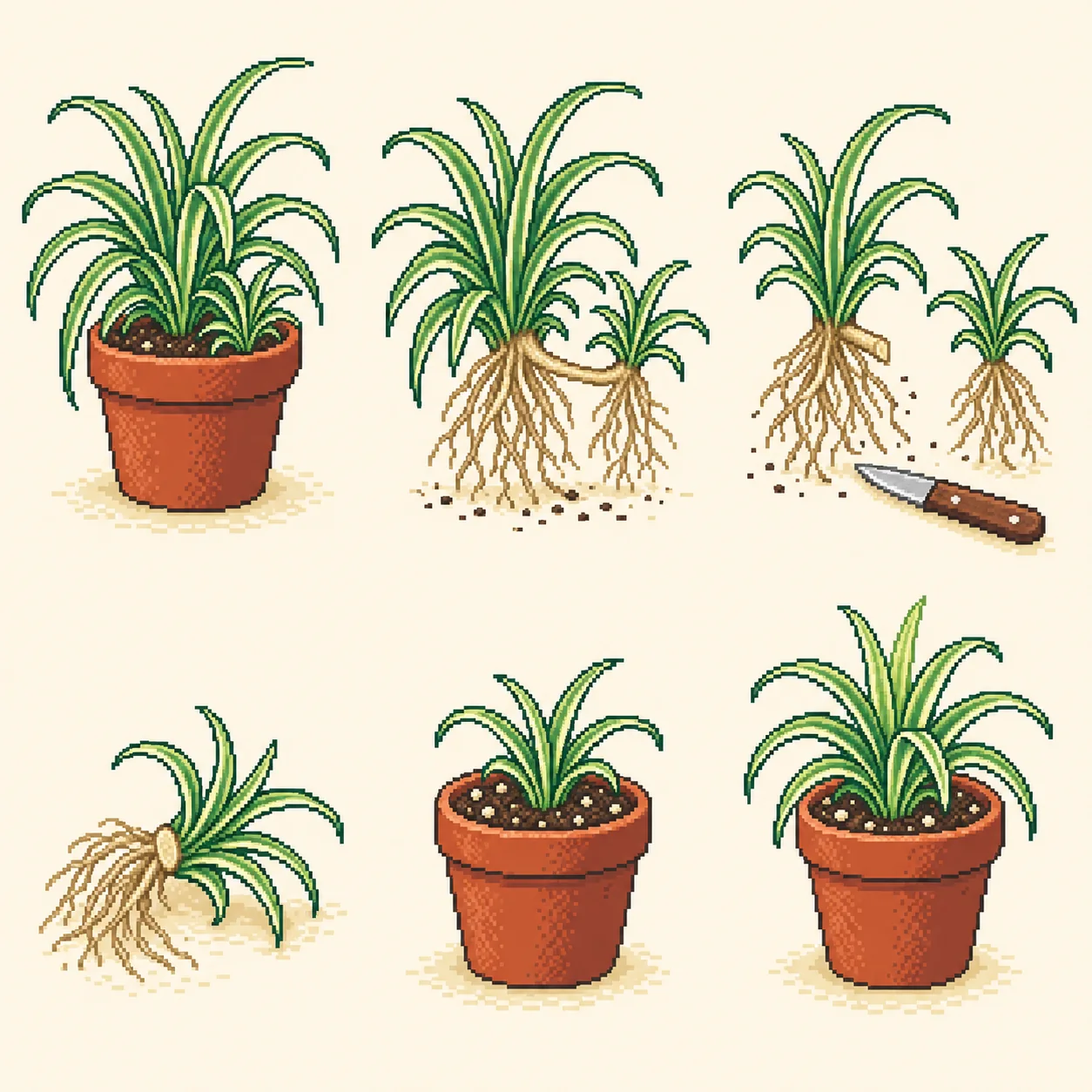
Spider plant makes plantlets on runners, so you can root a baby in a small pot while it remains attached to the parent. Once roots form, sever the runner and leave the rooted plantlet in that pot.
- 01
Choose a healthy plantlet on a runner. If it has no roots yet, leave it attached.
- 02
Set the plantlet base on moist, well-drained potting mix in a small pot beside the parent.
- 03
Keep the plantlet in place while roots form. Support the runner so the base stays in contact with the mix.
- 04
Once roots have formed in the small pot, cut the runner close to the plantlet.
- 05
Leave the rooted plantlet in that pot. Once the mix dries slightly, water thoroughly and let excess drain.
- 06
Give it bright indirect light and let the mix dry slightly between thorough waterings as new growth appears.
All spider plant guides
Related plants

Common questions
What is the easiest way to propagate a spider plant?
Root a plantlet in a small pot while it remains attached to the parent. Once it has roots of its own, cut the runner and leave the plantlet in that pot, watering after the mix dries slightly.
Should I cut a spider plant baby before it has roots?
Usually no. Let an unrooted plantlet sit on moist potting mix while it remains attached, then sever the runner after roots form and keep it in the same pot. An already rooted plantlet can be potted directly.
How long does a spider plant plantlet take to establish?
Establishment varies. Separate the plantlet after roots form, leave it in the pot where it rooted, and let the mix dry slightly between thorough waterings as stable new growth appears.
Sources: University of Wisconsin–Madison Extension’s spider plant guide and Clemson Extension’s spider plant factsheet support rooting plantlets while attached before severing and potting. Penn State Extension’s houseplant propagation guide supports natural layering and clean propagation practice.
6 steps · Sever the runner after roots form · Last reviewed: