



Light needs for a spider plant
Chlorophytum comosum
Quick answer
Give Chlorophytum comosum bright indirect light. Limit strong midday sun, while remembering that low light can slow growth and fade leaf stripes.
 Not sure it’s this plant?Check yours with a photo, free
Pet-safe
Light needs for a spider plant
Bright, indirect light
- 01
Best position and light
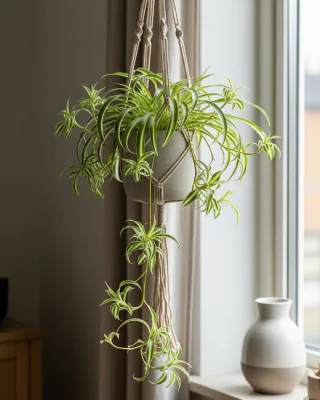
Bright indirect light is a suitable baseline for Chlorophytum comosum. Strong midday sun can scorch or bleach leaves, while low light slows growth and can reduce variegation.
Place the pot near a bright window behind a sheer curtain or where direct sun is limited to gentler periods. Move it gradually if it has been kept in shade.
- 02
Seasonal light changes
Keep the plant in its brightest indirect position as daylight changes through the year, but adjust gradually rather than moving a shade-acclimated plant straight into stronger sun.
- 03
Signs the light may be wrong
Bleached or scorched patches suggest excessive direct light. Slow growth or lost variegation suggests insufficient light, while brown tips remain nonspecific because air, water, salts, and fluoride can also contribute.
- 04
Limits of this light guide
This is a relative indoor placement guide for exact C. comosum, not a fixed light-meter or hours-per-day prescription. Cultivars, glass, and window direction change the exposure.
All spider plant guides
Keep reading
Sources3 references
- Royal Botanic Gardens, Kew: Plants of the World OnlineTaxonomy · accepted name · classification
- Royal Horticultural SocietyPosition · watering · feeding · repotting · brown tips · pests
- Clemson University Cooperative ExtensionLight · soil · water · temperature · feeding · pests · tip burn
Last reviewed: