



How to prune a spider plant
Chlorophytum comosum
Quick answer
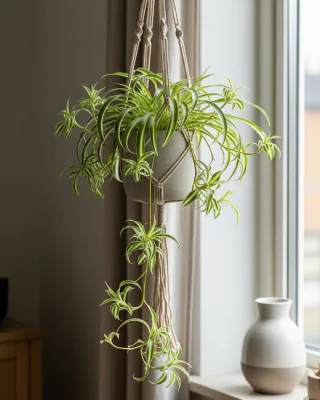
Spider plant pruning depends on the part you inspect: remove dead leaves, trim a spent flower spike, or reserve the 2–3 inch cut for severe damage.
 Not sure it’s this plant?Check yours with a photo, free
Pet-safe
How to prune a spider plant
- 01
Choose what to remove
The useful pruning targets are browned or dead leaves, finished flower spikes, unwanted heavy plantlets and, for a badly damaged plant, the remaining foliage as a renovation cut.
Pruning keeps the spider plant presentable, removes damaged foliage, controls spent spikes when new offsets are not wanted and can renew a neglected plant.
- 02
Prune at the right time
Remove dead or browned material when it is present. Trim finished flower spikes after flowering if plantlets are not needed. Reserve the 2–3 inch renovation cut for a damaged or neglected plant.
- 03
Make one clean cut
Pull browned or dead leaves firmly from the base or snip them off. Cut finished flower spikes back, and for renovation cut the foliage down to about 2–3 inches.
- 04
When pruning will not help
Do not remove flower spikes if the goal is to keep the plantlets, and do not treat routine trimming as a substitute for checking light, water quality, humidity and salts when tips brown.
- 05
Care for the plant after pruning
After a renovation cut, a new flush can emerge from the center if the plant is otherwise cared for. After ordinary trimming, continue normal indoor care and monitor new leaves. Old brown tissue will not recover.
All spider plant guides
Keep reading
Sources3 references
- Royal Botanic Gardens, Kew: Plants of the World OnlineTaxonomy · accepted name · classification
- Royal Horticultural SocietyPosition · watering · feeding · repotting · brown tips · pests
- Clemson University Cooperative ExtensionLight · soil · water · temperature · feeding · pests · tip burn
Last reviewed: