



How to fertilize a spider plant
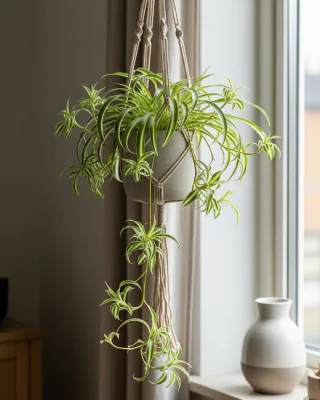
Chlorophytum comosum
Quick answer
Feed Chlorophytum comosum during active growth with a water-soluble or time-release houseplant fertilizer, not a lawn or garden rate.
 Not sure it’s this plant?Check yours with a photo, free
Pet-safe
How to fertilize a spider plant
- 01
When to fertilize
Feed during active growth, roughly March through September, and do not treat winter as a normal feeding season. Adjust the months to when your plant is actually growing.
Keep feeding within the active-growth window and reduce or stop routine feeding when indoor light and growth slow in autumn and winter. The exact start and stop dates depend on the room.
- 02
Fertilizer type and dose
Use a water-soluble or time-release fertilizer labeled for houseplants. Any brand works, but do not use a lawn or garden rate in a spider-plant pot.
Use the selected product’s houseplant label and do not increase the dose to force plantlets or darker leaves. Dilution differs between products, so read each label.
- 03
When not to fertilize
Brown leaf tips or pale foliage should not be treated as proof of underfeeding. Water quality, dryness, salts, light, and root conditions can overlap with a nutrition concern, so inspect the plant before adding more fertilizer.
All spider plant guides
Keep reading
Sources3 references
- Royal Botanic Gardens, Kew: Plants of the World OnlineTaxonomy · accepted name · classification
- Royal Horticultural SocietyPosition · watering · feeding · repotting · brown tips · pests
- Clemson University Cooperative ExtensionLight · soil · water · temperature · feeding · pests · tip burn
Last reviewed: