What you see
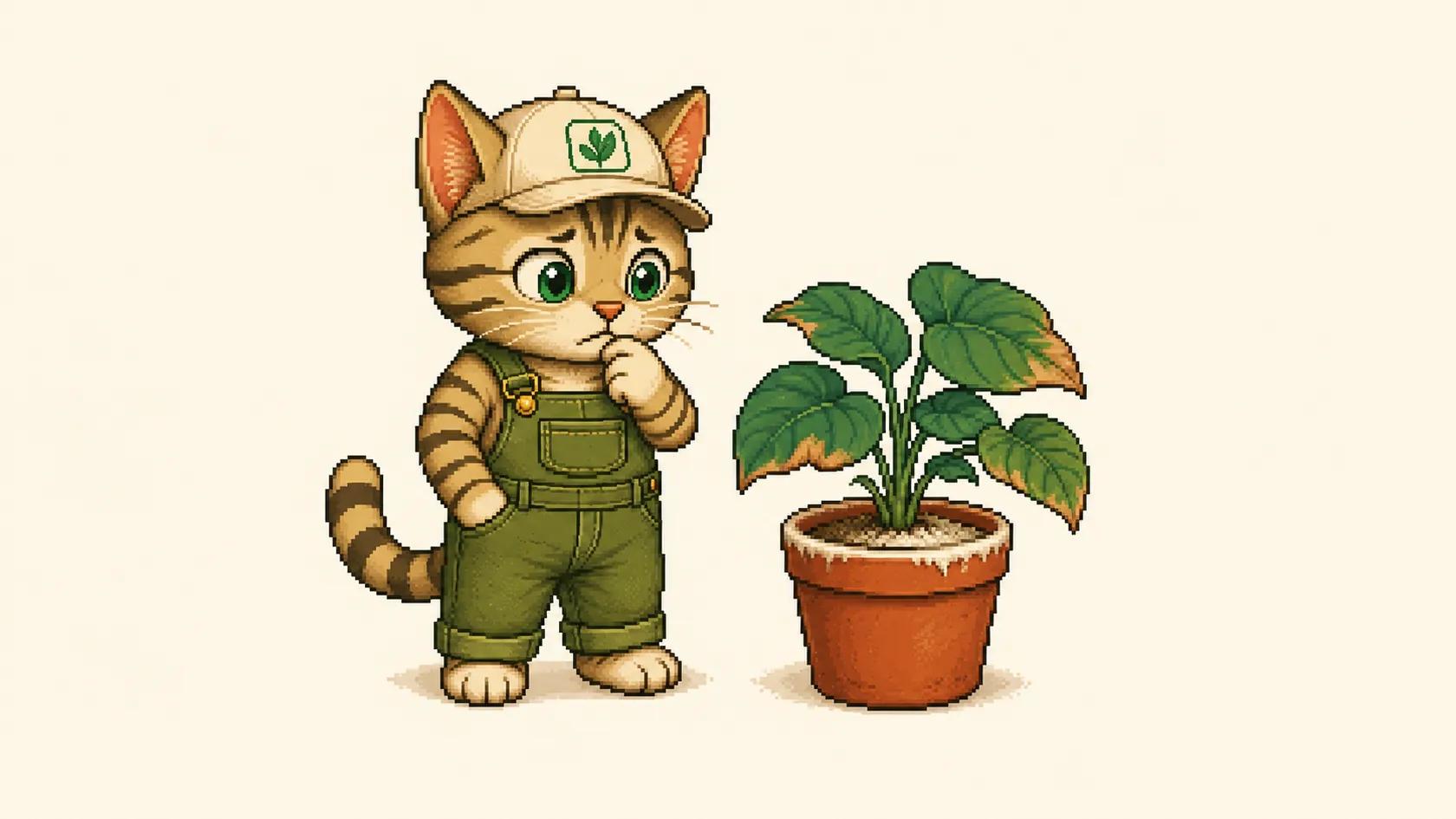
Crisp brown leaf tips and margins within days of feeding, a pale crust on the soil or pot rim, and wilting in soil that is not dry.



Crisp brown edges within days of a feed, and a plant wilting in soil that is not dry.
The timing is what identifies it. Damage that starts within a few days of feeding, on a plant that was fine before, points here more strongly than any single leaf symptom does.
The response is water, not more care. Rinsing the pot through is what lowers the concentration around the roots.
Most likely cause
Leaf tips and margins go brown, dry and crisp, often with a sharp line between the dead edge and the green tissue behind it. On thin leaves the whole margin can go at once.
Lower and older leaves usually show it first, and on a strong dose the newest leaves can wilt while the soil is clearly damp. A plant drooping in wet soil with crisp edges is the picture that separates this from thirst.
Look at the surface of the mix and the pot rim for a white or yellowish crust. That is salt left behind as water evaporated, and it builds up in a pot that is never rinsed through.
In a bad case the roots themselves are damaged, and leaves yellow and drop over the following week or two.
Granular fertilizer resting against a stem, or slow release pellets concentrated in one place, burns the tissue it touches rather than the whole plant.
Look at
Go back over the last two weeks. A feed, a switch to a new product, a top up of slow release granules, or a stronger mix than usual all belong on that list.
Fresh potting mix already carries a supply of nutrients, so a plant fed straight after repotting gets two doses at once. The same goes for a plant just bought, since nursery mix is usually well charged.
A dose that is fine in summer is too much for a plant in a cool, dim room that has stopped growing. The plant takes up less, so more of it stays in the pot.
Hard tap water adds its own salts on top. In a pot that is watered a little at a time and never rinsed, the two build up together.
If nothing was fed and no crust is visible, look at brown tips from dry air and uneven watering instead. Those look similar and behave differently.
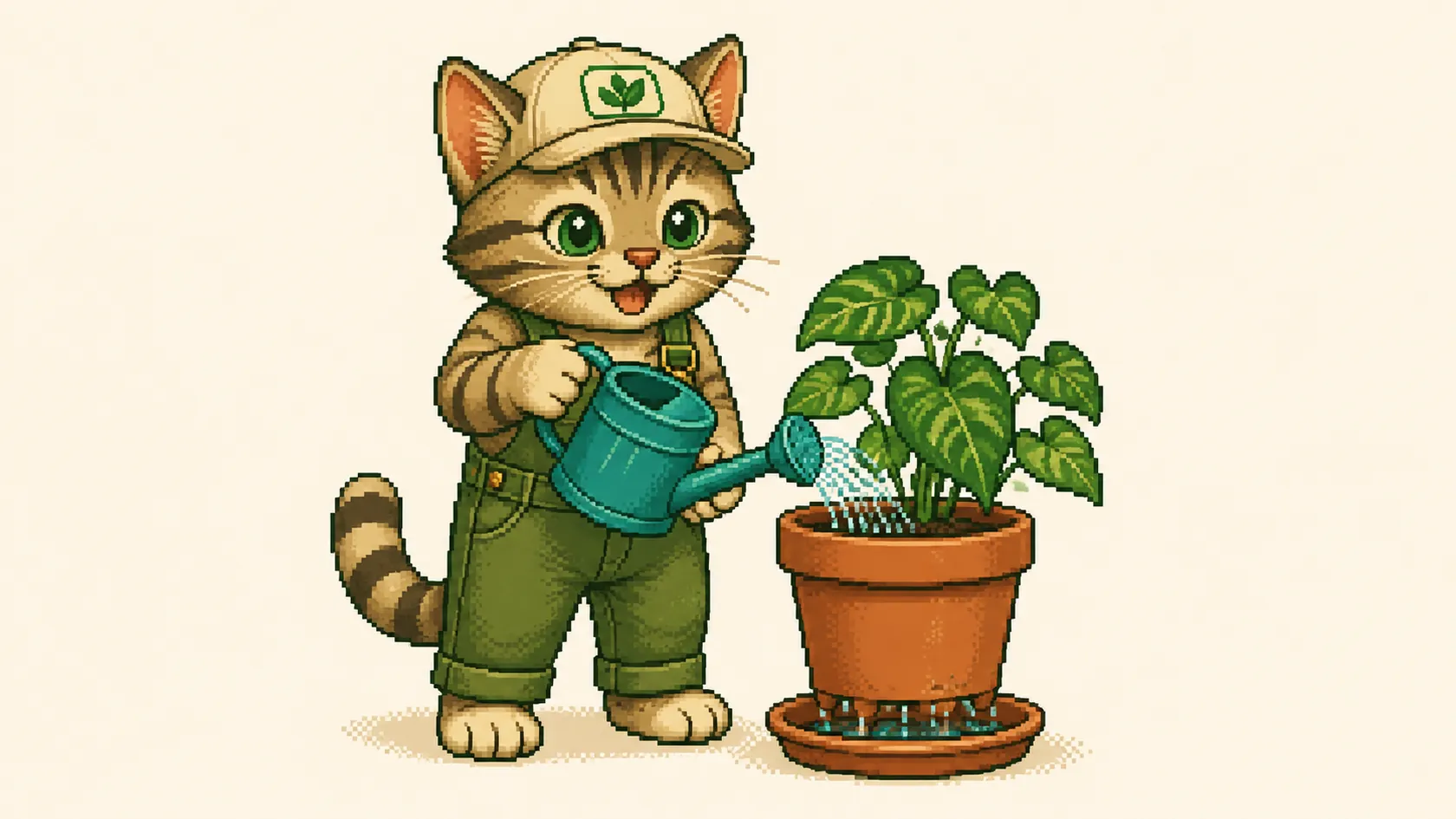
Take the plant out of its outer pot and stand it in a sink or a bath. The pot needs an open drainage hole for this to work at all.
If the plant is collapsing rather than showing edge damage, or if a heavy dose of granular fertilizer went in, take it out of the mix instead. Rinsing moves the salts more slowly than a badly loaded pot can afford.
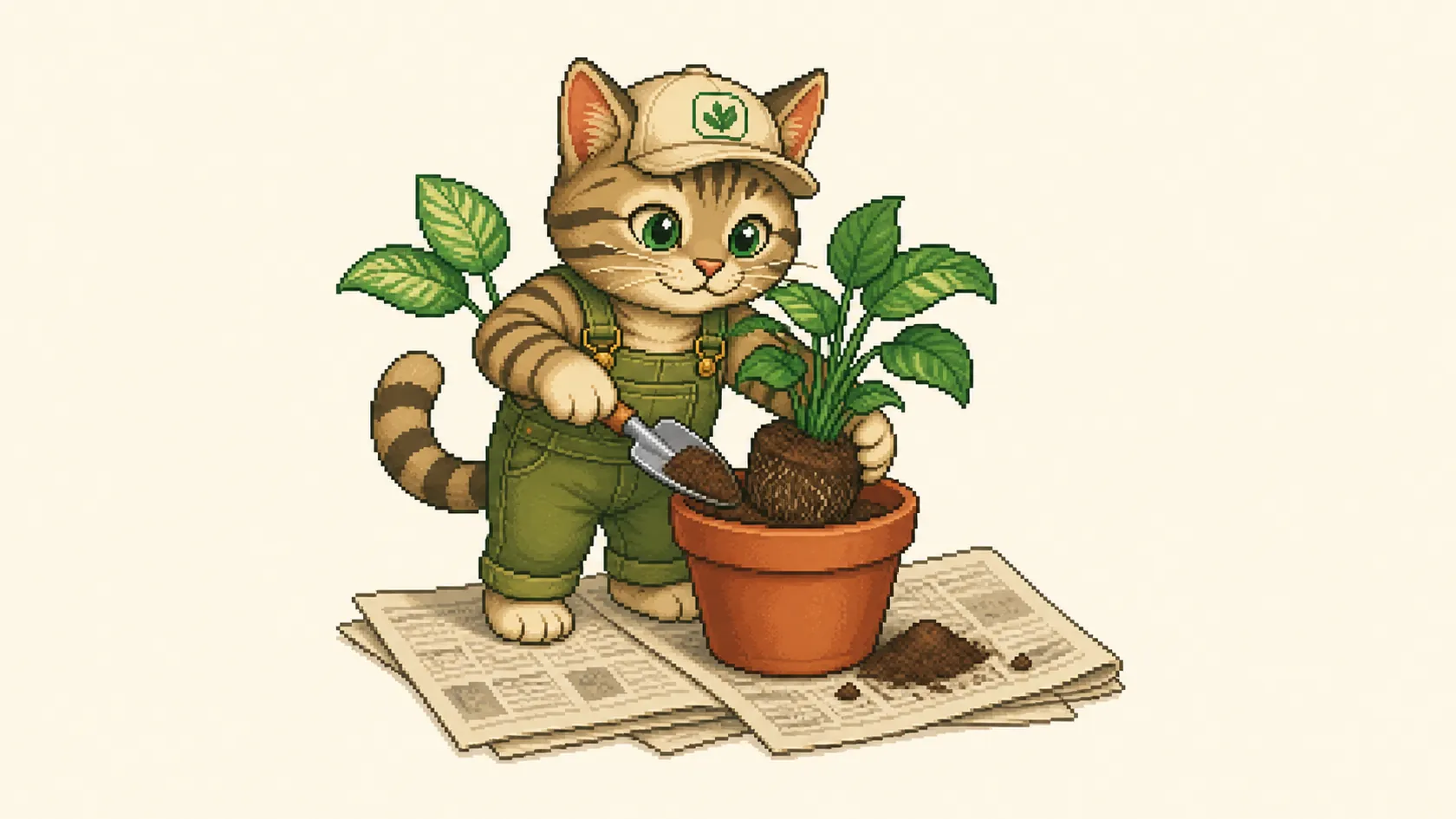
Lift the plant out, shake off as much of the old mix as the roots allow, and rinse the root ball under lukewarm running water. Cut away roots that have gone dark and soft.
Repot into fresh mix in a clean pot only slightly larger than the root ball, water it in once, and let it drain.
Do not feed a repotted plant. Fresh mix carries its own supply, and damaged roots take up little of anything.
Wait for new growth. Clean new leaves mean the roots are working again, and that is the signal to start feeding, not a date on the calendar.
Follow the strength printed on the product you are using, and mix it in a can of water rather than pouring it onto the soil straight. Concentrate landing on roots is what caused the problem.
Feed onto damp mix rather than a dry root ball. Dry roots take up a concentrated solution faster than they can handle.
Rinse the pot through with plain water from time to time through the feeding season, so salts leave rather than accumulate.
Feed less, or not at all, while a plant is not growing. A plant in a cool, dim room in winter uses very little.
Brown crisp edges also come from dry air, from a root ball that swings between bone dry and soaking wet, and from hard tap water building up over months. All three produce edge damage without any fertilizer involved.
Sun damage sits on the leaf surfaces facing the window and is flat and bleached rather than confined to the margin.
The recent history is what separates these. A feed in the last two weeks and a crust on the surface point at fertilizer, and their absence points elsewhere.
Change one thing and watch the next few leaves. Damaged tissue never recovers, so the new growth is where the answer shows up.
Brown, dry, crisp leaf tips and margins with a sharp line against the green tissue, usually starting on older leaves within days of feeding. A white crust on the soil surface or pot rim and wilting in damp soil support it.
Stop feeding, scrape off any crust or granules, and rinse the pot through with room temperature water several times until it runs freely out of the base. Empty the saucer, keep the plant out of direct sun for a few days, and do not feed again until new leaves open.
Usually, if the roots are still sound. The burned leaves stay burned, so recovery shows as clean new growth. A plant whose roots were damaged loses more leaves over the following weeks before it turns around.
It depends on the season and on how much root was affected, so watch the plant rather than the calendar. New leaves opening without brown margins is the signal that it is over.
Salts left behind from fertilizer and tap water as the water evaporates. Scrape it off with the top layer of mix and rinse the pot through, then water thoroughly enough in future that some runs out of the base each time.
Only the ones that are more damaged than sound. Leaves that are still mostly green keep working, and a plant recovering from root damage needs the leaf area. Trimming a brown edge is a decision about looks.
Last reviewed: 2026-09-07