What you see
White cottony pads in the leaf axils and along the stems, with sticky leaves and stunted new growth. An insect sits under the pad when you push it aside.



Where they sit and how they move names them. Fluff, jumping specks and flying clouds are three animals.
Leaf axils and stems, the surface of the mix, the underside of a leaf and the roots each have their own occupant. Two of them are not animals at all.
Find out which one you have before you treat anything, because the treatments have nothing in common.
Start with the plant rather than the pot. Look into the leaf axils, along the stems, at the growing tips and at the undersides of the leaves. Then look at the surface of the mix, and last lift the plant out and look at the roots.
Touch a leaf. Sticky film on the leaves or on the surface below the plant means something is feeding on sap, which narrows the list immediately.
Tap a shoot over a sheet of white paper. Anything that falls and then moves is an animal, and you can see the size and the shape against the paper.
Two answers pointing the same way are usually enough to name what you have.
Look at
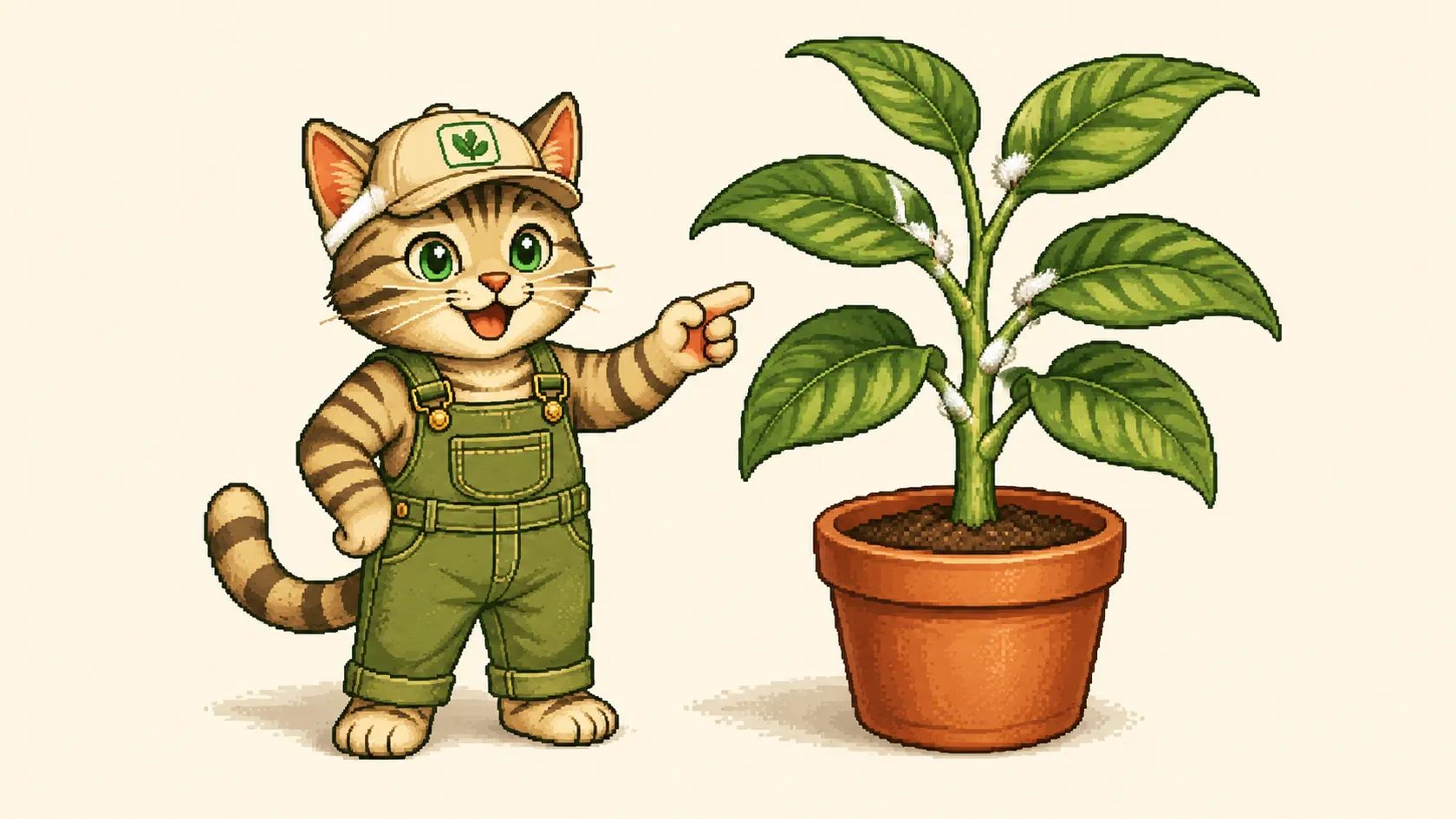
Small white cottony pads tucked where a leaf meets the stem are mealybugs. Under the wax sits a soft oval insect that feeds on sap, and the wax is what makes them so hard to wet.
The plant tells you before you find them. Leaves go sticky, then a black sooty film grows on the sticky patches, and growth at the tips becomes stunted and misshapen.
Push a pad aside with a toothpick to confirm. If an insect is under it rather than dust or fluff from a blanket, that is a mealybug.
Wipe every pad off with a cotton swab, working through the axils, the leaf stalks and the underside of the leaves. Then rinse the plant thoroughly and keep it away from the others.
Check the same plant every week for a month. Eggs hatch after you finish, which is why one treatment almost never ends it.
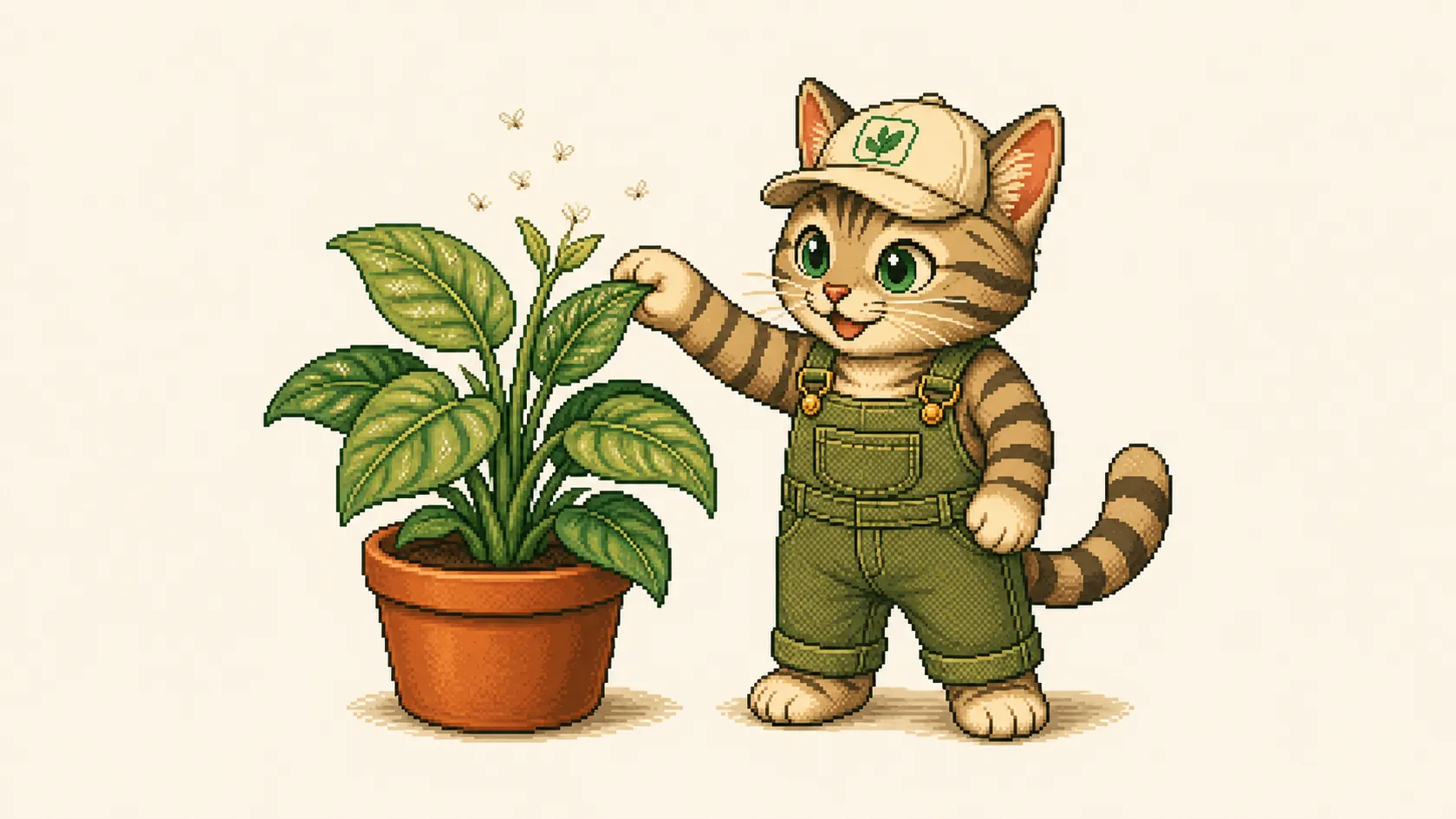
If tapping the plant sends up a small cloud of white insects that settle again a moment later, those are whiteflies. They sit on the undersides of the leaves and fly when disturbed, which no other white pest on this list does.
The undersides also carry their young, which look like flat pale scales stuck to the leaf and do not move at all. Those are the stage that does the feeding, and they are easy to mistake for part of the leaf.
Leaves go sticky and pale and later drop. The problem spreads through a group of plants quickly, because the adults simply fly to the next one.
Yellow sticky cards hung in among the shoots catch the flying adults and tell you whether the numbers are falling. Rinsing the undersides thoroughly deals with what is on the leaf.
Keep the plant separate while you work on it and check the neighbors, because by the time you see the cloud they have usually visited.
Dust sized white or gray specks that spring away when you disturb the surface are springtails. They live on soil that stays wet and they show up in numbers right after watering.
They eat decaying material and fungi rather than living roots, so the plant itself is unaffected. What they tell you is that the top layer never dries.
Let the surface dry out between waterings, clear fallen leaves off the mix and check that the pot drains. The population falls on its own once the wet layer goes.
Do not reach for an insecticide. Nothing is feeding on the plant, so there is nothing to treat.
Waxy white fluff along the roots and on the inside wall of the pot points to root mealybugs. You only ever find them by lifting the plant out, which is why they go unnoticed for so long.
Above the soil the plant stalls, stays pale and wilts between waterings while nothing visible is wrong with it. That mismatch is the reason to look.
Wash the whole root ball clear of mix under lukewarm water, cut damaged roots away and repot into fresh mix and a clean pot. The old mix goes in the trash.
Keep the plant separate afterward and look at the roots again a few weeks later. Any plant that shared a saucer with it is worth checking too.
Very small pale dots that creep slowly on the undersides of the leaves, together with fine pale speckling on the upper side, are usually spider mites rather than anything white.
Fine webbing between a leaf and its stalk is the confirmation. Tapping a shoot over white paper brings them down where you can watch them move.
They build up in warm dry air, so the heating season is when they turn up on plants that were fine all summer.
Rinse the plant thoroughly, undersides first, and repeat over several weeks. Isolate it while you work, because they walk from leaf to leaf where plants touch.
Perlite is the most common false alarm. White to pale gray, round, hard, and it never moves. If the specks stay exactly where they are, that is the mix.
Slow release fertilizer prills look similar. They are round and evenly colored and go soft over months.
A white film spreading across the surface is mold rather than an insect. It grows on mix that stays wet and it goes when the surface dries out between waterings.
A white crust on the rim of a clay pot is mineral salts from fertilizer and hard water. It scrubs off and it is not an animal.
The test for all four is simple. Watch for a minute. Anything that has not moved is not a pest.
Most of them arrive on a new plant. Keep new arrivals apart from the collection for two or three weeks and look over the leaf undersides and the leaf axils in that time.
Look at plants when you water them. Every pest on this list is easier to end in the first week than in the fourth, and the difference is only whether you noticed.
Wipe large leaves every few weeks. That takes the dust off and it puts your eyes on the undersides.
Water so the top layer dries out between waterings and clear dead leaves off the mix. That alone removes what springtails, gnats and mold live on.
Plants that spend the summer outdoors come back with company. Look them over before they come inside.
White cottony pads in the leaf axils are mealybugs. A cloud that flies up when you tap the plant is whiteflies. Specks that jump off wet soil are springtails, and white grains that never move are perlite or fertilizer.
Almost always springtails, which jump when disturbed and feed on decaying material rather than roots. They live on soil that stays wet, so a top layer that dries between waterings removes what they need.
Mealybugs, root mealybugs and whiteflies feed on the plant and need dealing with. Springtails and soil mites eat decay and leave the plant alone. Perlite and fertilizer grains are not alive at all.
It depends which one you have. Mealybugs come off with a cotton swab and a thorough rinse, whiteflies need sticky cards plus repeated rinsing of the leaf undersides, and springtails go when the surface of the mix dries out.
Whiteflies fly to the next plant, and mealybugs and mites walk across wherever leaves touch. Move the affected plant away from the collection while you treat it and check its neighbors at the same time.
Household dish soap can damage leaves, and it does nothing at all against what sits in the mix or on the roots. A thorough rinse and physically wiping the insects off does more, and it does it without the risk.
Last reviewed: 2026-09-07