What you see
Only the newest leaves are affected. Each one opens with more green and less white than the one before it, and the plant sits well back from a window or in a dim corner.



Most fading variegation is a light problem. Compare the newest leaves with the ones below them first.
A leaf keeps the pattern it opened with. So a plant that is losing variegation is really a plant whose newest leaves are coming out greener than the older ones, and that is where the answer sits.
Hold a leaf that opened in the last month next to one from earlier in the year. That comparison decides everything that follows.
If the new leaf carries less white than the old one, the plant is producing less pattern and you have a cause to find. If both look the same and the whole plant simply looks duller, you are looking at a different problem.
Count how many stems are involved as well. A change across every growing point points at the conditions. A change on one stem points at that stem.
Look at
Most likely cause
A variegated plant lives on a smaller share of leaf. Only the green tissue makes food, so it has less capacity than a plain green plant of the same size and it feels a dim spot sooner.
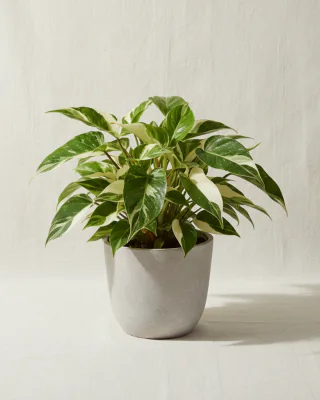
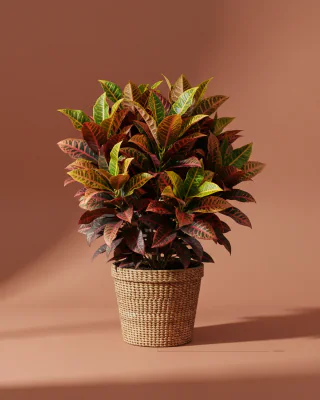
In poor light it puts more chlorophyll into each new leaf. The white and cream areas shrink, marbling turns patchy green, and after a few months of growth the plant looks plain. A croton moved into a dark room loses its coloring the same way.
Move it near a window with bright indirect light. Right beside an east-facing pane, or beside a south-facing one behind a sheer curtain, suits most variegated foliage.
Keep it out of hard midday sun. Pale tissue has no pigment to shield it and burns into dry brown patches long before the green parts show any mark.
Clean the glass and dust the leaves while you are there. Both cost light and both take a minute.

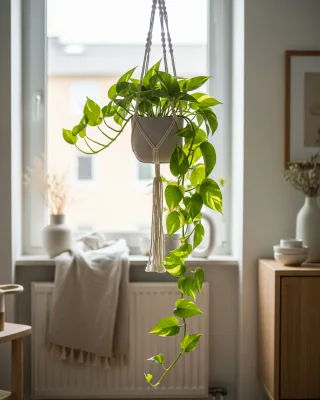
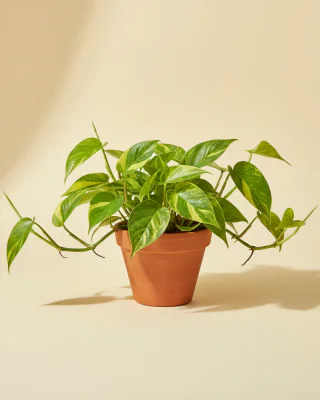
Sometimes a single stem produces all green leaves while the rest of the plant keeps its markings. That shoot has reverted, and a golden pothos or a Philodendron Brasil does it often enough to be worth checking for.
An all green shoot carries full chlorophyll and makes more food, so it grows faster and longer than the patterned stems around it. Left in place it takes the plant over within a year or two.
Cut it out. Follow the green stem back to the last leaf that still shows pattern and cut just above that leaf, with clean scissors or pruners.
Look again every couple of months. Reversion can return from the same area, and a shoot caught while it is short is a small cut.
A cutting keeps the character of the stem it was taken from. Root a piece of an all green shoot and the plant that grows from it stays all green for life.
This explains a young plant that never had much pattern to lose. There is nothing to bring back, because the tissue does not carry it, and no change of light or feeding will add it.
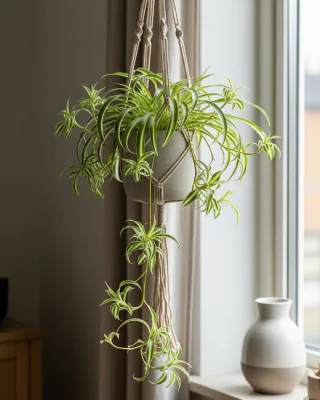
Take future cuttings from the most strongly patterned stem you have, including a leaf that shows the markings clearly. A golden pothos or an inch plant roots quickly enough that you find out within a few leaves. A spider plant offset carries whatever its parent runner carried.
Judge the result on the growth after rooting rather than on the cutting itself. The first leaf or two tells you what the stem holds.

A plant that dried out badly, sat in wet soil, lost roots or spent the winter in a dark corner builds its next leaves on a reduced budget. They open smaller, and the pattern in them often comes out thinner.
This one corrects itself. As the roots recover and the days lengthen, leaf size and markings return over a season of growth.
Treat the underlying condition rather than the leaf. Check the roots if the soil has been wet for weeks, water thoroughly if it went bone dry, and give the plant the brightest position you have as spring comes on.
Leave the small leaves on the plant. They still feed it, and stripping them off slows the recovery you are waiting for.
Losing variegation and going pale look alike from across the room. They separate on where the pale sits.
A pattern has edges. It repeats in a recognizable way and it varies from leaf to leaf on the same plant, so a leaf reads as marked rather than as faded.
A feeding shortage or a watering problem washes out the whole blade instead. The green fades evenly, the oldest leaves usually go first, and the veins often stay darker than the tissue between them.
Check the pot before you reach for a bottle. Lift it and feel the soil an inch or two down, then look for roots circling out of the drainage hole. A plant that has filled its pot and sat in the same soil for years is short of both room and nutrients.
Fertilizer supplies nutrients for growth. It creates no variegation. No feed, tonic or additive puts pattern into a leaf that the plant is not already producing.
Feeding a plant that has gone plain in a dark corner works against you. It grows faster in a place where it cannot support the leaves it already carries, so the new growth comes out weak and widely spaced.
Take the slow pace of a heavily marked plant as normal. Less green tissue means less food made and a smaller plant at the end of the year. That is the price of the pattern, not a fault to correct.
Change one thing and give the plant three or four new leaves to answer. Pattern only appears in growth, so growth is the only place the result can be read.
In most cases the plant is short of light and is putting more chlorophyll into every new leaf to compensate. A reverted green shoot and a cutting taken off a green stem are the other two common answers. The leaves already on the plant are not changing, so look at what opened most recently.
It comes back in the leaves that open after the move. Leaves that are already green stay green for the rest of their life. Expect to wait for three or four new leaves before you can judge the new position.
A single plain leaf on an otherwise marked stem can stay, because it still feeds the plant and costs nothing. A whole stem of green leaves is worth removing, since it grows faster than the marked stems and crowds them out.
No. Nutrients support the growth a plant is capable of, and none of them adds pattern to a leaf. If a plant is pale all over rather than losing its markings, feeding may well help, and that is a different situation.
The white and cream parts of the leaf make no food, so the plant works with less leaf area than its plain green form. A heavily marked plant puts on noticeably less growth in a year. Plan the position around that rather than trying to push it.
Yes. Pale tissue has no pigment to protect it, so it scorches into dry brown patches while the green parts still look fine. Bright light close to a window suits these plants. Direct midday sun through glass does not.
Last reviewed: 2026-09-07