



Carnivorous plants: care and easy types
Carnivorous plants want rainwater, a low-nutrient moss or peat mix, lots of light and no fertilizer. Some also need a cold winter rest.
Carnivorous plants grow in bogs and wet, poor soil, so their care is the opposite of most houseplants. Water them only with rainwater, distilled or reverse-osmosis water, never tap water. Pot them in a low-nutrient mix, never ordinary potting compost, and do not fertilize them.
The four most common types differ in one big way. The Venus flytrap and the purple pitcher plant need a cold winter rest. The Cape sundew and the tropical pitcher plant, Nepenthes, grow all year in a warm room.
Four easy carnivorous plants for beginners
These four are the easiest to buy and to keep. Each guide has the full care for that plant.
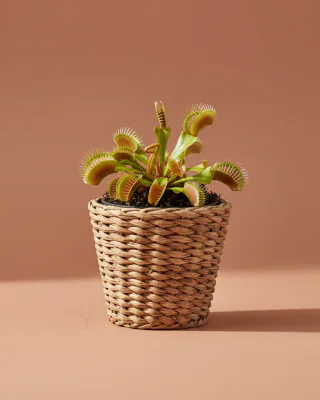
- Venus fly trap: Several hours of direct sun, the pot in a saucer of rainwater while it grows, and a cool, bright winter rest at about 0 to 10 °C (32–50 °F). Pet-safe (non-toxic).
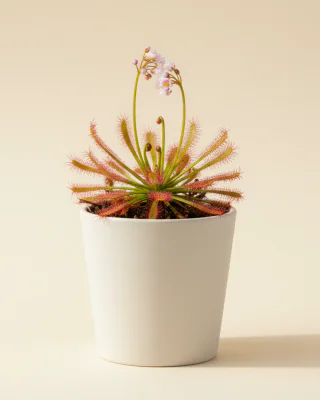
- Cape sundew: The easiest to start with. The brightest spot you have, a saucer of rainwater, room temperature all year and no winter rest. Not confirmed pet-safe.
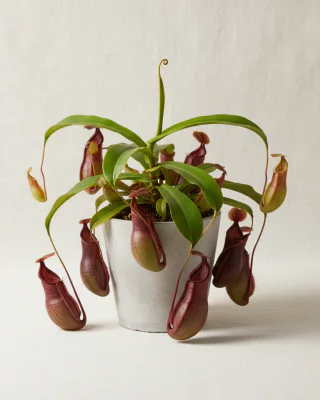
- Nepenthes: Bright light with a few hours of gentle sun, humidity above 60 % and a moss mix that never dries out. Needs warmth all year. Not confirmed pet-safe.
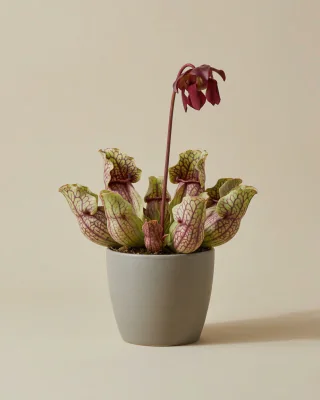
- Purple pitcher plant: A hardy bog plant for full sun outdoors, with a tray of rainwater in summer and a cold winter dormancy. Not confirmed pet-safe.
Water: rainwater, distilled or reverse-osmosis only
Never use tap water. The minerals in it build up in the low-nutrient mix and slowly harm the roots. Collect rainwater, or buy distilled or reverse-osmosis water.
Most carnivorous plants like the mix wet, not just damp. While they grow, stand the flytrap, the sundew and the purple pitcher plant in a saucer or tray of water a few centimeters deep and top it up before it runs dry. Nepenthes wants a mix that stays moist and drains well, so do not leave it standing in water all the time.
In winter, growth slows. Water from below and pour away the excess instead of leaving the pot standing in water, but never let the mix dry out completely.
Soil: no ordinary compost
The RHS warns never to plant carnivorous plants in garden soil or potting compost, which are too rich for them. Use a carnivorous plant mix, such as sphagnum moss or peat with perlite or sand. A peat-free option from the RHS is 75 % sphagnum moss with 25 % finely sieved pine bark.
Most do not need repotting for a year or more. Repot when the roots fill the pot, into one only slightly larger, with fresh carnivorous plant mix.
No fertilizer, and no meat
Do not fertilize carnivorous plants and never mix fertilizer into the soil. They come from places with very few nutrients and get what they need from the insects they catch.
Indoors they usually catch a few insects on their own, and a Cape sundew near your houseplants also helps keep fungus gnats down. Never feed them meat.
Light: as much as you can give
Too little light is the most common reason a carnivorous plant stays weak, loses color or stops making traps. Give the flytrap and the purple pitcher plant several hours of direct sun. A sunny window is the minimum indoors, and the purple pitcher plant does best outdoors.
Behind glass, strong midday sun can scorch the leaves, so the sundew and Nepenthes do best with full light and some shade from hot sun. If your windows are dim, a plant light makes a bigger difference than anything else.
Winter: which ones need a cold rest
The Venus flytrap needs a cool, bright winter rest at about 0 to 10 °C (32–50 °F), such as an unheated room or a sheltered spot outdoors. Kept warm all winter, it weakens. Protect it from hard frost.
The purple pitcher plant goes dormant in the cold. In autumn growth stops and many pitchers turn brown, which is normal. The RHS rates it hardy to around -15 °C (5 °F) in the ground, but roots in a pot are more exposed to frost.
The Cape sundew and Nepenthes need no winter rest. Keep them at room temperature, away from cold windows, drafts and radiators.
Humidity
The flytrap and the purple pitcher plant need no special humidity, because the wet mix gives them the moisture they need. The Cape sundew likes more humidity than most homes have, and lost dew is often a sign of dry air.
Nepenthes needs humidity above 60 %. In dry air its pitchers fail to form or wither. A bright terrarium works well, and on a windowsill keep it away from heating vents.
Related plants
Keep reading
Common questions
What is the easiest carnivorous plant for beginners?
The Cape sundew is the easiest. It grows all year at room temperature, needs no winter rest and only asks for a bright spot and a saucer of rainwater. The Venus flytrap is easy too, as long as it gets direct sun and a cold winter.
Can I water carnivorous plants with tap water?
No. Minerals from tap water build up in the low-nutrient mix and harm the roots over time. Use rainwater, distilled or reverse-osmosis water.
Do I need to feed my carnivorous plant?
No. Indoors it usually catches a few insects on its own. Never give it fertilizer or meat.
Can carnivorous plants live indoors?
The Cape sundew and Nepenthes grow indoors all year. The Venus flytrap can live on a sunny windowsill but needs a cold winter rest. The purple pitcher plant does best outdoors in full sun.
Are carnivorous plants safe for cats and dogs?
The ASPCA lists the Venus flytrap as non-toxic to cats and dogs. It has no record for Nepenthes, sundews or Sarracenia, so their pet safety is not confirmed. Keep them out of reach and call your vet if your pet eats some.
Last reviewed: