What you see
A trail runs up the stem, the leaves feel tacky, and small insects sit in groups on the shoot tips or leaf undersides.



Ants do not eat roots. They come for honeydew from pests, or for dry loose soil to nest in.
Both take a few minutes to check. Look at the leaf undersides and the soft new shoots first, then at the surface of the soil and the route the ants are taking.
Only after that is any treatment worth doing. Clear the ants and leave the sap-suckers in place, and the trail is back in the pot within a couple of weeks.
Most likely cause
Ants collect honeydew, the sugary liquid that aphids, mealybugs, scale insects and whiteflies leave behind. If the trail runs up the stem rather than only across the soil, the reason sits up on the plant.
Turn a few leaves over and look at the soft growing tips. Shiny or tacky leaves, a film on the furniture under the plant, and small insects sitting in tight groups all confirm it.
As long as those insects are there, the ants come back. Ants defend them against ladybugs and other predators, so an infestation under their protection lasts longer than it otherwise would. Treat the pest first.
Look at

A pot that stands dry for long stretches is a good building site. The soil is loose, warm and sheltered, and in a pot that is rarely watered right through, nothing disturbs the colony.
You spot a nest while watering. Fine crumbs rise to the surface, the ants get agitated, and single workers carry small white parcels away. Those are the brood. Sometimes the soil sinks in one place, or a small heap of crumbs sits at the pot rim.
The damage is indirect. The tunnels loosen the soil away from the roots and leave hollows behind, and water then runs down those channels instead of soaking the root ball. The plant stands dry even though you watered it.
Pots that spend the summer outdoors collect a colony from outside. On a balcony it takes only a pot standing straight on the tiles or over a joint for the ants to move in.
Indoors the line usually runs from a window, a patio door or a gap in the floor across to the plant. Follow it backward until you find the point where they are getting in.
Wipe the trail away with a damp cloth and a little vinegar water. That breaks the scent track, so the ants behind do not find the way straight back. Outdoors, stand the pot on feet so it has no direct contact with the ground.
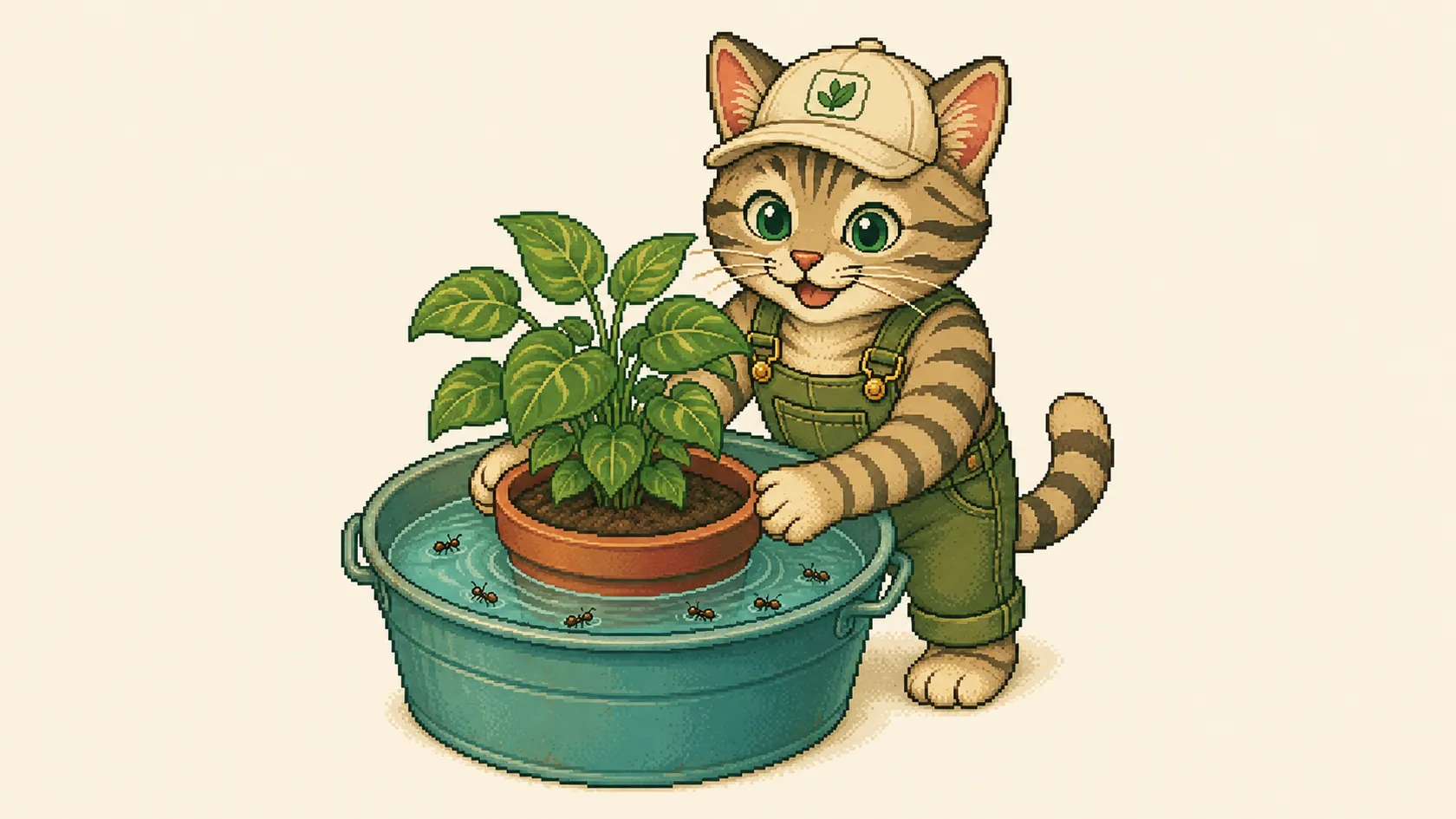
Stand the pot in a bucket of room temperature water until the water sits just below the rim. Leave it there until no more air bubbles rise. The ants leave the root ball and float, and the brood washes out with them.
Depending on the size of the pot that takes twenty minutes to an hour. Take the pot out afterward and let it drain completely before it goes back into its outer pot. A root ball left standing in water for days gives you root rot instead of ants.
Skim the floating ants off and pour the water well away from where the plant lives, down a drain for preference. Otherwise the colony settles nearby again.
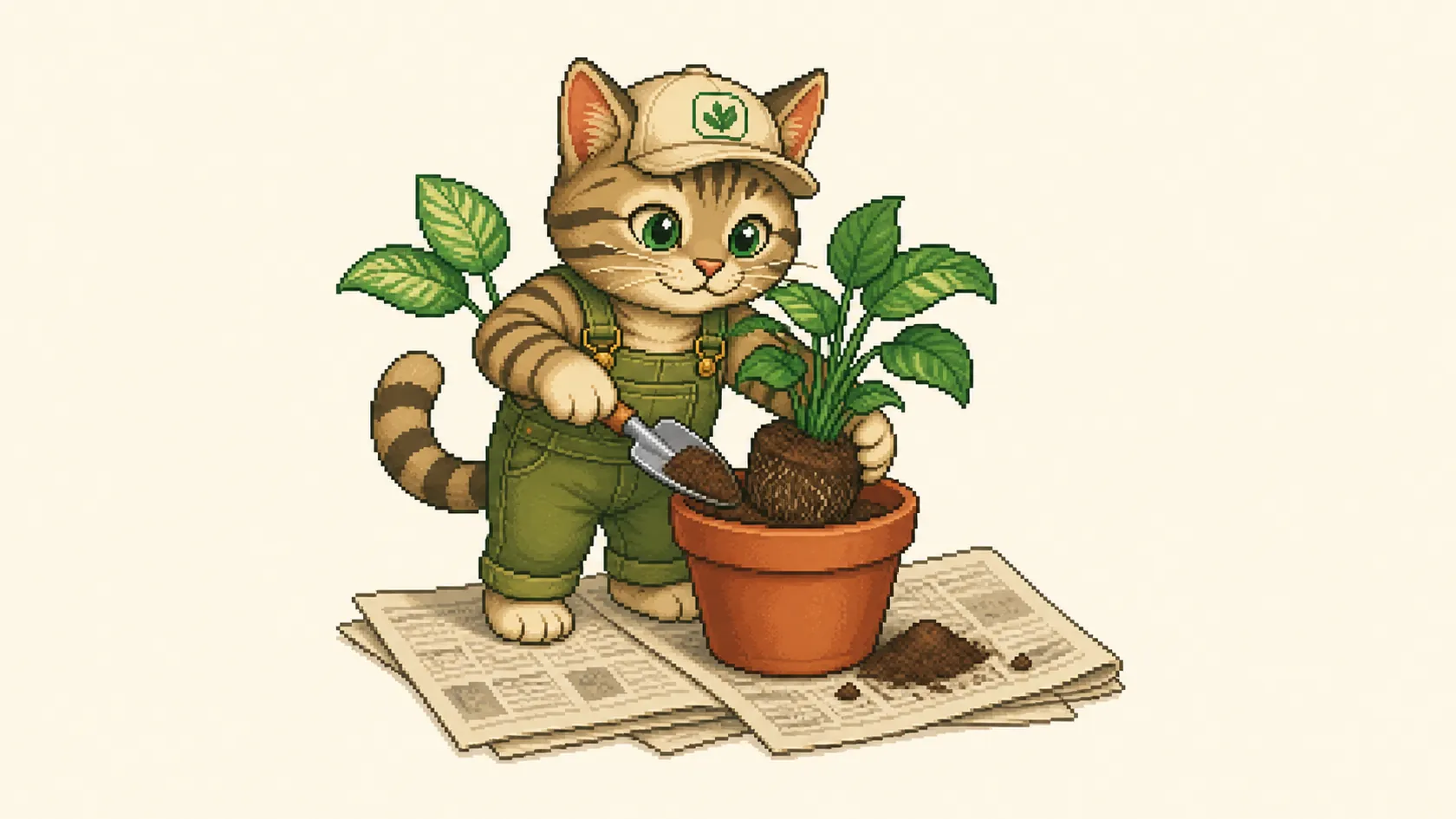
Lift the plant out and shake off as much of the old soil as the roots allow. Rinse the root ball under lukewarm water so tunnels, brood and remains all go.
Wash the pot out before the plant goes back in. Set it in fresh mix, water once until it runs through, let it drain, and look at the surface more often over the next few weeks.
Succulents, cacti, snake plant and ZZ plant take this route directly. A long soaking bath does them more harm than the nest does, because their mix stays wet too long afterward.
Cinnamon, lavender and chalk come up often. They disturb the scent trail for a while and do not move a colony out. On their own they are not enough.
Coffee grounds on the soil carry a second drawback. Spread wet, they go moldy at the surface and keep the top layer wet for longer, which brings fungus gnats.
Baking soda, cooking oil and dish soap do not belong in a plant pot. They stay in the mix, load the roots, and do not reach the nest anyway.
Ready made baits work through the workers and reach into the nest. Whether and how you use them indoors follows the instructions on the pack and the people and animals living in that room.
A plant with ants in the pot is rarely an emergency. The ants themselves eat nothing on it. The trouble comes from the tunnels in the root ball and from the sap-suckers they carry up and protect.
Work in this order. Turn the leaves over, water the root ball right through, then watch the surface for a few days. Only if the nest is still there after that do you reach for the soaking bath or repotting.
If the pot stays clear afterward and the plant keeps growing, the job is done. If the ants are back quickly, the nest sits outside the pot and the plant is only the feeding station.
They eat neither roots nor leaves. The harm comes from their tunnels, which loosen the soil away from the roots so water runs past the root ball. On top of that come the sap-suckers that ants keep and defend on the plant.
A soaking bath in room temperature water drives them and the brood out of the root ball. Let the pot drain fully afterward and wipe the trail away with a damp cloth. With no sap-suckers on the plant, the pot stays empty.
Water the root ball right through instead of wetting the top layer, so the soil never stays dry and undisturbed. Outdoors, stand the pot on feet away from paving joints. Both take the building site away.
From the garden or the balcony if the pot stood outside over summer, or through a gap at a window. In both cases what draws them is either honeydew from insects on the plant or dry, loose soil to nest in.
Cinnamon masks the scent trail briefly and confuses the workers. It does not break up a nest in the pot. As a follow up after a soaking bath it is useful, as the only measure it is not.
Water the pot right through and watch. If fine crumbs rise and single ants carry white parcels away, the brood is in the root ball. A sunken patch of soil or a heap of crumbs at the rim shows the same thing.
Last reviewed: 2026-09-07