



Rubber plant fertilizer
Ficus elastica
Quick answer
Feed less often if the plant stands in lower light.
- Pet safetyToxic to cats and dogs



Rubber plant fertilizer
- 1
Best fertilizer for a rubber plant
Clemson Extension recommends a water-soluble houseplant fertilizer during active growth in spring and summer.
More about this
The best rubber plant fertilizer is a water-soluble houseplant fertilizer, given every two weeks during active growth in spring and summer, as Clemson Extension advises. The RHS suggests a high-nitrogen fertilizer for leafy growth, from spring to late summer, and houseplants need little or none in winter.
The RHS says a high-nitrogen fertilizer encourages leafy growth in ornamental figs, and its rubber plant page also uses a high-nitrogen feed.
Either works. The leaves are what you grow a rubber plant for, which is why the RHS picks a high-nitrogen feed.
- 2
Rubber plant feeding schedule
In lower light: less often, as Clemson advises.
More about this
Spring and summer: every two weeks (Clemson), or once a month with a high-nitrogen feed (RHS rubber plant page).
Fall and winter: little or none. N.C. Cooperative Extension says houseplants in general need little or no fertilizer in winter, when growth almost stops, and the RHS feeds figs only from spring to late summer.
A newly bought plant: N.C. Cooperative Extension says recently purchased houseplants usually have enough fertilizer in their potting mix.
- 3
How to fertilize a rubber plant
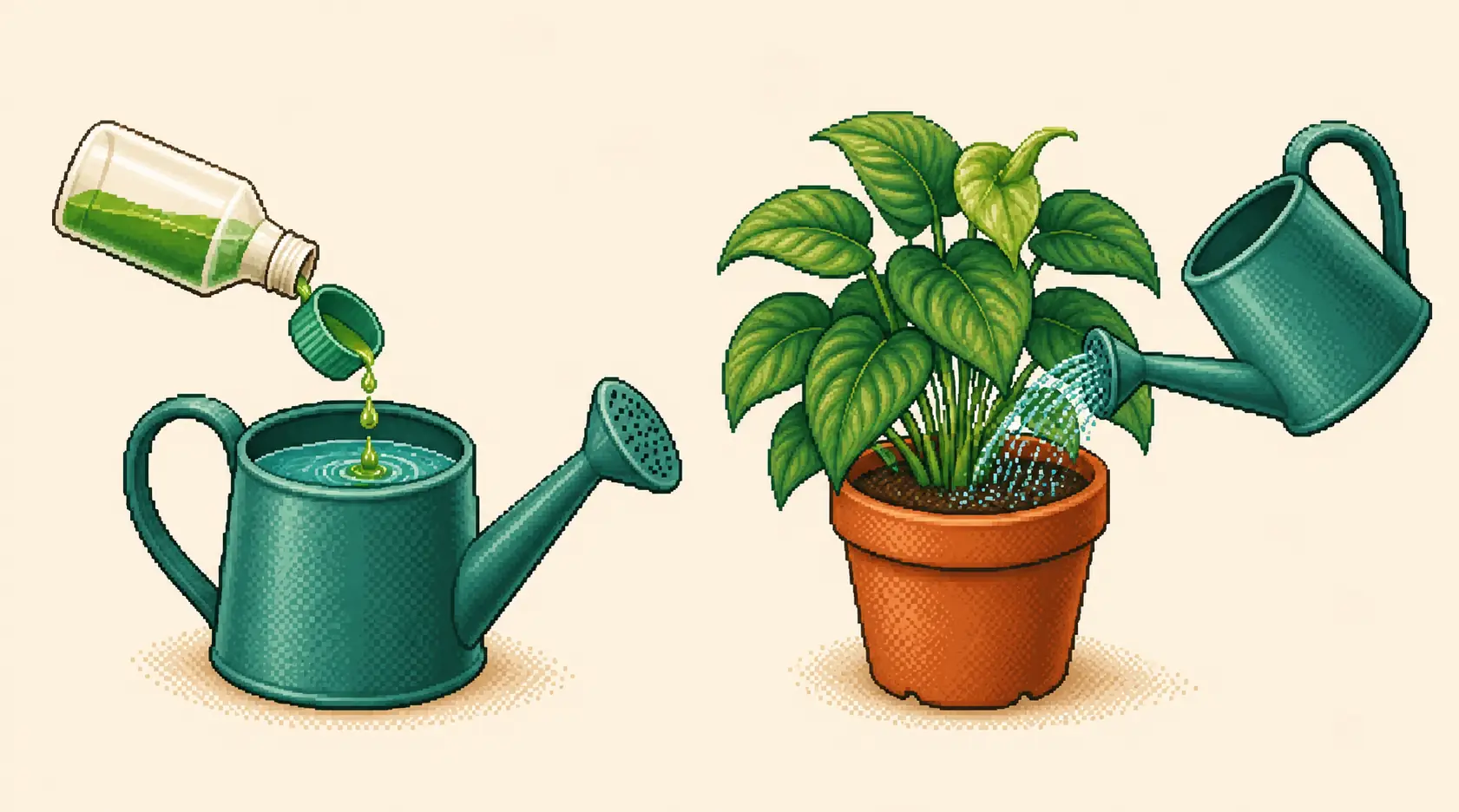
Mix the fertilizer at the rate on the label, or weaker. N.C.
More about this
Cooperative Extension says to always apply fertilizer at the recommended rate or less, and that many indoor gardeners do well with half strength at every other watering, for houseplants in general.
Water the plant thoroughly, as Clemson advises, and let the soil dry slightly between waterings. The pot needs drainage holes.
- 4
Signs of too much fertilizer
N.C. Cooperative Extension says strong fertilizer salts can burn the roots.
More about this
The RHS lists too much fertilizer among the causes of sudden leaf drop in figs, together with overwatering, low winter temperatures, low light and cold drafts.
If you have overdone it, wash the salts out: water the mix thoroughly and let it drain, several times, as N.C. Cooperative Extension advises.
- 5
Leaf drop and yellow leaves: check this first
Many leaf problems are not about food. NC State also links leaf loss to overwatering and cold drafts.
More about this
Clemson says too little light, dry air or cold drafts can cause leaf loss, and yellowing leaves can mean the soil stays too wet.
NC State and the RHS say it is normal for some bottom leaves to turn yellow and drop with age. Small, pale new leaves point to too little light, the RHS says, not to a lack of fertilizer.
- 6
Light decides how much it needs
In a dimmer spot the plant grows more slowly, which is why Clemson feeds it less often there.
More about this
Clemson says rubber plants prefer bright light but adapt to low light, and grow best with morning light from an east window.
The Missouri Botanical Garden suggests bright indirect light or part shade with protection from afternoon sun, and less water from fall to late winter.
- 7
Fresh potting mix every few years
3 with fine bark, or a peat-free multipurpose mix. In other years, it scrapes off the top inch (2.5 cm) and replaces it with fresh mix.
More about this
The RHS moves figs into a slightly larger pot every couple of years in spring, in a loam-based mix such as John Innes No.
The RHS rubber plant page top-dresses every year and repots every two to three years. Clemson repots in late winter or early spring if needed.
- 8
Sap, pets and children
NC State lists the rubber plant as a problem for cats, dogs and horses.
More about this
Clemson says the sticky white sap may irritate skin, or the stomach if eaten, and advises keeping rubber plants away from pets or young children that tend to eat plants.
Store fertilizer out of reach as well, and follow the safety notes on the package.


Common questions
How often should I fertilize a rubber plant?
Every two weeks in spring and summer, as Clemson Extension advises, and less often in lower light. The RHS feeds its rubber plant monthly in the growing season.
What is the best fertilizer for a rubber plant?
A water-soluble houseplant fertilizer (Clemson), or a high-nitrogen feed for leafy growth (RHS).
Should I fertilize my rubber plant in winter?
Little or not at all. N.C. Cooperative Extension says houseplants need little or no fertilizer in winter, and the RHS feeds figs only from spring to late summer.
Why is my rubber plant dropping leaves?
The RHS names overwatering, cold, low light, drafts and too much fertilizer. Clemson adds dry air. Check those before you feed more.
Is a rubber plant toxic to cats?
NC State lists it as a problem for cats, dogs and horses, and Clemson says the sap may irritate the stomach if eaten. Keep it away from pets that chew plants.
All rubber plant guides
Keep reading
Sources6 references
- Clemson Cooperative Extension HGIC: Rubber plant (HGIC 1510)
- RHS: How to grow ornamental figs
- RHS: Ficus elastica
- NC State Extension Plant Toolbox: Ficus elastica
- Missouri Botanical Garden Plant Finder: Ficus elastica
- N.C. Cooperative Extension, Union County: How to fertilize house plants (Debbie Dillion)
- How we check our plant advice
How we check our plant advice → · Last reviewed: