



Light needs for a rubber plant
Ficus elastica
Quick answer
Put Ficus elastica in bright filtered or indirect light, then soften hot afternoon sun. Variegated forms need more light than green ones.
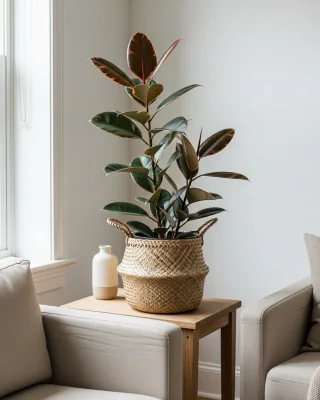
 Not sure it’s this plant?Check yours with a photo, free
Toxic to pets
Light needs for a rubber plant
Bright, indirect light
- 01
Best position and light
Use bright filtered or indirect light indoors. Protect Ficus elastica from hot afternoon sun and watch for scorch after any move.
Choose a stable bright place near a suitable window and soften intense sun. Variegated forms need more light than green-leaved forms. Do not keep moving the plant while adjusting it.
- 02
Seasonal light changes
Keep bright filtered light through the year and reassess the window or supplemental setup when winter daylight falls. That does not create a winter low-light rule.
- 03
Signs the light may be wrong
Small pale leaves, poor new growth, leaning or stretched growth can fit too little light. Bleached or scorched foliage after strong exposure fits too much direct sun. Variegated pattern may fade in low light. Check water, roots, temperature and pests as well.
- 04
Limits of this light guide
Green and variegated Ficus elastica can react differently to light. Glass, season and acclimation change the result, so treat bright indirect light as a placement target and watch the leaves.
All rubber plant guides
Keep reading
Sources4 references
- Royal Botanic Gardens, Kew: Plants of the World OnlineTaxonomy · accepted name · classification
- Royal Horticultural SocietyLight · watering · humidity · feeding · compost · repotting · pests
- Clemson University Cooperative ExtensionLight · temperature · watering · drainage · humidity · fertilizer · repotting · pests
- North Carolina State University Extension Gardener Plant ToolboxLight · water · seasonal reduction · root and leaf drop · pests
Last reviewed: