


How to repot a jade plant
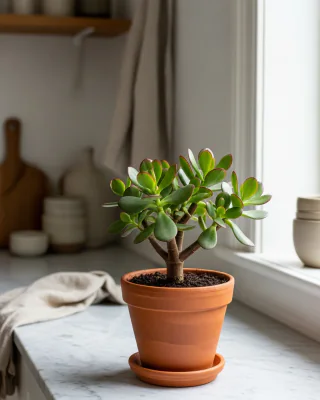
Crassula ovata
Quick answer
Repot when roots fill or emerge from drain holes, or when the medium no longer drains reliably, not just because leaves fall.
 Not sure it’s this plant?Check yours with a photo, free
Toxic to pets
How to repot a jade plant
- 01
When to repot
Repot when the jade plant’s roots have filled or congested the container, emerge from drainage holes, or the current medium no longer drains reliably. Do not repot merely because a few old leaves have fallen.
Spring is the preferred routine repotting window for an indoor jade plant as succulent growth resumes, rather than the darkest or coldest part of winter.
- 02
Choosing the next pot
Choose a pot only slightly larger than the root ball and use one with a drainage hole. An oversized pot leaves more succulent mix wet around a relatively small root system.
- 03
How to repot
Lift the plant to inspect its roots, use a free-draining cactus or succulent medium, loosen only congested material, and set the stem at its former depth. Avoid packing wet soil around damaged roots or burying the woody stem.
- 04
After repotting
Let damaged or disturbed roots settle before returning to the jade plant’s dry-side watering pattern. Keep the new pot draining freely instead of watering by a fixed schedule.
All jade plant guides
Keep reading
Sources4 references
- Royal Botanic Gardens, Kew: Plants of the World OnlineTaxonomy · accepted name · classification
- Royal Horticultural SocietyC. argentea synonym · full sun · cactus compost · moisture · winter watering · feeding · pests
- North Carolina State University Extension Gardener Plant ToolboxSunny indoor position · drainage · dry-down watering · seasonal reduction · indoor temperature · pests and root rot
- Penn State ExtensionCactus mix · drainage holes · complete dry-down · light · leaf drop · repotting interval
Last reviewed: