



How to repot a ponytail palm
Beaucarnea recurvata
Quick answer
A ponytail palm can stay in the same pot for many years. Repot when roots are congested, or when a larger container is a deliberate size decision, not on a yearly calendar.
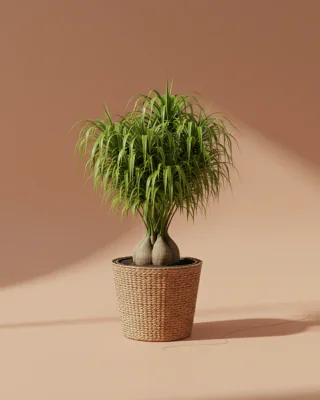
 Not sure it’s this plant?Check yours with a photo, free
Pet-safe
How to repot a ponytail palm
- 01
When to repot
Ponytail palms can remain in the same container for many years. Inspect the roots when the plant is root-congested, or when a larger pot is wanted for additional height and girth.
Spring is the best season for repotting, as plants start growth. There is no set month or interval for Beaucarnea recurvata, so repot only when it needs it.
- 02
Choosing the next pot
Use only a modestly larger pot when upsizing, no more than one third larger. A small pot keeps a ponytail palm smaller, while a larger pot allows more height and girth.
- 03
How to repot
Lift the plant, assess the roots, trim only soft or rotted sections, place it at the same level in fresh well-drained medium, and use a container with drainage. Cactus-style mix amended with sharp sand or small gravel is an exact ponytail-palm option.
- 04
After repotting
After repotting, water until some water exits the drainage holes, then return to deep but infrequent watering only after the medium dries. Reduce watering substantially in winter because overwatering is the common failure mode described for ponytail palms.
All ponytail palm guides
Keep reading
Sources3 references
- Royal Botanic Gardens, Kew: Plants of the World OnlineTaxonomy · accepted name · classification
- North Carolina State University Extension Gardener Plant ToolboxSunny window · drought tolerance · watering · soil · winter air · pests · rot and leaf spot
- Royal Horticultural SocietyLight · compost · watering · winter · top-dressing or potting-on · pests
Last reviewed: