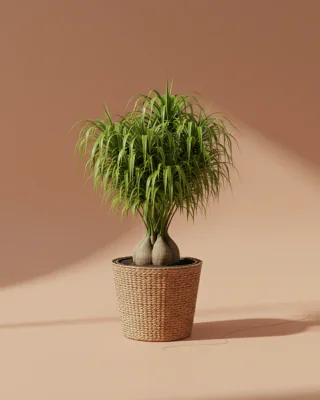
Tips and edges turn brown and soft rather than dry and papery, and the soil stays damp for days. Damaged roots can’t supply the leaf tips.
The fix
Let the soil dry out and water again only once the soil has dried out completely. If the base is soft or the roots are brown and mushy, unpot it, trim the soft roots, and repot in fresh, fast-draining mix.
Other possible causes
Not a match? Compare the signs below to find the one you have.
Too much direct sun
How to tell
Dry brown patches or scorched edges show up where strong sun hits the leaf. Ponytail palm wants bright light and some direct sun.
The fix
Filter the harshest midday sun with a sheer curtain for a few weeks, then reintroduce the sunny spot gradually so the leaves can harden off.
Tap-water minerals and salts (a smaller factor here)
How to tell
Ponytail palm tolerates tap-water minerals better than more sensitive foliage plants (calatheas, prayer plants), so this is rarely the main cause. Salts can still build up in a mix that’s never flushed, though.
The fix
If tips keep browning despite correct watering, flush the mix thoroughly with plain water every few months to clear any accumulated salts.
Fertilizer burn (easy to cause on this plant)
How to tell
Tips brown within a week or two of a feed. Ponytail palm needs so little feeding that a normal houseplant dose is often already too strong for it.
The fix
Flush thoroughly with plain water, then feed at half the recommended strength and about every 90 days while it’s actively growing.
Dry heat from a radiator or vent
How to tell
Tips brown mainly on the side facing a radiator or heater vent. Ponytail palm does well at 30–60% humidity, so ordinary room air is rarely the cause on its own.
The fix
Move it away from the heat source. It doesn’t need misting or a humidity tray.
Occasional dry spells (a minor factor here)
How to tell
Because ponytail palm goes long stretches between waterings by design, the very oldest leaf tips can dry and brown even with correct care. This is a much smaller factor than on thirstier plants and rarely the main cause.
The fix
Water according to moisture, only when the soil has dried out completely. Check drainage and do not add water just because a tip is brown or a calendar says it is time.