



Set it up so nothing is cut and nothing is strangled. The two ways staking goes wrong are a stake driven through the root ball and a tie that bites into the stem as it grows.
Decide whether it needs support or light
Look at the spacing on the stem. Long bare gaps between leaves with small pale foliage means the plant is reaching for light, and tying that stem upright leaves you with a supported weak stem rather than a strong one.
Move it closer to the window first, or add a grow light, and turn the pot a quarter turn every week or two so it grows evenly. Then decide about a stake once new growth is coming in compact.
A plant that has simply grown tall is a different case. Thick stem, full leaves, and a top that has outgrown the base is a plant that needs holding while it keeps going.
Check the pot as well. A plant that leans and lifts on one side, or wobbles when you nudge it, is often loose in the mix or root bound rather than weak in the stem.
Matching the support to the growth habit
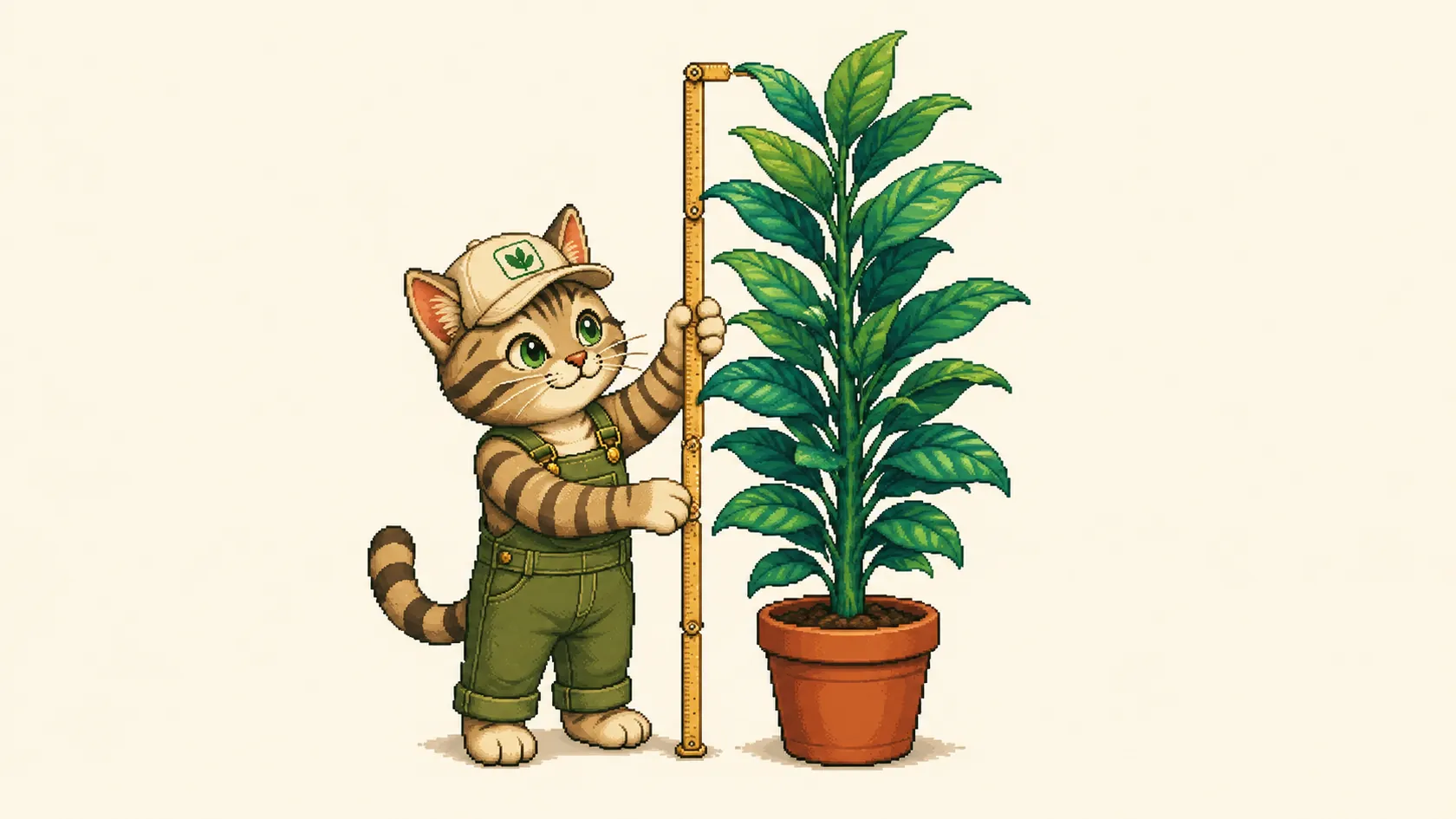
A single cane suits one upright stem such as a young rubber plant, a fiddle-leaf fig or a dracaena that has lost its balance. Bamboo, a coated metal rod and a wooden dowel all work, and it should be at least two thirds of the plant’s height.
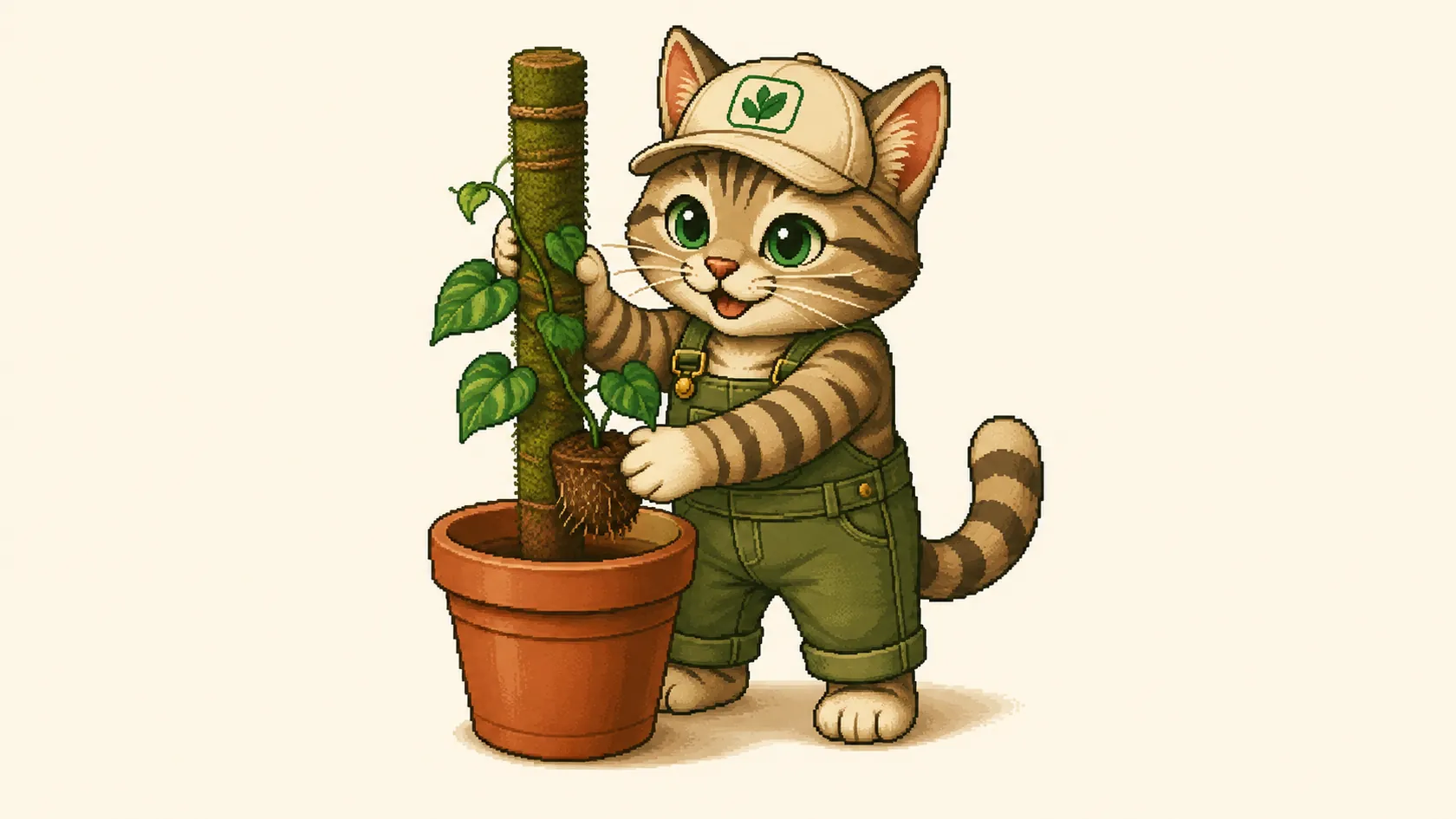
A moss pole is for climbers that make aerial roots, such as monstera, philodendron and pothos. Those roots grip a damp pole and the plant then holds itself, which a bare cane never allows.
Three canes and a loop of twine around them make a cage for a bushy plant that splays outward, which is the usual answer for a large peace lily or a wide umbrella plant.
A trellis or a hoop suits a twining vine like hoya, wax plant or string of hearts, where the point is to give the stems something to wind around rather than to hold weight.
Match the thickness to the load. A thin cane bends under a heavy top and then holds the plant in a curve, which is worse than no stake.
- Single cane: one upright stem that has lost its balance
- Moss pole: climbers with aerial roots
- Three canes and twine: bushy plants that splay
- Trellis or hoop: twining vines
Setting the stake without cutting roots
Put it in at repotting time whenever you can. With the plant out of the pot you can see where the root ball is, stand the stake against the inside wall and fill mix around both at once.
In an established pot, work in from the rim rather than beside the stem. Push the stake down slowly a couple of inches out from the base, and if it stops against something solid, pull it out and try a different spot instead of forcing it through.
Drive it deep enough to be stable, which usually means close to the bottom of the pot. A stake that only reaches halfway down tips with the plant.
Set it on the side the plant is leaning toward, so the stem is pulled back to upright rather than pushed away. Then firm the mix around the base of the stake and water it in.
Tying so the stem can still grow
Use soft, wide material. Garden twine, strips of cloth, a nylon stocking cut into bands or plant clips all spread the load, while wire and thin string cut into the stem as it thickens.
Tie in a figure eight. Loop the tie around the stake, cross it, then loop it around the stem so a cushion of tie sits between the two. The stem then rests against the tie rather than grinding on the stake.
Leave it loose enough to slide a finger under. A tight tie looks tidier and girdles the stem within a season, which shows up as a swollen band and dieback above it.
Start the lowest tie roughly a third of the way up and add one every eight to twelve inches. Two or three well-placed ties hold better than a stem lashed at every leaf.
Check them every few months. A stem thickens over a season, and a tie that was loose in spring can be tight by fall.
Keeping a heavy floor plant stable
Weight at the bottom does most of the work. A heavy ceramic or terracotta pot resists tipping in a way a light plastic one does not, and a plain plastic grower pot inside a heavy cachepot is the easy version.
A layer of stones or bricks in the bottom of the cachepot lowers the center of gravity further. Keep them under the growing pot rather than inside it, so drainage is unaffected.
Move a tall plant off a walkway. Most breakages happen because someone brushes past, and no staking survives that repeatedly.
Turn it a quarter turn every week or two. A plant lit from one side leans further that way over months, and turning it keeps the load centered so the stake has less to hold.
When a stake is not the answer
A stem that is stretched and thin needs light and pruning rather than support. Cut it back to a node above a healthy leaf and let the plant branch out from lower down, then stake the new growth only if it needs it.
A plant that flops with wet mix at the base is a root problem. Check the root ball for dark soft roots and a sour smell before you tie anything up.
A root bound plant that dries out daily wilts and recovers repeatedly. That is a repotting job, and staking a wilted stem holds it in place while nothing improves.
Take the support away once it is no longer doing anything. A stem thickens fastest when it has to carry some of its own weight, so as soon as the plant stands on its own the stake comes out.
Related plants
Keep reading
Common questions
How do you stake a tall houseplant?
Push a stake at least two thirds of the plant’s height down beside the root ball from the rim, on the side the plant leans toward. Then tie loosely in a figure eight every eight to twelve inches with soft, wide material.
What can I use to stake a plant?
A bamboo cane, a coated metal rod or a wooden dowel for a single stem, a moss pole for a climber with aerial roots, three canes and twine for a plant that splays, and a trellis for a twining vine.
How do you tie a plant to a stake without damaging it?
Use soft, wide ties and cross them in a figure eight so the tie sits between the stem and the stake. Leave enough slack to slide a finger under, and check the ties every few months as the stem thickens.
Will a stake stop my plant from leaning?
It holds the stem straight, but a plant leaning toward a window will keep growing that way. Move it into brighter light and turn the pot a quarter turn every week or two so the new growth comes in balanced.
How deep should a plant stake go?
Close to the bottom of the pot, so it does not tip with the plant. Set it in at repotting time when you can see the root ball, and in an established pot work in from the rim rather than beside the stem.
When should I remove the stake?
Once the stem holds the top up on its own, which usually takes a season or more. A stem thickens faster when it carries some of its own weight, so leaving a stake in permanently keeps it dependent.
Last reviewed: 2026-09-07