



Keeping one narrow is a second job. Light from one side, a pot that is too small and no pruning all turn a slim plant into a leaning one within a year.
Measure the footprint before the height
Measure the gap the plant has to live in at its narrowest, usually between a piece of furniture and a wall, and then measure how far the pot can stick out. The pot is normally the widest part at floor level and it decides whether the plant fits at all.
Then measure up. Leave a foot or so between the top of the plant and the ceiling, since a plant that is at the ceiling on the day you buy it has nowhere to go.
Check the swing of doors, drawers and curtains through the space. A plant brushed twice a day loses leaves on that side and eventually leans away from the contact.
Look at the light from where the plant will actually stand. A narrow gap beside a wall often gets much less light than the room appears to have, and that is the constraint that rules out half the candidates.
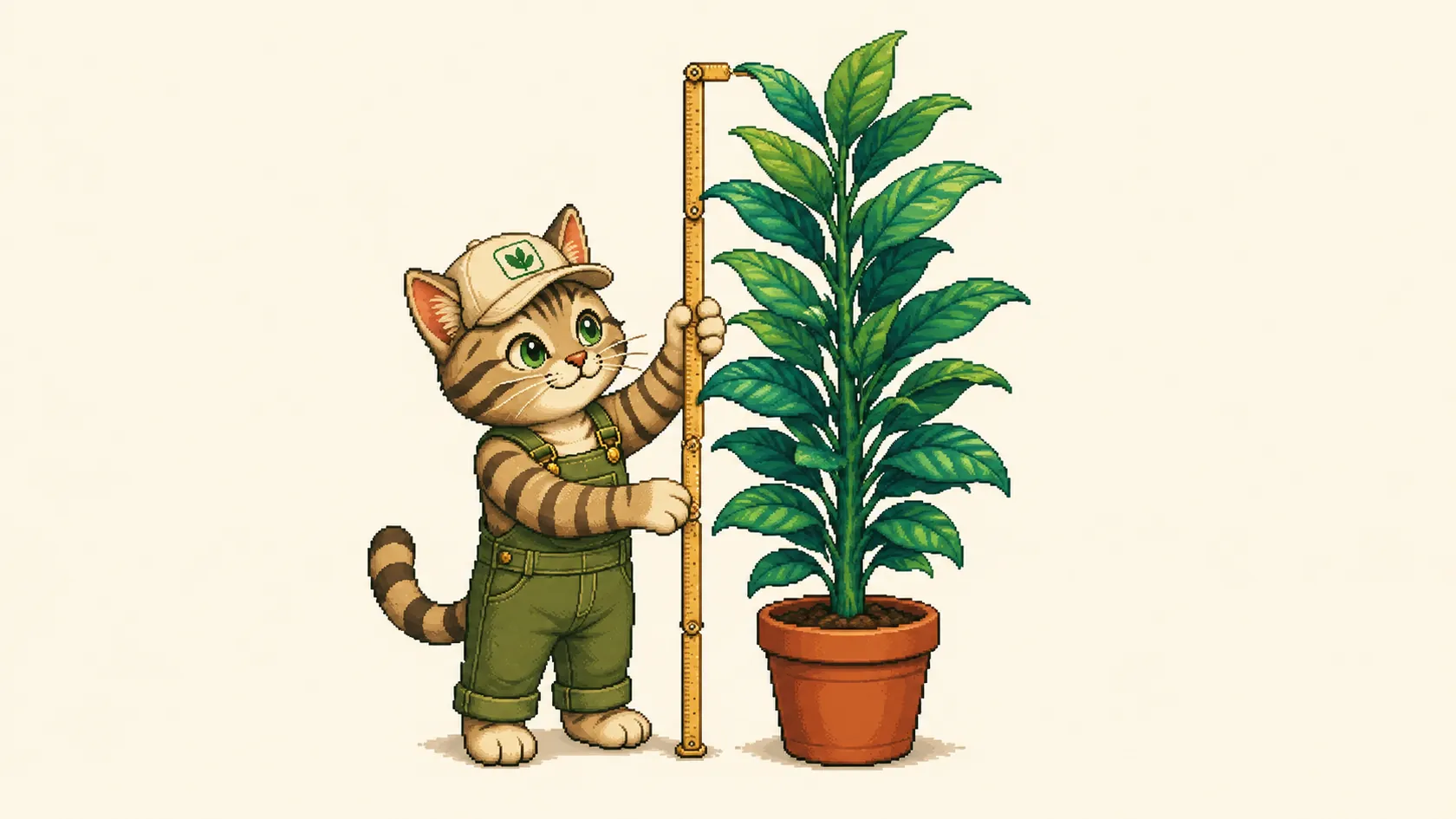
Plants that grow up rather than out
Snake plant is the narrowest of the reliable ones. Stiff upright leaves rise straight from the mix, the clump widens slowly, and it takes low light and irregular watering without complaint.
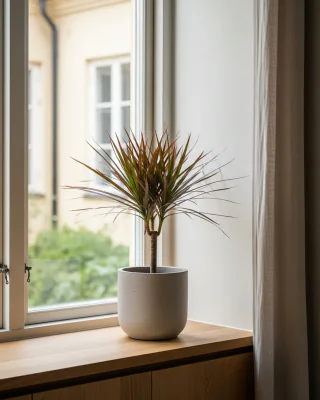
Dragon tree carries thin arching leaves on a slim bare cane, so it reads as tall and light rather than bulky. It suits a bright corner and stays narrow for years.
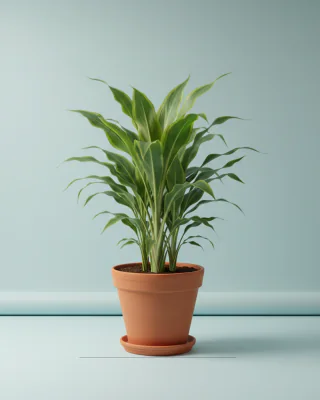
Corn plant does the same in a fuller form, with wider strappy leaves on a thick cane. It handles medium light and is the easier of the two if the spot is not especially bright.
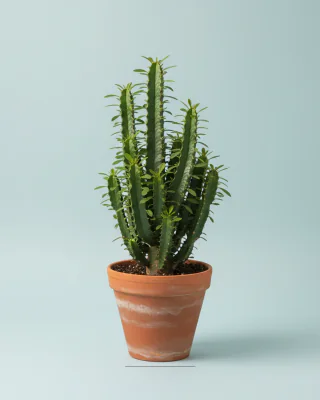
African milk tree grows as a straight ridged column that branches into more columns. It needs sun and very little water, and it is the closest thing to a vertical line in plant form.
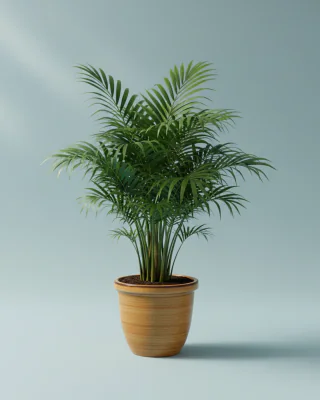
Parlor palm stays slim, tolerates low light better than any other palm and rarely gets wide indoors. Kentia palm is the taller version for a bright spot, elegant and slow, and worth the price for a corner that has to look finished.
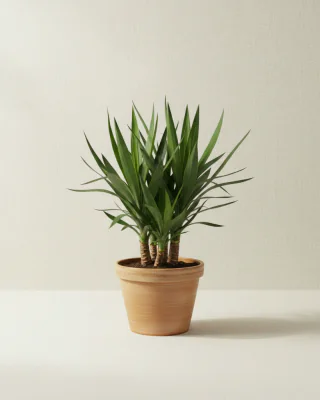
Yucca is the sun-loving option, a woody trunk topped with a stiff rosette that stays tight. Weeping fig and rubber plant can both be kept as narrow columns in a bright spot, though they need pruning to stay that way.
Whip-like stems of a pole-grown philodendron or monstera give height in a narrow footprint too, since the plant climbs its support instead of spreading sideways.
Each plant’s own care guide carries the safety information for pets and children, including sap that irritates skin. Check the guide before you put a plant where an animal can chew it.
- Snake plant: narrowest, low light, forgiving
- Dragon tree and corn plant: slim cane, thin crown
- African milk tree: a vertical column, needs sun
- Parlor palm and kentia palm: slim, low to medium light
- Yucca: sun, woody trunk, tight rosette
What light a narrow spot really gives
Light falls off fast with distance from the glass. A corner six feet into a room gets a fraction of what the windowsill gets, and a spot beside a wall loses the reflected light as well.
Match the plant to that rather than to the room. Snake plant, parlor palm, corn plant and ZZ plant cope with the dim end, while yucca, African milk tree and rubber plant need to be within a few feet of a bright window.
A plant in too little light tells you within a season. New leaves come in smaller and paler, the gaps along the stem get longer, and the whole plant leans toward the window.
A grow light on a timer fixes a corner that has no real daylight. Position it above the plant rather than to one side, so the plant grows straight instead of toward the fixture.
Keeping a tall plant narrow
Turn the pot a quarter turn every week or two. A plant lit from one side leans that way permanently, and turning it is the whole difference between a straight trunk and a curved one.
Prune to control width. Cutting a stem back to just above a leaf node makes it branch below the cut, so remove the growth heading sideways and leave the vertical stems alone.
Take off the lowest leaves on a cane-forming plant if the base needs to stay clear. Dragon tree, corn plant and yucca all look intentional with a bare lower trunk, and the plant loses nothing by it.
Give a climber a moss pole rather than room to sprawl. Aerial roots grip the pole and the plant holds itself upright in the same footprint the pot occupies.
Pot, weight and stability
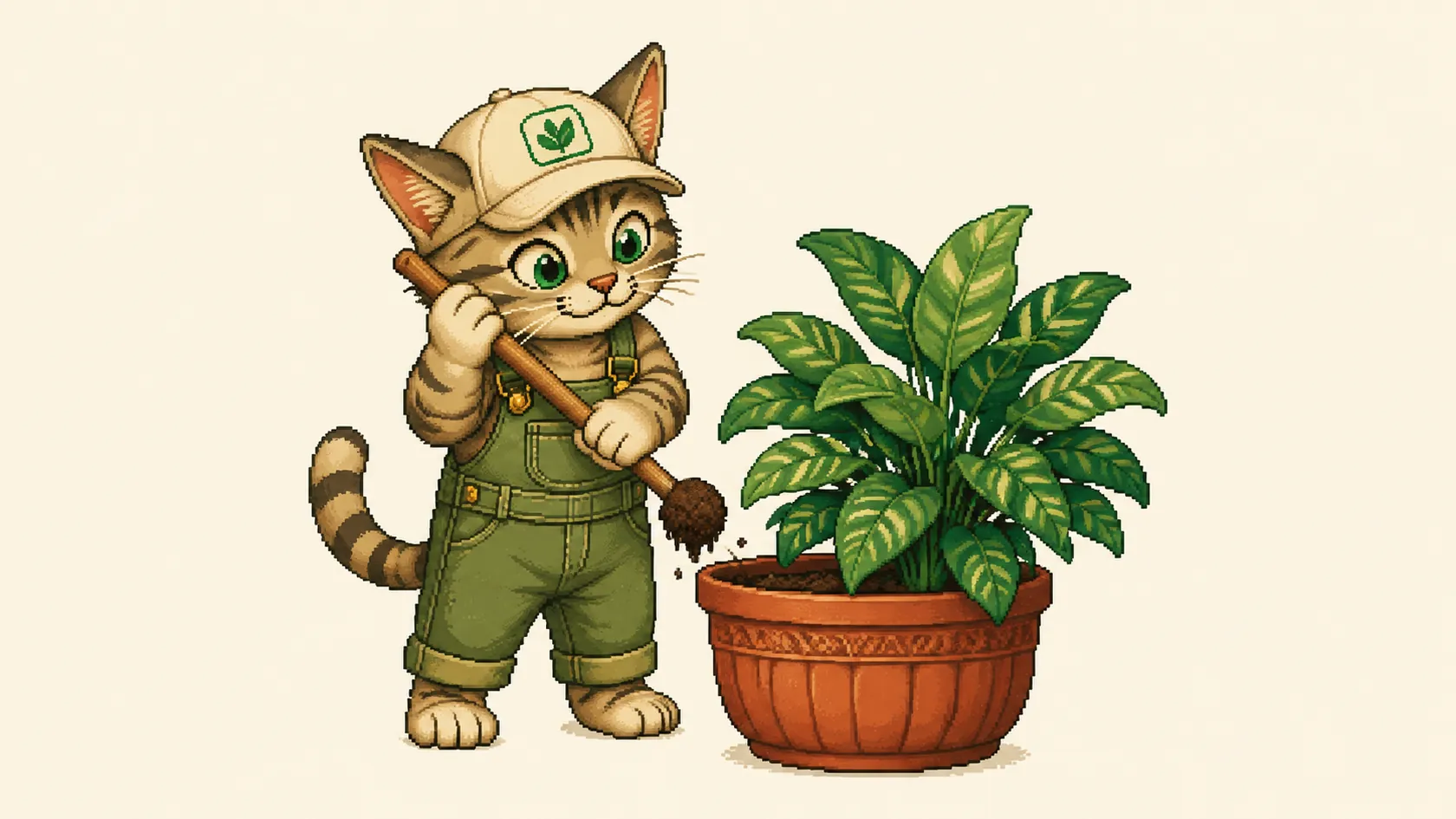
A tall plant in a light plastic pot goes over. Use a heavy ceramic or terracotta pot, or set a plastic grower pot inside a heavy cachepot and put a few stones under it to lower the center of gravity.
Keep the pot only a little wider than the root ball. A large pot for stability surrounds the roots with wet mix that nothing is using, and it wastes the floor space you were trying to save.
Stake a stem that cannot hold its top yet, with the stake set at the rim rather than through the root ball and ties loose enough to slide a finger under.
Casters under a heavy pot make the difference between turning the plant and never touching it. A large floor plant that cannot be moved does not get turned, cleaned or watered properly.
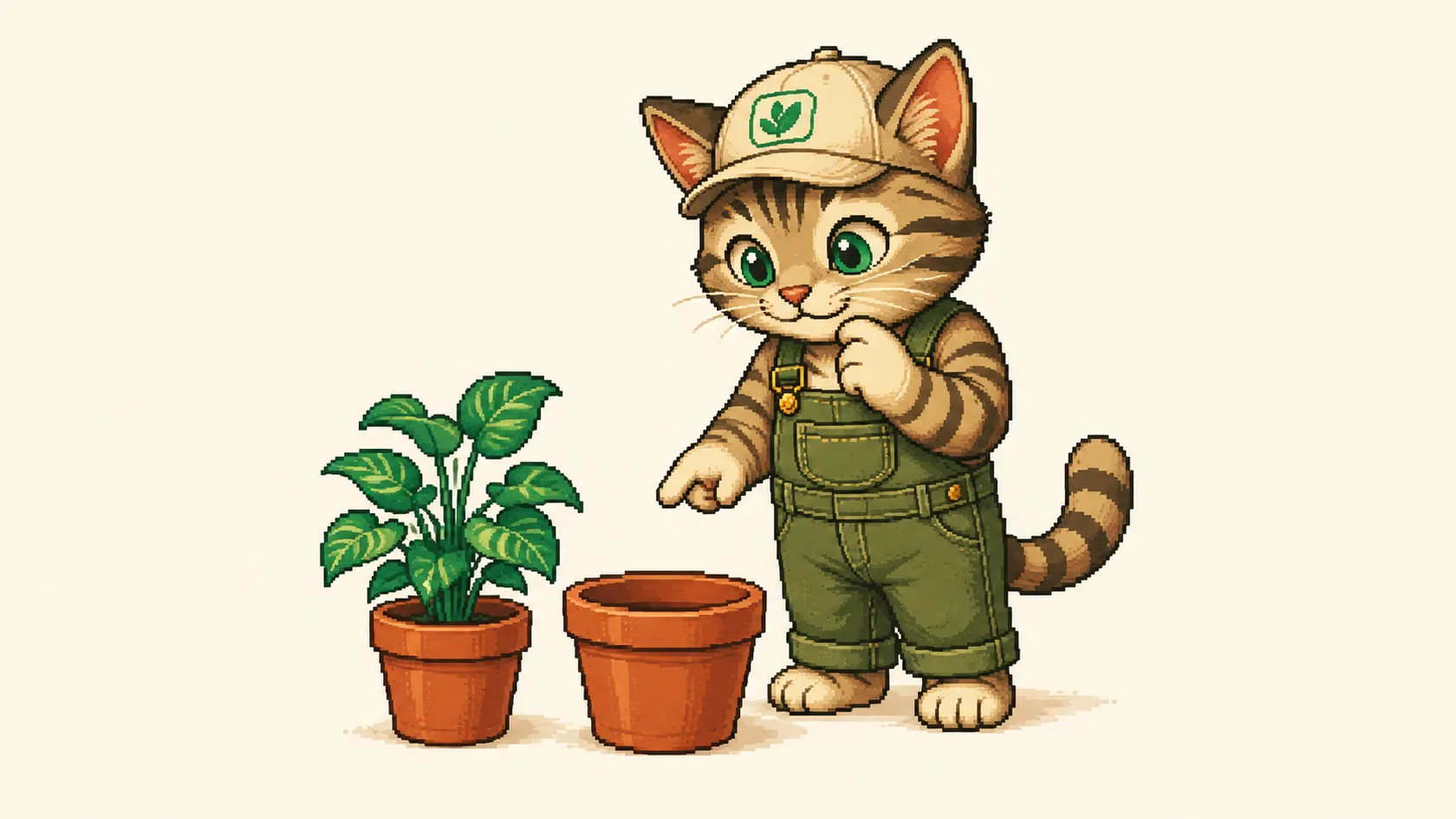
Watering a tall plant in a deep pot
A deep pot dries from the top down, so the surface tells you almost nothing. Push a finger in as far as it goes, or use a wooden stick pushed nearly to the base and check whether damp mix clings to it.
Water thoroughly until it runs out of the bottom, then empty the saucer twenty minutes later. Small amounts wet only the top few inches while the roots below stay dry.
Long-leaved plants collect dust, which cuts the light they receive in a corner that has little to spare. Wipe the leaves with a damp cloth every few weeks, supporting each leaf from underneath.
Expect the interval to stretch in winter. Less light means less growth and less water use, and a big pot of wet mix in a dark corner in January is where the trouble starts.
Related plants
Keep reading
Common questions
What indoor plants grow tall but not wide?
Snake plant, dragon tree, corn plant, African milk tree, parlor palm, kentia palm and yucca all gain height without spreading much. A monstera or philodendron on a moss pole climbs upward in the footprint of its pot.
What is the best tall plant for a dark corner?
Snake plant and parlor palm cope with the least light, with corn plant close behind. They grow slowly there, and a grow light on a timer above the plant makes a genuinely dark corner workable.
How do I keep a tall plant from leaning?
Turn the pot a quarter turn every week or two so it is lit evenly, use a heavy pot or a weighted cachepot, and stake the stem loosely if the top is heavier than the stem can hold.
What is the fastest growing tall indoor plant?
Among the narrow growers, corn plant and dragon tree put on height quickly in good light, and a pole-grown monstera or philodendron climbs fast. Snake plant and kentia palm are slow whatever you do.
How big a pot does a tall indoor plant need?
Only an inch or two wider than the current root ball, whatever the height of the plant. Stability comes from the weight of the pot and a low center of gravity, not from extra width filled with unused mix.
Do tall plants need more water?
They hold more mix, so a watering takes longer and lasts longer, but the decision is the same. Check deep in the pot with a finger or a wooden stick and water thoroughly only when it comes out dry.
Last reviewed: 2026-09-07