



Once the features on the plant match the name you were given, you have something to base care on.
Start with the way the plant grows
Take a step back and look at how the plant is built. It grows upright on a trunk, it climbs or trails, it forms a rosette from a single point, or it comes out of the soil as many separate shoots.
That one question narrows the field a long way. A shoot that climbs and puts aerial roots against a wall belongs in a different group from a single trunk with a tuft of leaves on top.
Look at whether the plant is built to store water. Thick fleshy leaves or a swollen base point to succulents, which have their own clearly separate set of features.
Note the size and how fast it has grown, if you know. Two species with similar leaves often differ sharply in speed and in the size they end up.
Read the leaf
The leaf carries most of the evidence. Look at shape, edge, tip, veins and surface one at a time instead of forming a general impression.
Shape runs from round through heart shaped and lance shaped to deeply divided. Note whether the leaf has splits or holes, and whether young leaves already have them.
The edge is smooth, wavy, toothed or lobed. It is one of the most reliable features, because it barely changes as the plant ages.
Veins tell you which large group the plant belongs to. Parallel veins running from base to tip appear in palms, grasses and many other monocots. A net pattern with a midrib and side veins belongs to the dicots.
Leaf arrangement takes a second to check. Leaves sit singly and alternately along the stem, in opposite pairs, or several in a ring. Those three options separate species that look alike at a glance.
Feel the surface. Leathery and glossy, matte and velvety, hairy, or covered in a waxy bloom are four different findings. Pale stripes or spots narrow things further, though they may only mark the cultivar.
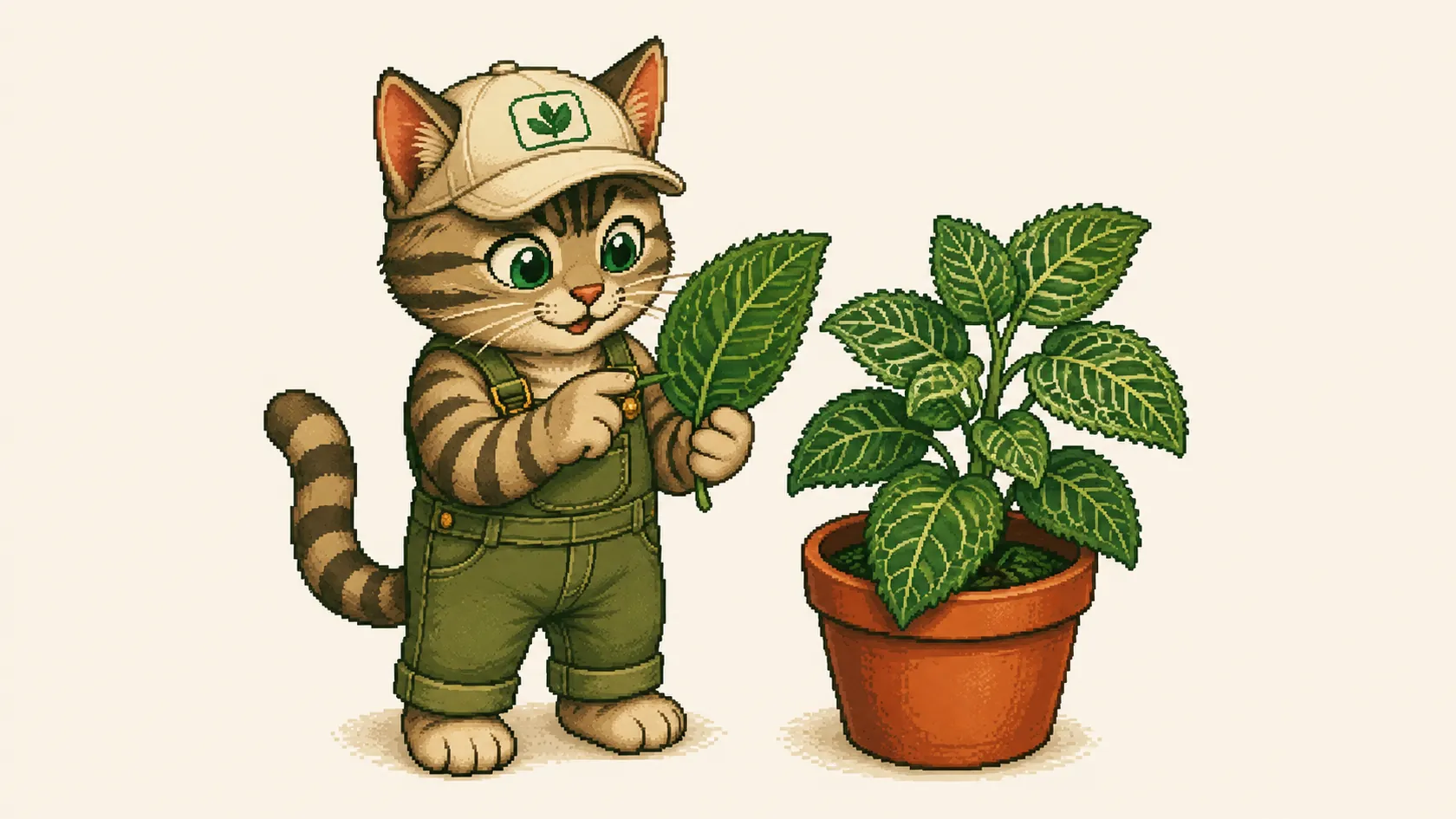
Stem, sap and roots
Look at how the stem is built. Clear nodes with a leaf scar, a woody trunk, a soft green runner, or leaf sheaths wrapped around the stem each lead in a different direction.
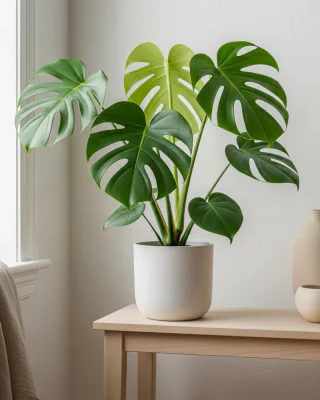
Aerial roots are a strong feature. Climbing aroids such as monstera, pothos and philodendron form them at the nodes, while many other houseplants never do.
White milky sap at a broken edge narrows the possibilities sharply. Figs and the spurge family show it, many other families do not. Wash the sap off your skin and clean the blade.
What is under the soil helps at the next repotting. A tuber, a rhizome or thick water storing roots are features you will never see in a photo.
Flowers and fruit
When a plant is flowering, the flower is the single best feature. Count the petals, look at the symmetry, and note whether flowers stand singly or in a cluster.
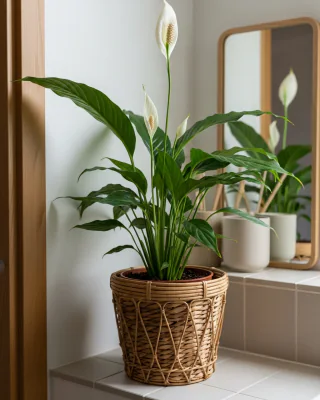
On some houseplants the eye catching part is not a petal at all. Anthurium, peace lily and calla lily carry a spike with a colored bract around it, and that construction identifies the whole family.
Many houseplants never flower in a living room. That is why identifying them works mainly through leaf and habit, while identification keys for wild plants lean heavily on flowers.
Note the flowering season if you have seen it. For species that bloom in winter it is an extra clue.
What a photo identification app can and cannot do
Photo identification is pattern matching against many images of known species. On widespread houseplants it generally gets the genus, and often the species.
It stops where species differ only in details. Cultivars of the same species, variegated selections and young plants without their adult leaf features frequently cannot be separated in a picture.
It also cannot see what is not in the frame. Sap, root type, scent, the feel of a leaf and the size the plant reaches are all outside a photo, and they are often what settles a hard case.
The photo decides the quality of the answer. Shoot in daylight, hold the camera still and focus on the leaf.
Take two pictures. One shows the whole plant with its habit, the second a single leaf from above, filling the frame, with the edge and the veins visible. A leaf against a plain surface gives better results than one in front of a full shelf.
Keep other plants out of the shot, since a group of species leaves it unclear which one you mean. Include anything distinctive if you have it. A flower, a fruit, a thorn or a leaf sheath is worth more than another picture of the same leaf surface.

Check the result on the plant
Take the suggested name back to the plant. Read the description of the species and check leaf shape, leaf edge, leaf arrangement and habit one by one. If one feature clearly does not match, the suggestion is wrong even when the overall shape looks right.
Check that the care makes sense as well. A name that belongs to a bog plant while yours has grown for years in dry soil does not fit.
When several names come back, the genus is often certain and the species open. For care that is usually enough, because species in one genus tend to want similar light and water.
Two questions need more than that. For toxicity and for anything involving pets or children you need a confident identification. Use the species care guide, and after an incident contact a veterinarian, a doctor or a poison control center.
Keep the name with the plant. A label in the pot or a photo with a note saves you the whole exercise next time.
Related plants
Keep reading
Common questions
How accurate are plant identification apps?
On common houseplants they usually get the genus right. Cultivars, variegated selections and young plants without their adult features are much less certain. Treat every result as a suggestion you check against the plant.
How do I identify a plant from a photo?
Take two pictures in daylight. One of the whole plant showing how it grows, one of a single leaf filling the frame with the edge and veins visible. Keep other plants out of the shot and include a flower or fruit if there is one.
Can an app identify a plant without flowers?
Yes, and for houseplants that is the normal case. Leaf shape, leaf edge, veining and the arrangement of leaves on the stem are there all year and change little with age, which is why they carry the identification.
How do I tell pothos and philodendron apart?
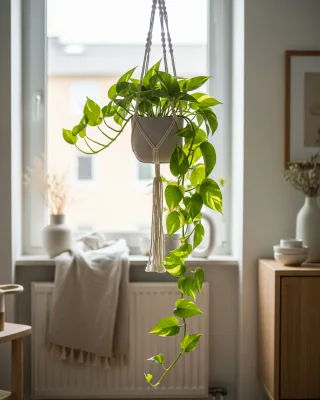
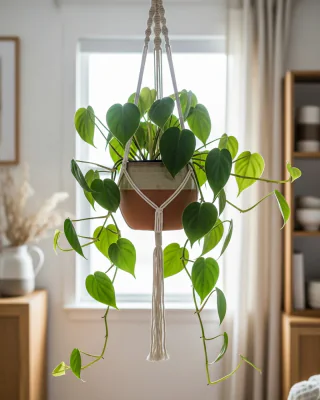
Look at the leaf stalk and the base of the leaf. Pothos has a stalk that is grooved toward the leaf and a slightly uneven leaf. On a climbing philodendron the leaf is more evenly heart shaped, and new leaves emerge from a thin sheath that dries up later.
What if the result names several species?
Compare them on the points where they differ, usually leaf edge, leaf size or hairiness. If it stays open, work from the genus, since its species mostly want the same light and water. For toxicity questions the genus is not enough.
Can I rely on an app to tell me if a plant is toxic?
No. A photo result is a strong guess, and toxicity is a question that needs the species confirmed. Check the identification against the plant, read the species care guide, and contact a veterinarian, a doctor or a poison control center after an incident.
Last reviewed: 2026-09-07