What you see
Smooth sealed edges the same color as the leaf, windows that appear as the leaf unfurls, or matching holes spaced evenly on both halves.



The edge of the hole names the cause. Chewed, torn and dried-out edges each point somewhere else.
The answer is written at the edge of the hole and on the undersides of the leaves around it. Chewed edges, a clean split and a dry brown ring lead to three different responses.
Hold the leaf up to the light and look at the rim of the hole from close up. A rim that is green all the way to the opening was cut out of living tissue by something with jaws. A rim carrying a dry brown line means the tissue died first and then fell out.
Then check whether it is the newest leaves that are affected or only the older ones. Damage that keeps appearing on fresh growth is still happening. Damage confined to old leaves happened once, and the plant has grown past it.
Turn a few leaves over and look into the leaf joints in good light. Most of what eats a houseplant sits underneath or comes out at night, so the top of the leaf shows the result rather than the cause.
Look at

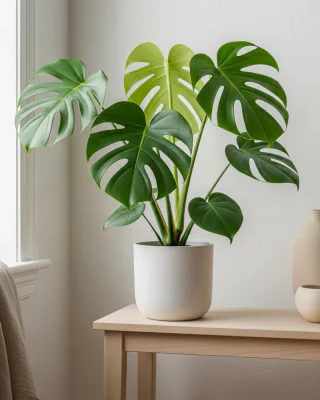
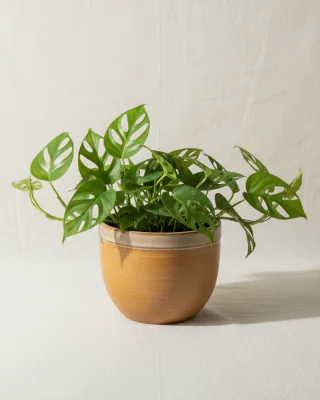
Some plants are supposed to have holes. Monstera and the swiss cheese vine open windows in their leaves as they mature, and on a young plant those windows arrive gradually, first as notches on the edge.
A natural window has a smooth, sealed edge that is the same color as the rest of the leaf. It appears while the leaf is unfurling, not weeks later on a leaf that was whole.
The second self-made case is damage from before the leaf opened. A new leaf sits tightly rolled, and anything that pierces or creases it at that stage shows up as a row of matching holes once it expands. The spacing is regular and the same on both halves of the leaf.
Neither case needs treatment. Watch the next few leaves instead. If they come out clean, the plant has already answered the question.
Most likely cause
Ragged holes with a green edge and missing pieces along the leaf margin come from chewing insects. Caterpillars are the common one, and a single caterpillar can work through several leaves in a night.
Look on the leaf undersides, in the leaf joints and along the middle vein, because that is where a caterpillar rests during the day. Small dark pellets on the leaves below it or on the soil surface confirm it even when you cannot find the animal.
Most of this comes indoors from outside. A plant that spent the summer on a balcony, a bunch of cut flowers, or a new plant from a store are the usual routes. It is rare on a plant that has never left the room.
Pick off what you find and move the plant away from your others while you check it over a few evenings. Look again after dark, when the feeders are active and easier to catch.
Slugs and snails leave large irregular holes in the middle of soft leaves and eat the low leaves first. They work at night and hide during the day under the pot, in the drainage saucer or in the top of the soil.
The giveaway is a dried silvery trail on the leaf, the pot or the surface underneath. Nothing else that eats a houseplant leaves one.
Lift the pot and look at its base and its rim, then run a finger over the top inch of soil. Bringing a plant back indoors in fall usually brings a few passengers with it.
Take out what you find and check the pot again a few nights running. A plant that stays indoors afterward does not get reinfested.
A hole ringed by a dry brown or yellow border is where the tissue died before it fell away. Fungal or bacterial leaf spots do this, and so does cold damage on a leaf that touched a winter window.
The sequence is the tell. Somebody watching the leaf would have seen a spot first, then a paper-dry center, then the center crumbling out. Nothing chewed it.
Water sitting on a leaf in direct sun and a splash of concentrated fertilizer both do the same on a smaller scale. The mark is where the drop was, and it goes no further.
Take the worst leaves off, water the soil rather than the foliage, and let leaves dry before the plant goes back in among others. Whether the cause is spreading shows on the leaves that were clean last week.

A split that runs in from the edge of the leaf is mechanical. Someone brushed past it, the leaf caught on a moss pole while it unfurled, or a fan pushed it against a hard corner for a week.
Cats and dogs make holes with torn, bruised edges and often bend the stem at the same time. That case is about where the plant stands rather than about care, and the toxicity of the species for animals belongs on the plant’s own care guide.
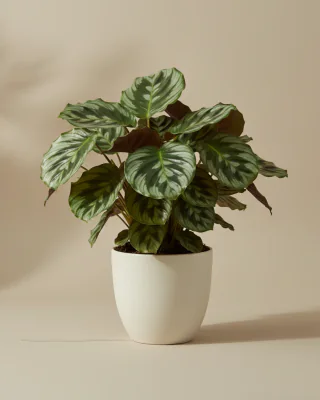
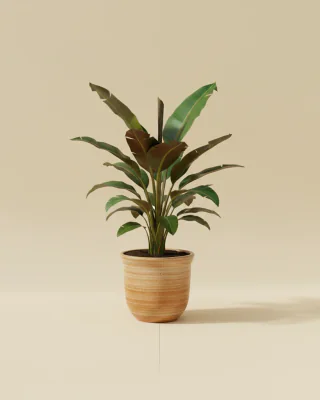
Large thin leaves tear most easily, which is why monstera, banana and calathea show it first. Give a big plant enough clearance that a person can walk past without touching it.
Torn leaves stay torn. Trim a badly damaged leaf along the shape of the leaf if it bothers you, and take it off at the base only once the plant has newer ones to spare.
Old damage looks like current damage, and that is what sends people after a pest that left weeks ago. Mark the situation instead of guessing. Note which leaves have holes today and look again in ten days.
New holes on new leaves means something is still feeding, and the search moves to the undersides and to the hours after dark. No new holes means the plant has already put the cause behind it.
Change one thing at a time and give it two or three weeks. A plant that is opening clean leaves has answered you more clearly than any single hole can.
Chewed holes with a green edge come from caterpillars and other chewing insects, and large holes with a silvery trail come from slugs or snails. Both usually arrive with a plant that was outdoors or newly bought. Search the leaf undersides and the soil surface after dark.
Mature monstera leaves open windows as they grow, with smooth sealed edges that form while the leaf unfurls. That is normal. A hole with a chewed or dry brown edge on an older leaf is a different matter.
No. Leaf tissue does not grow back across a hole, and the leaf stays as it is. Judge whether the problem is over by looking at the leaves that opened afterward.
Not directly. Spider mites and thrips feed on the surface and leave fine pale speckling, silvery patches and webbing rather than open holes. Badly damaged patches can dry out and crumble later, which leaves a hole with a dry edge.
Only when the leaf is mostly gone or the holes are ringed with spreading spots. A leaf with a few holes still feeds the plant. Take damaged leaves off gradually as new ones come in.
Because they were damaged while still rolled up. One puncture at that stage repeats through the folded layers and shows as evenly spaced matching holes once the leaf expands. Check whether anything is feeding on the growing tip, then watch the next leaf.
Last reviewed: 2026-09-07