


How to water a peace lily
Spathiphyllum wallisii

Quick answer
Water a peace lily when the surface or upper few centimeters have dried, then wet the root ball and let it drain. The plant should not sit in standing water or stay saturated.
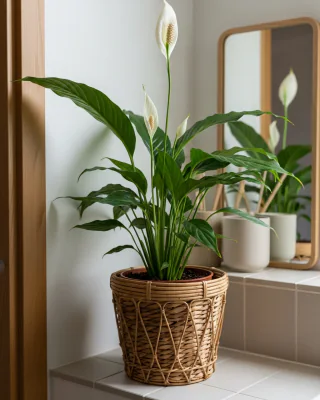
 Not sure it’s this plant?Check yours with a photo, free
Toxic to pets
- Starting point (summer)
- every 6 to 8 days
- Starting point (winter)
- every 11 to 17 days
How to water a peace lily
- 01
When to water
Keep the potting mix damp but not saturated and water when the surface or upper few centimeters have dried. A dramatic droop can be an observable sign that the plant may need water, not a universal calendar interval.
Reduce watering slightly in winter when growth slows, then return toward the active-growth pattern as light and growth increase. This is a directional change, not a fixed winter schedule for every home.
- 02
How to water thoroughly
Water thoroughly enough to wet the root ball, allow the container to drain freely and pour away water from the saucer or outer pot. Use room-temperature water. Rainwater or filtered water is also fine.
Do not leave the peace lily in standing water because roots can rot when potting mix stays wet for long periods. Aim for potting mix that stays damp but drains freely. Avoiding soggy potting mix does not mean letting it dry out completely.
- 03
Signs of too much or too little water
Drooping can follow a dry root ball, while yellowing, brown tips or root decline can also follow overwatering, low humidity, direct sun, salts or another stress. Inspect moisture and roots before changing the routine.
All peace lily guides
Keep reading
Sources4 references
- Royal Botanic Gardens, Kew: Plants of the World OnlineTaxonomy · accepted name · classification
- University of Florida IFAS ExtensionLight · soil · water · fertilizer · temperature · pests
- North Carolina State University Extension Gardener Plant ToolboxSpecies list · light · temperature · water · fertilizer · potting · repotting · problems
- Montana State University ExtensionSpathiphyllum wallisii row · light · moisture · humidity
Last reviewed: