


How to prune a peace lily
Spathiphyllum wallisii

Quick answer
Peace-lily pruning is cleanup, not reshaping: remove spent flower stalks and yellow, brown or dead leaves at the base. Healthy green foliage does not need a routine cut.
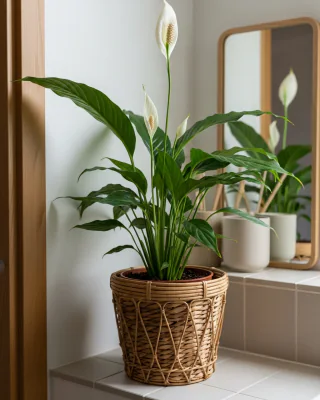
 Not sure it’s this plant?Check yours with a photo, free
Toxic to pets
How to prune a peace lily
- 01
Choose what to remove
Pruning concerns spent flower stalks and yellow or brown leaves. The plant keeps its shape without routine pruning. Cleaning leaves, removing a spent stalk and reshaping a clump are separate jobs.
Remove a spent flower stalk or dead or damaged leaf to tidy the clump and keep damaged tissue from remaining in the pot. Pruning is not needed to force a new shape and does not promise more flowers from cutting healthy leaves.
- 02
Prune at the right time
Cut flower stalks after the display has finished and remove leaves once they are clearly yellow, brown or dead rather than cutting healthy green foliage on a schedule.
- 03
Make one clean cut
Follow a spent flower stalk or damaged leaf down and cut it close to the base with a clean sharp tool. Avoid leaving a long wet stub in the clump.
- 04
When pruning will not help
Healthy peace lilies do not need regular shaping, and a yellow leaf may reflect watering, humidity, light or age rather than a need to prune more aggressively. This advice applies to all peace lilies, not only S. wallisii.
- 05
Care for the plant after pruning
After a cut, return the plant to ordinary indirect-light, warm and damp-but-draining indoor care and watch for new growth. Do not give extra water or fertilizer to make up for the cut.
All peace lily guides
Keep reading
Sources4 references
- Royal Botanic Gardens, Kew: Plants of the World OnlineTaxonomy · accepted name · classification
- University of Florida IFAS ExtensionLight · soil · water · fertilizer · temperature · pests
- North Carolina State University Extension Gardener Plant ToolboxSpecies list · light · temperature · water · fertilizer · potting · repotting · problems
- Montana State University ExtensionSpathiphyllum wallisii row · light · moisture · humidity
Last reviewed: