


How to repot a peace lily
Spathiphyllum wallisii

Quick answer
Repot a peace lily when roots are packed, circle the soil surface or emerge from drainage holes. Use a slightly larger pot, not a large jump.
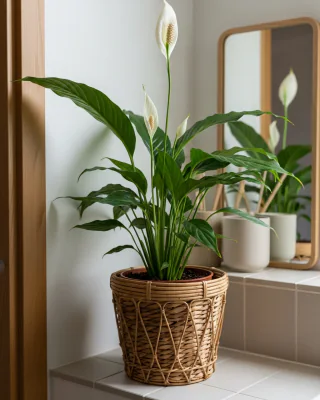
 Not sure it’s this plant?Check yours with a photo, free
Toxic to pets
How to repot a peace lily
- 01
When to repot
Repot when roots are densely packed, circle the top of the soil or emerge through drainage holes. A newly bought peace lily can often stay in its original pot for one to two years, but the roots tell you when.
Check roots in spring as growth starts. February and March are a good window, but root condition matters more than the month.
- 02
Choosing the next pot
Use a pot only a few centimeters larger than the current one and do not overpot. Peace lilies prefer to stay somewhat pot-bound.
- 03
How to repot
Use peat-free multipurpose potting mix with perlite, ideally in a 3:1 ratio of potting mix to perlite, lift the plant to check the root ball and move it into the slightly larger pot with free drainage.
- 04
After repotting
After repotting, keep the medium damp but not soggy, allow excess water to drain and avoid standing water. Do not use overpotting to compensate for a watering problem.
All peace lily guides
Keep reading
Sources4 references
- Royal Botanic Gardens, Kew: Plants of the World OnlineTaxonomy · accepted name · classification
- University of Florida IFAS ExtensionLight · soil · water · fertilizer · temperature · pests
- North Carolina State University Extension Gardener Plant ToolboxSpecies list · light · temperature · water · fertilizer · potting · repotting · problems
- Montana State University ExtensionSpathiphyllum wallisii row · light · moisture · humidity
Last reviewed: