



Aloe vera brown tips: what to check
Aloe vera (Aloe barbadensis)
Quick answer
Check the leaf and root conditions before changing water. Aloe vera brown tips can follow wet roots, prolonged dryness, intense sun, fertilizer salts, water quality, cold, dry air or pests.
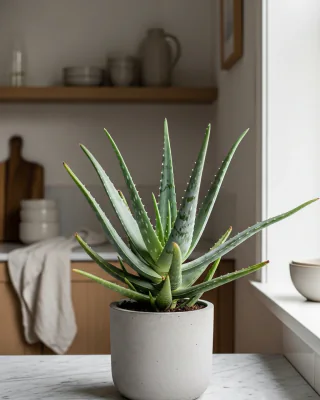
 Not sure it’s this plant?Check yours with a photo, free
Toxic to pets
What kind of brown mark is it?
Record whether browning is confined to dry leaf tips, runs along margins, appears as soft dark tissue or follows a sun-facing side, and whether leaves are also thin, yellow, spotted or collapsing.
Check whether the succulent mix has dried between waterings or stays wet, whether drainage holes are open, how much direct or bright light the plant receives, whether water or fertilizer changed, and whether pests or root damage are visible.
Possible causes and next checks
Brown tips can follow prolonged wetness or root rot, a mix kept dry too long, intense direct sun after low-light exposure, fertilizer salts, unsuitable water quality, cold, dry air and pests.
Correct the observed condition: let a saturated root zone dry and inspect drainage, restore thorough watering after excessive dryness, acclimate gradually to stronger sun, keep winter watering lighter, and pause extra fertilizer while checking for pests.
What to watch on new leaves
After light, water and fertilizer inputs have been stable, compare new growth with the same leaves and inspect the mix. Ongoing browning, soft tissue or collapse needs another root and exposure review.
What brown tips cannot tell you
Aloe vera stores water and does not follow a generic leafy-houseplant watering rule. Old brown tissue will not turn green, and brown tips cannot separate root, sun, salt, water-quality and air causes without context.
All Aloe vera guides
Keep reading
Related plants
Last reviewed: