



How to propagate Aloe vera
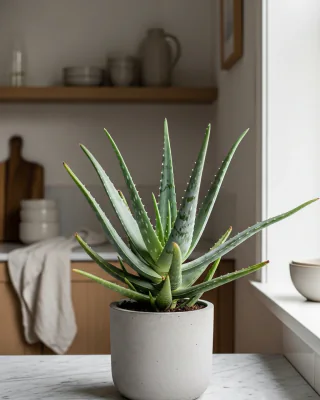
Aloe vera (Aloe barbadensis)
Aloe vera makes pups around the base. Separate a pup when it is large enough to handle, keep any roots, and let a cut surface dry before potting.
 Not sure it’s this plant?Check yours with a photo, free
Toxic to pets
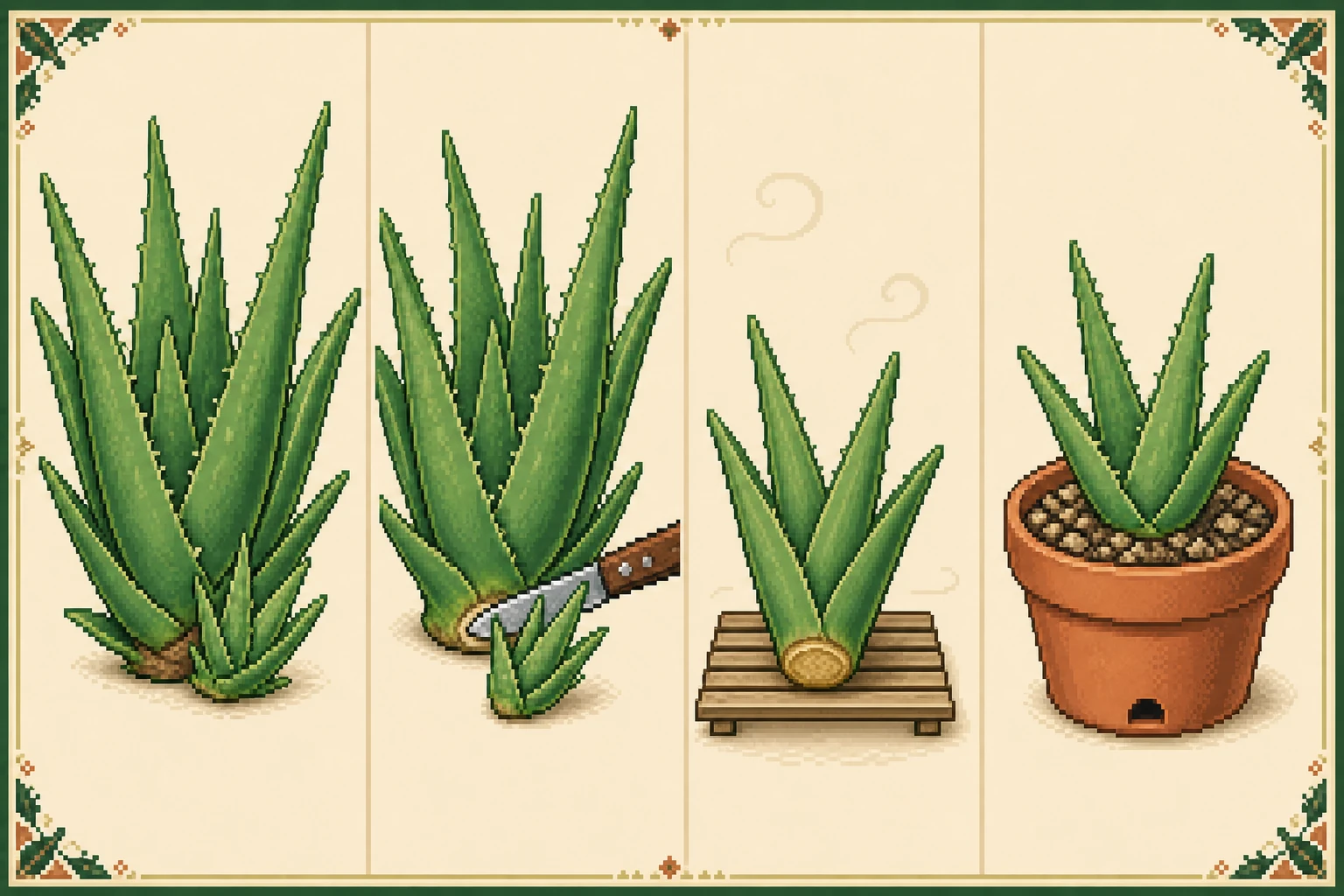
How to propagate by offsets / pups
Aloe vera is a succulent that produces offsets at the base. A pup with roots can be separated and potted on, while a cut pup needs a dry, healed surface before it is planted.
- 01
Choose a healthy basal pup that is large enough to handle. Prefer one with roots of its own.
- 02
Remove the plant from its pot and brush away enough mix to see where the pup joins the parent.
- 03
Separate the pup with a clean, sharp tool, keeping its roots when they are present.
- 04
If the separation leaves a cut, leave the pup in open air until the surface is dry and healed. Do not pot or water a fresh wet cut.
- 05
Pot a rooted, uncut pup or a healed cut pup in a small container of fast-draining succulent mix. Set it at the same level and keep the rosette above the mix.
- 06
Water a rooted, uncut pup lightly after potting and let excess drain. For a cut pup, delay the first watering until the scab has fully set, then keep it in bright light while it settles.
- 07
Treat the pup as established once it has firm new growth and a settled root system.
All Aloe vera guides
Related plants
Common questions
How do you propagate Aloe vera?
Aloe vera is usually propagated from a basal pup. Keep roots that are already present, let any cut surface dry and scab before potting, and water a cut pup only after the scab has set.
Should an Aloe vera pup have roots?
Roots help a pup settle, so keep them when you can. If separation leaves a cut, let the surface dry and scab before potting, then delay the first watering until the scab has fully set.
How long does an Aloe vera offset take to establish?
Establishment varies by pup. Look for firm new growth and a settled root system before treating it as mature.
Sources: NC State Extension’s Aloe vera profile supports basal offsets. University of Arizona’s Aloe vera guide supports letting a cut surface dry and heal before watering or potting. Iowa State Extension’s succulent propagation guide supports callusing for succulent offsets.
7 steps · Watch for firm new growth and a settled root system · Last reviewed: