What you see
Fine, even yellow or pale dots that do not wipe off, worst on older leaves. Webbing in the leaf axils, or a silvery sheen with tiny black dots underneath.



The shape decides. Even flecking, a round spot with a halo, and yellow between green veins differ.
Take a marked leaf to the window, look at both sides, and match it to one of the patterns below before changing any part of the care.
Yellow tissue is tissue that has lost its chlorophyll, and the pattern of the loss is the evidence. Even dotting comes from something feeding on the leaf. A defined round spot comes from an infection. A soft gradient between veins comes from what the roots are taking up.
Check whether the spots are still spreading. Old damage stays on a leaf after the cause has gone, so the signal to follow is whether new leaves come out marked as well.
Turn the leaf over while you are at it. Two of the five patterns are settled on the underside.
Look at

Most likely cause
Even, fine yellow or pale dots scattered over a leaf are feeding marks. Each dot is a cell that was emptied, so the pattern is regular and nothing wipes off.
Spider mites are the usual ones indoors. They sit on the underside, and fine webbing appears in the leaf axils once the population is established. Dry warm air over a radiator suits them.
Thrips leave similar flecking with a silvery sheen, along with tiny black dots of excrement on the underside.
Stand the plant apart from the ones around it and shower it with the spray aimed up at the undersides. Then treat the undersides with a soap solution sold for plants every few days for at least three weeks, because eggs keep hatching after the first round. Look at the same leaves each time to see whether it is working.

Round or irregular spots with a darker, watery or brown edge, often ringed by a yellow halo, are leaf spot. They grow, and new ones appear, mostly on the lower leaves first.
They take hold where leaves stay wet and the air stands still. Water splashed on foliage, misting in a closed corner, and plants packed tightly together all favor it.
Take the affected leaves off and bin them. Water the soil rather than the leaves, give the plant room where air can move, and stop misting while it settles.
A photo cannot tell a fungal spot from a bacterial one, and at home both get the same answer. What decides the outcome is whether the leaves stay dry from now on.

When a leaf yellows between the veins while the veins stay clearly green, the plant is short of what it needs to build chlorophyll.
On the youngest leaves that usually points to iron, which roots take up poorly from soil that is waterlogged or has been watered with hard water for a long time. On the oldest leaves it points to magnesium instead.
Look at the pot before reaching for fertilizer. Roots sitting in wet soil take up little regardless of what is in the mix, and a plant that has been in the same soil for years has run its supply down.
A balanced houseplant fertilizer at the label dose through the growing season covers both. Repotting into fresh mix does the same job for a plant that has not been moved in years.
A dry pale patch in the middle of a leaf facing the glass is sun damage. It starts yellow and turns papery brown, and only the leaves in the light are affected.
It shows up after a move into a brighter spot, and in early spring when the sun reaches further into the room than it did all winter.
Move the plant back from the window or hang a sheer curtain. A plant coming from a dim corner needs two or three weeks of steps before it stands at the glass.
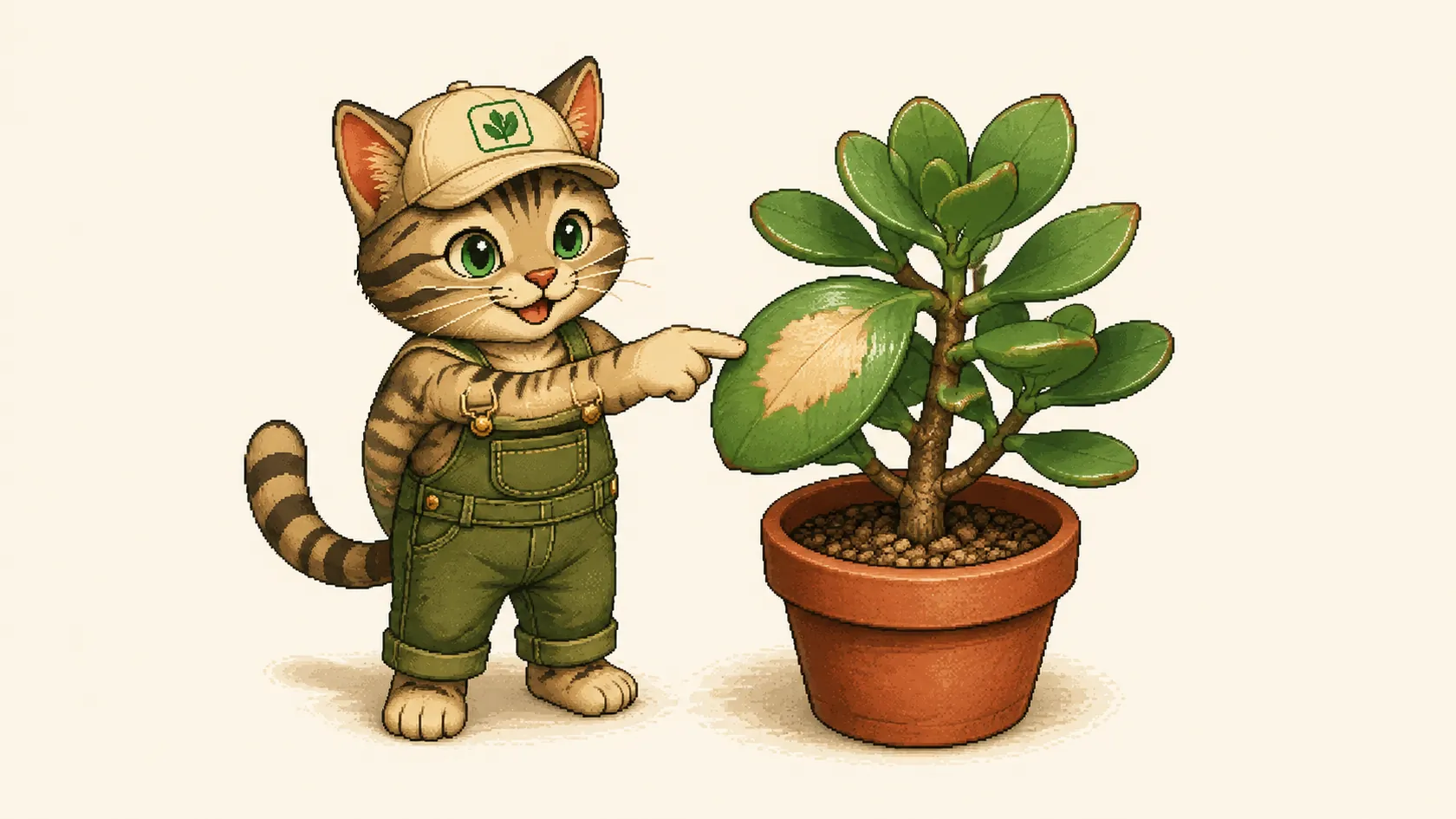
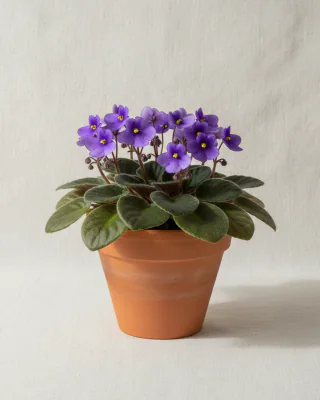
Pale rings and blotches on soft, hairy leaves such as African violet come from cold water sitting on the leaf. Water those from below and keep the foliage dry.
A night pressed against a cold windowpane, or a delivery in winter, can leave yellow blotches that brown at the edges within days. The marked leaves do not recover and the plant does.
Marks that appear once and never spread belong to an event rather than to a condition. Note when it happened and watch what the new leaves do.
A single lower leaf yellowing all over while new growth comes at the top is the normal leaf change. Cut it off once it loosens.
Several leaves yellowing at once from the bottom up, while the soil stays dark and heavy, is about water sitting in the pot rather than about spots.
A plant that pales all over with no pattern is usually short of light or of nutrients. Moving it a yard closer to the window is the first thing to try, and it is also the easiest change to reverse.
Sap-sucking pests leave fine even flecking. Leaf spot makes round spots with a defined edge. A nutrient shortage yellows the tissue between green veins, and direct sun bleaches a patch on the window side.
Yes. Their feeding shows as fine, even pale or yellow dots that do not wipe off, worst on older leaves. Check the undersides in good light for moving specks and fine webbing in the leaf axils.
Remove leaves with spreading leaf spot and bin them. Leaves marked by sun, cold or a pest problem you have dealt with stay on the plant while the rest of the leaf is firm and green.
No. Damaged tissue stays as it is. Whether the cause is fixed shows on the leaves that open next, not on the ones already marked.
Not usually as spots. Too much water shows first as whole lower leaves yellowing while the soil stays dark and heavy. Spots with a defined edge point at foliage that stays wet instead.
Iron when the youngest leaves are affected, magnesium when the oldest ones are. Both often come from roots that cannot take nutrients up, so check that water leaves the pot before feeding.
Last reviewed: 2026-09-07